
Nutrient quality
The formula provides a meaningful total omega-3 amount without obvious filler. Ethyl-ester delivery and missing EPA and DHA detail limit dose and absorption confidence.
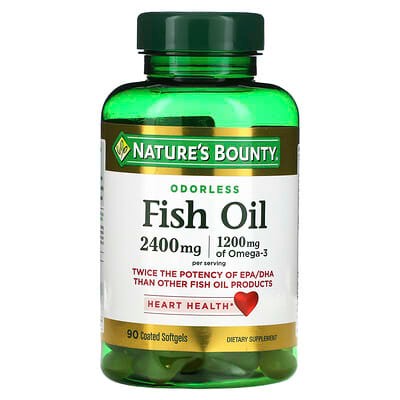
 iHerb iHerb | $ 19.47 | |
 Vitacost Vitacost | $ 21.43 | |
| iHerb | $ 19.47 |
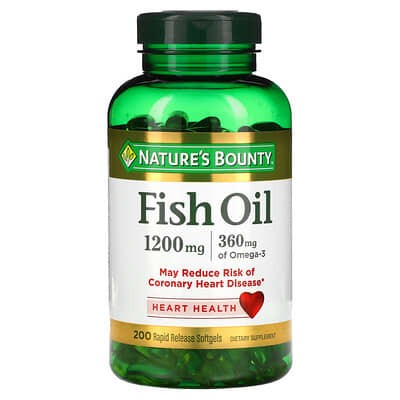
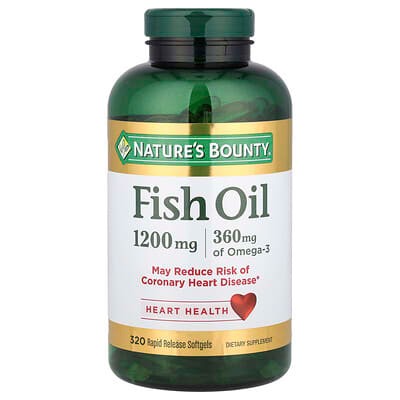
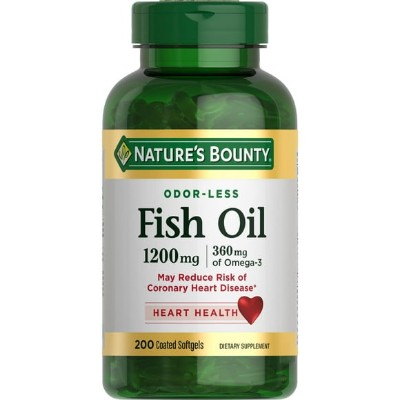
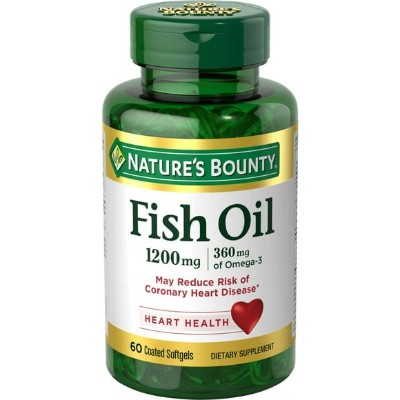
Total omega-3, rather than the larger fish-oil weight, is the meaningful active measure. The 1200 mg amount offers basic support but does not reveal how much comes from EPA versus DHA.
The label identifies ethyl esters, which are best taken with a fat-containing meal and are less efficiently absorbed than triglyceride forms. The supplied data also omit the fish species, antioxidant protection, oxidation measures, and independent purity verification.
Two softgels provide the serving in a 45-serving package. The cost per disclosed omega-3 amount is attractive. It fits general low-dose use better than targeted high-EPA or high-DHA supplementation.
The formula provides a meaningful total omega-3 amount without obvious filler. Ethyl-ester delivery and missing EPA and DHA detail limit dose and absorption confidence.
The label states total omega-3 and serving count. Separate EPA and DHA amounts, other ingredients, full directions, and key sourcing or quality details remain missing.
The aggregate satisfaction signal is strong and supported by the available response volume. No review-text evidence is provided to assess repeated complaints or whether experiences match the intended use.
The formula remains reasonably priced for basic fish-oil use. Modest active concentration and missing EPA and DHA detail reduce value per effective serving.

A substantial amount of omega-3 ethyl esters supports healthy lipids and vascular function. The formula has meaningful depth in a well-supported cardiovascular pathway.
EPA and DHA amounts are not individually disclosed, which prevents a precise assessment of the most relevant fatty acids. The ethyl ester form can also be less efficiently absorbed than triglyceride forms unless taken with a fat-containing meal.

The disclosed omega-3 total may support skin-barrier lipids and help regulate inflammatory signaling. The fish-oil amount is substantial, but the individual EPA and DHA contributions are not provided.
Ethyl ester delivery and missing EPA/DHA values make the functional dose harder to judge, especially without instructions to take it with a fat-containing meal. Fish oil may cause fishy reflux or stomach upset in sensitive users.

Omega-3 fatty acids may help inflammatory joint discomfort, giving the product a direct but narrow joint-health role. The label lists 1200 mg total omega-3.
EPA and DHA amounts are not separated, so the clinically relevant anti-inflammatory dose cannot be confirmed, and the ethyl-ester form offers only moderate absorption. The formula does not provide cartilage building blocks or joint-lubricating compounds.

A meaningful omega-3 amount may support lipid metabolism and insulin signaling. Missing EPA and DHA amounts prevent a precise potency judgment.
It is better aligned with cardiometabolic health than a noticeable metabolism boost. Ethyl-ester fish oil is best taken with a fat-containing meal for absorption.

Fish oil is relevant to inflammation resolution, and the total omega-3 amount suggests meaningful fatty-acid content. The ethyl ester form is clearly identified.
EPA and DHA are not separately quantified, so the most important active balance cannot be evaluated. That gap weakens confidence in dose quality despite the substantial total omega-3 amount.
| Ingredient | Amount per serving |
|---|---|
Calories | 25 Calorie(s) |
Total Fat | 2.5 Gram(s) |
Polyunsaturated Fat | 1.5 Gram(s) |
Cholesterol | 25 mg |
Fish Oil | 2400 mg |
Total Omega-3 Fatty Acids Ethyl Esters | 1200 mg |
Eicosapentaenoic Acid | 0 NP |
Docosahexaenoic Acid | 0 NP |
Other Fatty Acids | 0 NP |
The label identifies an ethyl-ester omega-3 concentrate, a less preferred molecular form. Only total omega-3 is quantified, and the active fraction remains below the preferred concentration. Its low serving cost gives excellent value when total omega-3 is used as the active estimate, but independent purity testing is not stated.
The label discloses an ethyl ester oil but does not provide usable individual EPA and DHA amounts from the 2,400 mg serving. Fish species, purification method, independent testing, and antioxidant protection are not identified. Without EPA and DHA disclosure, active potency and value per gram cannot be determined.
Published studies used for the product analysis and the top-ranked studies for each ingredient and goal.