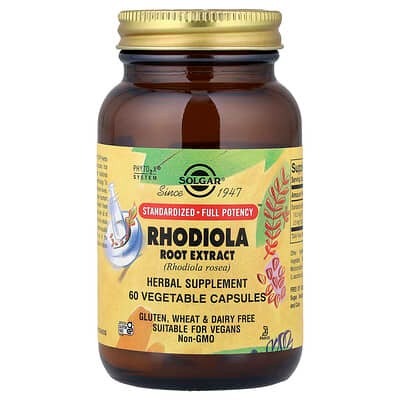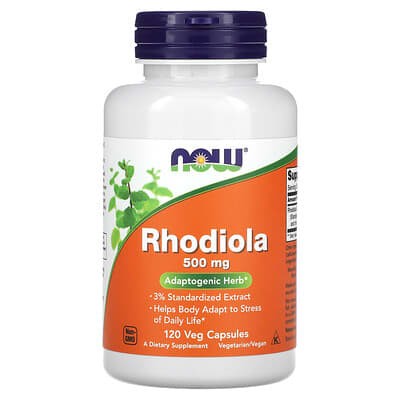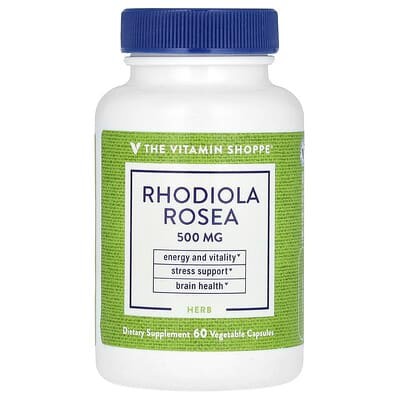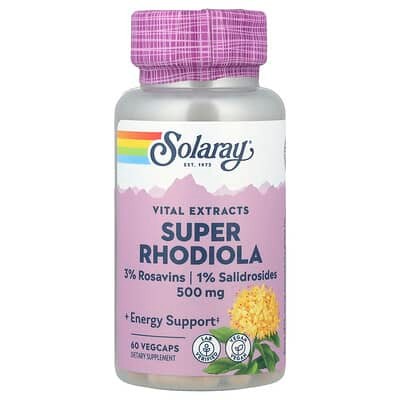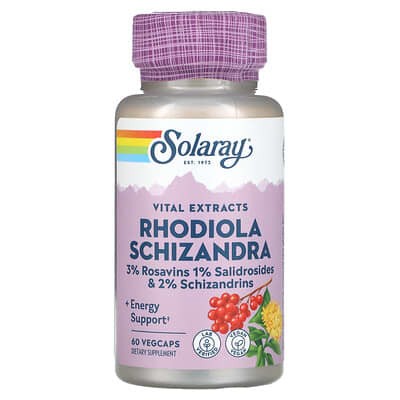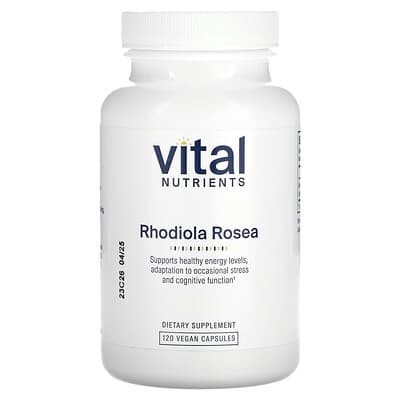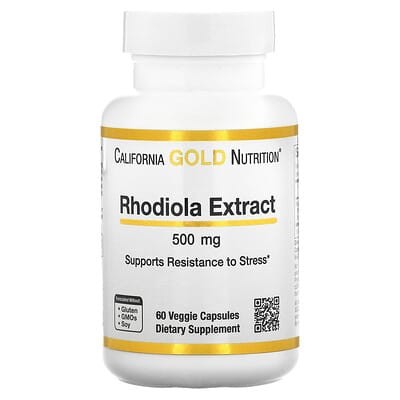
Rhodiola

botanical

Rhodiola rosea is a perennial flowering plant in the Crassulaceae family, also known as golden root, roseroot, or arctic root. It grows in the cold, high-altitude regions of Europe and Asia. As an adaptogen, it helps balance the body’s stress response system, or HPA axis, which enhances resilience against physical, chemical, and environmental stressors. The herb’s primary active compounds, salidrosides and rosavins, may influence neurotransmitters such as serotonin, dopamine, and norepinephrine. These interactions are associated with improved mood, energy, and cognitive function, making it helpful for addressing fatigue and mental clarity during stressful periods. Rhodiola also supports physical performance by potentially reducing perceived exertion and assisting with recovery. It may also support attention, memory, and information processing, making it a frequent choice for those looking to maintain mental performance and manage burnout.

Natural sources
Rhodiola rosea plant (roots and rhizomes)

Ingredient forms

No public comparison lists found.

Timing & Intake
AnytimeWith foodAvoid before bedTake with Can be taken with food to minimize potential mild stomach upset, though often well-tolerated on an empty stomach.
Because some individuals may experience a mild stimulating effect, taking this botanical earlier in the day is often recommended to avoid potential sleep disturbances.
Optimal Dosage
Minimum200 mg
Maximum600 mg
Safety & Toxicity
4 safety notes
  • Individuals with bipolar disorder or other mood disorders should use with caution and under medical supervision, as Rhodiola may exacerbate manic symptoms.
  • Pregnant or nursing individuals should avoid use due to insufficient safety data.
  • Individuals with autoimmune conditions should consult a healthcare professional before use.
  • Discontinue use at least two weeks before any scheduled surgery due to potential effects on blood clotting.
Goals
Cognitive Support
Impact
High effect
Typical dose:100–600 mg
Rhodiola rosea helps the body adapt to physical and mental stressors. It has an acute effect on reducing the feeling of 'burnout,' enhancing concentration, and improving mood by influencing levels of neurotransmitters like serotonin and dopamine.

Study evidence

7 studies

Rhodiola may support attention and mental performance when stress or fatigue is reducing performance. The favorable evidence mainly concerns standardized extracts in these settings, and it does not establish a broad or lasting cognitive benefit in well-rested people.

View goal
General Health
Impact
High effect
Typical dose:200–600 mg
Rhodiola rosea works by influencing key central nervous system mediators, such as serotonin and dopamine, and modulating the HPA axis response to stress. This leads to a tangible feeling of reduced fatigue and increased mental clarity and physical endurance, making it effective for combating burnout and enhancing daily performance.

Study evidence

7 studies

Rhodiola may help fatigue and well-being in some stressful situations, but the findings are inconsistent and largely concern specific extracts. Placebo-controlled research also reports worsened fatigue, and the supplied evidence does not establish broad health improvement or longer life.

View goal
Mental Focus
Impact
High effect
Typical dose:100–600 mg
Rhodiola rosea helps regulate the body's stress-response system, preserving levels of key neurotransmitters like dopamine and serotonin. This leads to improved concentration, mood, and mental stamina during demanding tasks.

Study evidence

15 studies

Rhodiola may improve concentration and mental performance when fatigue or stress interferes with them, but results are not consistent. The evidence mainly concerns specific extracts and demanding situations, so it does not establish a dependable focus benefit for everyone.

View goal
Mood Support
Impact
High effect
Typical dose:200–600 mg
Rhodiola rosea is particularly effective for mood issues related to burnout and exhaustion. It can improve energy levels, concentration, and overall sense of well-being by influencing monoamine oxidase activity.

Study evidence

15 studies

Rhodiola shows some promise for stress-related mood symptoms and mild to moderate depression, but controlled findings are inconsistent. Positive results often come from limited studies or combination treatment, so a dependable mood benefit from rhodiola alone remains uncertain.

View goal
Productivity Boost
Impact
High effect
Typical dose:200–600 mg
Rhodiola rosea helps the body adapt to physical and mental stress by influencing key brain chemicals like serotonin and dopamine, and by moderating the stress hormone cortisol. This action helps preserve cognitive resources, leading to improved endurance and concentration during long or stressful tasks.

Study evidence

7 studies

Rhodiola may reduce stress-related fatigue and improve selected attention or reaction-time measures, especially under demanding conditions. The evidence is promising but limited, and improvements on tests do not establish a dependable increase in everyday productivity or work output.

View goal
Stress Relief
Impact
High effect
Typical dose:200–600 mg
Rhodiola rosea helps balance the body's stress-response system, particularly by influencing levels of neurotransmitters like serotonin and dopamine. It is highly effective for enhancing energy, focus, and endurance during periods of high stress.

Study evidence

16 studies

Rhodiola may ease perceived fatigue and some stress-related symptoms, but the evidence remains preliminary. Many favorable findings come from uncontrolled studies or particular extracts, so reliable relief of stress, anxiety, or burnout is not established across products and populations.

View goal
Showing 6 of 10 goals

Studies

Research connections will load here.
Sources

Up to five highest-ranked published examples per goal. Study counts and charts include all published studies for the connection.

  1. Evidence-based efficacy of adaptogens in fatigue, and molecular mechanisms related to their stress-protective activity.
    Panossian A; Wikman G · Current clinical pharmacology · 2009
    Narrative reviewMental FocusCognitive Support
  2. Effects of a Rhodiola rosea extract on mental resource allocation and attention: An event-related potential dual task study.
    Koop T; Dienel A; Heldmann M; Münte TF · Phytotherapy research : PTR · 2021
    Single-arm trial50 participantsCognitive SupportBrain Health
  3. Central additive effect of Ginkgo biloba and Rhodiola rosea on psychomotor vigilance task and short-term working memory accuracy.
    Al-Kuraishy HM · Journal of intercultural ethnopharmacology · 2016
    Clinical trial112 participantsCognitive Support
  4. Clinical evidence for the adaptogenic effects of Withania somnifera and Rhodiola rosea - A systematic review with molecular interpretation of psychometric outcomes.
    Łuszczak J; Kocki J · Annals of agricultural and environmental medicine : AAEM · 2026
    Systematic review19 studies pooledStress ReliefCognitive Support
  5. A randomised, double-blind, placebo-controlled, parallel-group study of the standardised extract shr-5 of the roots of Rhodiola rosea in the treatment of subjects with stress-related fatigue.
    Olsson EM; von Schéele B; Panossian AG · Planta medica · 2009
    Randomized trial60 participantsProductivity BoostCognitive Support
  6. Rhodiola rosea in stress induced fatigue--a double blind cross-over study of a standardized extract SHR-5 with a repeated low-dose regimen on the mental performance of healthy physicians during night duty.
    Darbinyan V; Kteyan A; Panossian A; Gabrielian E; Wikman G; Wagner H · Phytomedicine : international journal of phytotherapy and phytopharmacology · 2001
    Randomized trial56 participantsProductivity BoostGeneral HealthBrain Health
  7. Actaea racemosa L. Is More Effective in Combination with Rhodiola rosea L. for Relief of Menopausal Symptoms: A Randomized, Double-Blind, Placebo-Controlled Study.
    Pkhaladze L; Davidova N; Khomasuridze A; Shengelia R; Panossian AG · Pharmaceuticals (Basel, Switzerland) · 2024
    Randomized trial220 participantsGeneral Health
  8. A double-blind, placebo-controlled pilot study of the stimulating and adaptogenic effect of Rhodiola rosea SHR-5 extract on the fatigue of students caused by stress during an examination period with a repeated low-dose regimen.
    Spasov AA; Wikman GK; Mandrikov VB; Mironova IA; Neumoin VV · Phytomedicine : international journal of phytotherapy and phytopharmacology · 2000
    Randomized trialGeneral HealthProductivity Boost
  9. Rhodiola rosea in Subjects with Prolonged or Chronic Fatigue Symptoms: Results of an Open-Label Clinical Trial.
    Lekomtseva Y; Zhukova I; Wacker A · Complementary medicine research · 2019
    Single-arm trial100 participantsEnergyGeneral HealthStress Relief
  10. [The effect of the preparation rodakson on the psychophysiological and physical adaptation of students to an academic load].
    Spasov AA; Mandrikov VB; Mironova IA · Eksperimental'naia i klinicheskaia farmakologiia · 2000
    Clinical trialGeneral Health
  11. The effectiveness and efficacy of Rhodiola rosea L.: a systematic review of randomized clinical trials.
    Hung SK; Perry R; Ernst E · Phytomedicine : international journal of phytotherapy and phytopharmacology · 2012
    Systematic review11 studies pooledMental Focus
  12. Effects of Rhodiola rosea on Physical and Decision-Making Performance in Football Players: A Randomised Controlled Trial.
    Dou Y; Wang Y; Zhang W; Jiang Y; Zhang J; Yang T; Han Z; Li Y; Liu C; Ren D · Nutrients · 2026
    Randomized trial24 participantsFitnessEnergyMental Focus
  13. Dose-Response Effects of Short-Term Rhodiola rosea (Golden Root Extract) Supplementation on Anaerobic Exercise Performance and Cognitive Function in Resistance-Trained Athletes: A Randomized, Crossover, Double-Blind, and Placebo-Controlled Study.
    Koozehchian MS; Newton AT; Mabrey G; Bonness FM; Rafajlovska R; Naderi A · Nutrients · 2025
    Randomized trial27 participantsMental FocusFitnessBrain Health
  14. Effects of Rhodiola rosea supplementation on mental performance, physical capacity, and oxidative stress biomarkers in healthy men.
    Jówko E; Sadowski J; Długołęcka B; Gierczuk D; Opaszowski B; Cieśliński I · Journal of sport and health science · 2022
    Randomized trial26 participantsProductivity BoostMental Focus
  15. Efficacy of Pharmacological Interventions in Milder Depression: A Systematic Review and Meta-Analysis.
    Urata M; Sakurai H; Ueno F; Maruki T; Tada T; Uchida T; Matsumoto Y; Murao M; Tomita M; Baba H; Kato M; Tsuboi T; Watanabe K · Neuropsychopharmacology reports · 2025
    Meta-analysis1,049 participants2 studies pooledMood Support
  16. The Effect of Acute Rhodiola rosea Ingestion on Exercise Heart Rate, Substrate Utilisation, Mood State, and Perceptions of Exertion, Arousal, and Pleasure/Displeasure in Active Men.
    Duncan MJ; Clarke ND · Journal of sports medicine (Hindawi Publishing Corporation) · 2015
    Clinical trial10 participantsMood Support
  17. Herbal medicine for depression, anxiety and insomnia: a review of psychopharmacology and clinical evidence.
    Sarris J; Panossian A; Schweitzer I; Stough C; Scholey A · European neuropsychopharmacology : the journal of the European College of Neuropsychopharmacology · 2012
    Systematic review66 studies pooledMood Support
  18. Medicinal Plants in the Treatment of Depression. II: Evidence from Clinical Trials.
    Moragrega I; Ríos JL · Planta medica · 2022
    Systematic reviewMood Support
  19. Multicenter, open-label, exploratory clinical trial with Rhodiola rosea extract in patients suffering from burnout symptoms.
    Kasper S; Dienel A · Neuropsychiatric disease and treatment · 2020
    Single-arm trial118 participantsMood Support
  20. The Effectiveness of Rhodiola rosea L. Preparations in Alleviating Various Aspects of Life-Stress Symptoms and Stress-Induced Conditions-Encouraging Clinical Evidence.
    Ivanova Stojcheva E; Quintela JC · Molecules (Basel, Switzerland) · 2022
    Narrative reviewStress ReliefProductivity Boost
  21. Stress management and the role of Rhodiola rosea: a review.
    Anghelescu IG; Edwards D; Seifritz E; Kasper S · International journal of psychiatry in clinical practice · 2019
    Narrative reviewStress Relief
  22. Plant-based medicines for anxiety disorders, part 2: a review of clinical studies with supporting preclinical evidence.
    Sarris J; McIntyre E; Camfield DA · CNS drugs · 2013
    Narrative reviewStress Relief
  23. A combination of green tea, rhodiola, magnesium and B vitamins modulates brain activity and protects against the effects of induced social stress in healthy volunteers.
    Boyle NB; Billington J; Lawton C; Quadt F; Dye L · Nutritional neuroscience · 2022
    Randomized trial100 participantsBrain Health
  24. Rosenroot (Rhodiola rosea): traditional use, chemical composition, pharmacology and clinical efficacy.
    Panossian A; Wikman G; Sarris J · Phytomedicine : international journal of phytotherapy and phytopharmacology · 2010
    Narrative reviewBrain Health
  25. The Effect of Short-Term Rhodiola rosea Supplementation on Simulated Game Time, Perceived Fatigue, and Performance in Basketball Players.
    Wang J; Zhao H; Yu L; Zhao K; Jiang W; Liu S; Dai J; Xu L; Sun P; Yun H; Liu C · Nutrients · 2025
    Randomized trial48 participantsEnergyFitness
  26. Combined Effects of Rhodiola Rosea and Caffeine Supplementation on Straight Punch Explosive Power in Untrained and Trained Boxing Volunteers: A Synergistic Approach.
    Tao B; Sun H; Li H; Xu Z; Xu Y; Chen L; Ma C; Zhang X; Yu L; Bao S; Liu C · Metabolites · 2025
    Randomized trial96 participantsEnergy
  27. Combined Rhodiola rosea and eccentric training boost endurance performance and lower-limb reactive strength in recreationally active women.
    Wang IL; Su Y; Zhang L; Tang M; Chen YM · Frontiers in physiology · 2025
    Randomized trial30 participantsFitnessEnergy
  28. The Impact of Rhodiola Rosea Extract on Strength Performance in Alternative Bench-Press and Bench-Pull Exercises Under Resting and Mental Fatigue Conditions: A Randomized, Triple-Blinded, Placebo-Controlled, Crossover Trial.
    Marcos-Frutos D; Leban Ž; Li Z; Zhang X; Lara PM; Alix-Fages C; Jiménez-Martínez P; Zebboudji N; Caillet A; Redondo B; Vera J; Janicijevic D; García-Ramos A · Nutrients · 2025
    Randomized trial18 participantsFitness