
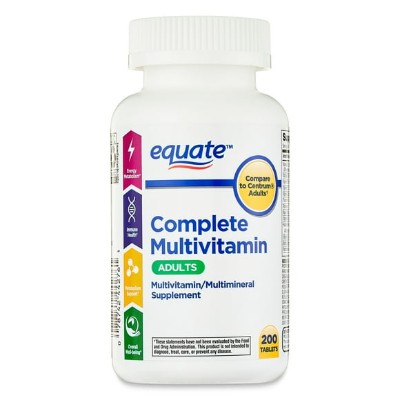

$9.82 $0.04 per serving

Product analysis
Complete Multivitamin offers broad nutritional support that may help fill gaps in your diet, including nutrients involved in energy use, blood formation and normal immune function. Extra benefit depends on what you already get from food.
AI assessment of the formula, label and price. How scoring works
Nutrient Quality43
Ingredient quality is mixed, with favorable vitamin D and iodine forms alongside less favored vitamin E, selenium, copper and silicon forms. Quality remains uncertain for several other nutrients, so the broad ingredient list alone does not establish an advantage.
Ingredient Transparency89
All nutrient amounts and nearly all forms are disclosed, making the formula relatively easy to compare. The folate form and some calcium mixture proportions remain unclear.
Value For Money60
Several nutrients appear inexpensive at the serving price, while vitamin D offers less favorable value. The synthetic vitamin E form weakens its value despite the low cost of several minerals.
Customer Satisfaction85
Feedback is favorable across thousands of ratings. The large number of opinions gives a broader picture of buyer satisfaction.
Product Focus31
The formula mainly helps cover everyday nutrient needs across several related areas of health. Its broad range of nutrients does not imply extra benefits when your needs are already met.
- Format
Tablet - Container
- 200 Tablet(s)
- Per serving
- $0.04
- Also available
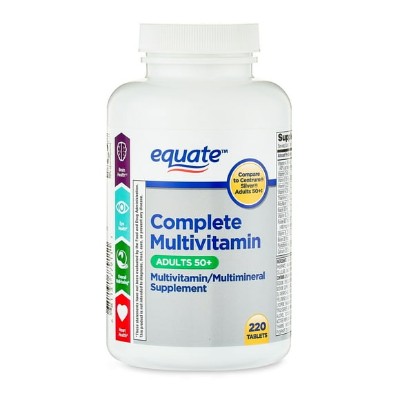 Complete Multivitamin$8.84
- Customer rating
- 4.7 · 2,082 ratings
Goals

Impact
Highest effect
Folate · 400 mcgVitamin B12 · 6 mcgVitamin D · 400 IUMagnesium · 50 mgVitamin K · 25 mcgBoron · 75 mcgSelenium · 55 mcgZinc · 11 mgVitamin C · 60 mg
B1, B2, niacin, pantothenic acid and B6 support the normal processes that help the body use food. Folate and iron contribute to normal blood formation, while iodine provides nutritional support for thyroid function. The 18 mg of iron is a meaningful contribution, especially when dietary intake falls short.
Zinc and selenium support normal immune and antioxidant functions. Calcium and vitamin D also contribute nutrients involved in bone health, although the 200 mg of calcium and 10 mcg of vitamin D provide only part of adult daily needs. Overall, the main value is helping fill nutritional gaps; extra benefit depends on what a person already gets from food.
How this product is rated for Everyday Health
Ingredient fit79
B vitamins, folate, zinc, selenium, iron and iodine give the blend a clear nutritional focus. Most of the ingredients included in the saved assessment have substantial amounts, with smaller contributions from zinc and selenium.
Goal fit
Ten ingredients contribute to the saved assessment. Four additional actives have no assessed role for this goal, and the blend is linked to several other goals, making its focus less specific.
Dose adequacy
The B1, B2, B3, B5, B6, folate, iron and iodine amounts reach their saved comparison levels. Zinc and selenium make smaller contributions.
Pathways100
The saved findings cover three areas: normal energy metabolism, blood formation and related folate functions, and antioxidant and immune support. Energy metabolism is the strongest covered area.
Depth
B1, B2, B3 and B5 provide the strongest coverage through their roles in normal energy metabolism. Folate and B6 also give strong coverage to blood formation and related metabolic functions.
Breadth
All three target areas are covered: energy metabolism, blood formation and related folate functions, and antioxidant and immune support. Zinc and selenium contribute to the third area.
Evidence82
Folate provides the strongest evidence contribution among the ingredients counted at sufficient amounts. The saved assessment also accepts the preparations of all ten counted ingredients.
Evidence strength
Folate is the strongest contributor to the saved evidence finding, though it falls below the highest evidence level available for this goal. Its practical role is nutritional support when intake falls short.
Studied preparation
All ten ingredients counted at sufficient amounts meet the saved preparation criteria. The nutrient forms receive no additional benefit simply for their form.
Formulation logic100
The counted ingredients can contribute independently or have their relevant partners present. No screened ingredient conflict was flagged, and all ten counted ingredients meet the saved minimum amount criteria.
Partner coverage
Every counted ingredient can contribute alone or has its relevant partner present. Copper accompanies zinc, and vitamin B12 is present alongside folate.
Conflicts
None of the screened conflicts was triggered by the supplied ingredients and amounts. Copper and B12 are present, and the checked high-amount conditions were not met.
Effective doses
All ten counted ingredients reach the saved minimum amount criterion. Magnesium, B12, D, K, C, boron and calcium remain below that criterion in this assessment.

Impact
Moderate effect
Biotin · 30 mcgVitamin D · 400 IUZinc · 11 mgIron · 18 mgVitamin C · 60 mg
Complete Multivitamin offers nutritional support for hair through 18 mg iron, 11 mg zinc and 30 mcg biotin per serving. These nutrients may help when inadequate intake contributes to shedding; extra intake has no established regrowth benefit when needs are already met. Folate also supports normal cell division.
Vitamin C supports collagen formation and iron absorption, while copper contributes to normal pigmentation and connective-tissue biology. Selenium has an antioxidant role, but that role alone is not evidence of added hair growth. Overall, the main contribution is helping cover nutritional needs.
How this product is rated for Hair Health
Ingredient fit48
Complete Multivitamin supplies several nutrients relevant to hair nutrition, alongside a broad range of other nutrients. The saved assessment found a moderate fit for hair health and limited overall dose coverage.
Goal fit
Hair-related nutrients sit within a broad multivitamin, with 13 other active ingredients and links to eight goals. Hair health is therefore only part of its focus.
Dose adequacy
The saved assessment found partial dose coverage across nine included nutrients. Vitamin A and vitamin D had no usable amount in that assessment, which reduced the finding.
Pathways18
The strongest saved finding concerns antioxidant protection around hair follicles, with a much smaller contribution to hair-fibre support. Coverage remains limited across the different aspects of hair health.
Depth
Antioxidant protection around hair follicles is the strongest area, mainly reflecting selenium. Hair-fibre support contributes much less.
Breadth
None of the assessed areas reached the saved coverage threshold. No contribution was recorded for androgen signalling or stress-hormone regulation.
Evidence97
Zinc leads the saved evidence finding, while most included nutrients met the preparation check. For zinc, the practical hair benefit remains tied to correcting an inadequate intake rather than expecting extra growth when intake is already sufficient.
Evidence strength
Zinc provides the strongest saved evidence finding at the assessed amount. Its hair relevance is mainly in filling a nutritional gap that can contribute to shedding.
Studied preparation
Most of the seven nutrients meeting the saved dose threshold also met the preparation check. Iodine was the exception.
Formulation logic94
The saved assessment found no missing required partners or matched ingredient conflicts. Seven of nine included nutrients met its dose threshold, leaving vitamin A and vitamin D below it.
Partner coverage
All included ingredients either work independently or have their required partner present. No missing partner reduced the saved finding.
Conflicts
No ingredient conflict was matched in the saved assessment.
Effective doses
Seven of nine included nutrients met the saved dose threshold. Vitamin A and vitamin D fell below it because their assessed amounts were unresolved.

Impact
Moderate effect
Magnesium · 50 mgVitamin C · 60 mgZinc · 11 mgVitamin A · 3500 IUVitamin D · 400 IUSelenium · 55 mcg
Zinc at 11 mg and selenium at 55 mcg per serving contribute to normal immune function, with amounts matching common adult intake references. Vitamin C and vitamin D add nutritional support, while vitamin A relates to the body’s protective barriers.
Iron, copper, vitamin B6, vitamin B12 and folate help maintain immune-cell function when dietary intake is insufficient. Their main value is helping fill nutritional gaps; higher amounts of B6 and B12 do not necessarily provide extra immune benefit.
How this product is rated for Immunity
Ingredient fit47
Several nutrients support normal immune function, although the broad multivitamin mix has only a moderate focus on immunity. The saved amount assessment is mixed, with stronger coverage from iron and B vitamins than from several other nutrients.
Goal fit
Nine ingredients are included in the saved immunity assessment, alongside 19 other actives. The mix serves several nutritional goals rather than focusing narrowly on immunity.
Dose adequacy
Iron, vitamin B6, vitamin B12 and folate reach the saved comparison amounts, while zinc, selenium and copper provide partial coverage. Vitamins A and E have no usable amount in the required units for that comparison.
Pathways18
Support is strongest for lymphocyte function and immune regulation, followed by oxidative and inflammatory balance. Coverage of barrier defenses and innate immune cells is more limited.
Depth
Lymphocyte function and immune regulation is the most strongly supported area in the saved findings, with zinc contributing to normal immune-cell function.
Breadth
None of the assessed immune pathways reaches the saved threshold for broad coverage. Contributions span several areas but remain limited within each.
Evidence100
Zinc provides the strongest evidence match among ingredients meeting the saved amount threshold. The seven qualifying ingredients also meet the saved preparation criteria, with benefits centered on normal nutrient function.
Evidence strength
Zinc is the strongest evidence match at a qualifying amount, supporting normal immune function. Its role here is nutritional support.
Studied preparation
All seven ingredients meeting the saved amount threshold also meet the preparation criteria used in the assessment. That finding does not imply that one nutrient form offers greater immune benefits than another.
Formulation logic94
The assessed ingredients can contribute independently or have their required partners, and no listed conflict was triggered. Seven of nine ingredients meet the saved minimum amount threshold.
Partner coverage
Each assessed ingredient can work independently or has its required partner present. No missing partner limits the saved findings.
Conflicts
No listed ingredient conflict was identified. Copper is present alongside zinc, and the zinc amount is below the level that triggers the listed excess-zinc concern.
Effective doses
Seven of nine assessed ingredients meet the saved minimum amount threshold. Vitamins A and E fall short in that assessment because usable amounts in the required units are unavailable.

Impact
Moderate effect
Iodine · 150 mcgVitamin D · 400 IUVitamin B5 · 10 mgMagnesium · 50 mgRiboflavin · 1.7 mgThiamin · 1.5 mgVitamin B12 · 6 mcgIron · 18 mgPotassium · 80 mg
Thiamin, riboflavin, niacin and pantothenic acid support the normal processes that release energy from food. Vitamins B6 and B12, iron and vitamin C may also help with tiredness when intake is insufficient; 18 mg of iron is a substantial nutritional contribution, while 50 mg of magnesium supplies a smaller share of daily needs.
The main energy-related role is helping fill nutritional gaps. Extra amounts are not expected to add energy when needs are already met, and the ingredients do not suggest a caffeine-style alertness boost or direct support for exercise energy reserves.
How this product is rated for Energy
Ingredient fit59
The multivitamin offers several nutrients related to normal energy use, alongside a wider range of nutrients for general nutrition. The saved dose assessment is mixed across the ingredients it counts.
Goal fit
Ten ingredients contribute to the saved energy assessment, while sixteen other active ingredients and links to several goals reflect its broader nutritional purpose.
Dose adequacy
The saved assessment finds partial overall dose coverage among the ten counted ingredients. Magnesium, vitamin B12, vanadium and vitamin D fall below its inclusion threshold.
Pathways0
The saved findings show no coverage of the assessed alertness, exercise-energy, stress-fatigue or blood-flow routes. Its relevant contribution is mainly nutritional support.
Depth
None of the five assessed routes has recorded coverage.
Breadth
No assessed route reaches the saved coverage threshold.
Evidence97
Iron leads the saved evidence finding, and most counted ingredients have a matching preparation in the assessment. These findings need to be read in the context of nutritional adequacy rather than an extra energy boost.
Evidence strength
Iron provides the strongest saved evidence finding at the amount assessed. Its fatigue relevance is chiefly for people with low iron, rather than people whose needs are already met.
Studied preparation
The saved assessment records matching preparations for nearly all counted ingredients, with iodine the exception. A preparation match alone does not mean the whole multivitamin improves energy.
Formulation logic100
The saved findings identify no missing required partners or matched ingredient conflicts. All ten ingredients retained in this assessment meet its minimum amount threshold.
Partner coverage
Each counted ingredient can contribute independently or has its required partner present.
Conflicts
No conflicts covered by the saved checks were found; melatonin, valerian, kava and tryptophan are absent.
Effective doses
All ten retained ingredients meet the saved minimum amount threshold. Meeting that threshold is separate from showing a noticeable energy benefit.
Vitamin B5 Not classified
No linked studies yet.
Ingredients
| Ingredient | Amount per serving | Score |
|---|---|---|
Vitamin A (Beta-Carotene, Vitamin A Acetate) | 3500 IU | |
Vitamin C (Ascorbic Acid) | 60 mg | |
Vitamin D (Cholecalciferol) | 400 IU | |
Vitamin E (DL-Alpha-Tocopheryl Acetate) | 30 IU | |
Vitamin K (Phytonadione) | 25 mcg | |
Thiamine (Thiamine Mononitrate) | 1.5 mg | |
Riboflavin | 1.7 mg | |
Niacin (Niacinamide) | 20 mg | |
Vitamin B6 (Pyridoxine Hydrochloride) | 2 mg | |
Folic Acid | 400 mcg | |
Vitamin B12 (Cyanocobalamin) | 6 mcg | |
Biotin (D-Biotin) | 30 mcg | |
Pantothenic Acid (D-Calcium Pantothenate) | 10 mg | |
Calcium (Calcium Carbonate, Dicalcium Phosphate) | 200 mg | |
Iron (Ferrous Fumarate) | 18 mg | |
Phosphorus (Dicalcium Phosphate) | 20 mg | |
Iodine (Potassium Iodide) | 150 mcg | |
Magnesium (Magnesium Oxide) | 50 mg | |
Zinc (Zinc Oxide) | 11 mg | |
Selenium (Sodium Selenate) | 55 mcg | |
Copper (Cupric Sulfate) | 0.5 mg | |
Manganese (Manganese Sulfate) | 2.3 mg | |
Chromium (Chromium Picolinate) | 35 mg | |
Molybdenum (Sodium Molybdate) | 45 mcg | |
Chloride (Potassium Chloride) | 72 mg | |
Potassium (Potassium Chloride) | 80 mg | |
Boron (Boric Acid) | 75 mcg | |
Nickel (Nickel Sulfate) | 5 mcg | |
Silicon (Silicon Dioxide) | 2 mg | |
Tin (Stannous Chloride) | 10 mcg | |
Vanadium (Sodium Metavanadate) | 10 mcg |
Iodine (Potassium Iodide) · 150 mcg OverallScore100
A serving provides 150 mcg iodine as potassium iodide, an amount the evaluation regards as suitable for maintenance. The whole-product serving costs about $0.05.
How this ingredient is rated
Active Ingredient Quality & Bioavailability100
The iodine is supplied as potassium iodide, a form favored in this evaluation.
Iodine Form & Bioavailability
Potassium iodide is the named iodine source and is favored in the form assessment.
Marine Source Purity & Sourcing
No marine source is recorded, so the seaweed-specific purity concern is not identified here.
Dose, Safety & Label Transparency100
The serving supplies 150 mcg iodine, an amount the evaluation regards as suitable for maintenance.
Dosage Efficacy for Daily Support
The evaluation regards 150 mcg iodine per serving as a maintenance-level amount.
Dosage Safety & Upper Limits
The 150 mcg per serving falls within the evaluation's safety reference; it does not account for iodine from other sources.
Elemental Iodine Transparency
The stated amount is 150 mcg of iodine per serving.
Value100
The whole-product serving costs about $0.05.
Price Per Effective Serving
A whole-product serving costs about $0.05.
Niacin (Niacinamide) · 20 mg OverallScore81
The serving provides 20 mg of niacin. The cost per serving is low. Niacinamide is the stated form.
How this ingredient is rated
Active Ingredient Quality & Bioavailability86
Niacinamide is the stated form.
Niacin Form & Goal Alignment
Niacinamide is the stated form.
Precursor Source Quality
The stated form is niacinamide, with no advanced cellular energy claim in the available details.
Dose, Safety & Label Transparency67
The serving provides 20 mg of niacin. Niacinamide is a non-flushing form; an explicit no-flush claim is not available.
Clarity of Chemical Form
The label identifies the form as niacinamide.
Form-Specific Dosage Efficacy
The serving provides 20 mg of niacin.
Flush Risk & Safety Labeling
Niacinamide is a non-flushing form; an explicit no-flush claim is not available.
Value100
The cost per serving is low.
Price Per Effective Serving
The cost per serving is low.
Vitamin A (Beta-Carotene, Vitamin A Acetate) · 3500 IU OverallScore74
Complete Multivitamin provides 3500 IU of vitamin A per serving at a low cost for the amount. The vitamin A forms include Beta-Carotene and Retinyl Acetate.
How this ingredient is rated
Active Ingredient Quality & Bioavailability36
The vitamin A forms include Beta-Carotene and Retinyl Acetate.
Vitamin A Chemical Form & Source
The vitamin A forms include Beta-Carotene and Retinyl Acetate.
Dose, Safety & Label Transparency100
The serving provides 3500 IU of vitamin A. The named forms and their proportions are disclosed.
Dosage Efficacy & Safety Thresholds
The serving provides 3500 IU of vitamin A.
Label Transparency of Specific Forms
The named forms and their proportions are disclosed.
Value100
The cost is low for the amount of vitamin A provided.
Price per 5,000 IU Dose
The cost is low for the amount of vitamin A provided.
Alternative products
Report alternatives
Sources
Published studies used for the product analysis and the top-ranked studies for each ingredient and goal.
- Association of radioactive iodine treatment with survivorship symptoms and primary care utilisation in women of reproductive age with thyroid cancer: a retrospective cohort study.
- Energy level and fatigue after surgery for thyroid cancer: A population-based study of patient-reported outcomes.
- Health-Related Quality of Life in Differentiated Thyroid Cancer Survivors: A Cross-Sectional Study From Turkey.
- Large-dose intravenous ferric carboxymaltose injection for iron deficiency anemia in heavy uterine bleeding: a randomized, controlled trial.
- The Effect of Parenteral or Oral Iron Supplementation on Fatigue, Sleep, Quality of Life and Restless Legs Syndrome in Iron-Deficient Blood Donors: A Secondary Analysis of the IronWoMan RCT.
- Ferric carboxymaltose vs. oral iron in the treatment of pregnant women with iron deficiency anemia: an international, open-label, randomized controlled trial (FER-ASAP).
- Effect of iron therapy on fatigue symptoms in non-anaemic iron deficient women of reproductive age- A Randomized Controlled Trial.
- Intravenous iron isomaltoside treatment of women suffering from severe fatigue after postpartum hemorrhage.
- Magnesium-L-threonate improves sleep quality and daytime functioning in adults with self-reported sleep problems: A randomized controlled trial.
- Total magnesium intake and risk of frailty in older women.
- Red blood cell magnesium and chronic fatigue syndrome.
- Exercise, magnesium and immune function.
- [Efficacy of potassium N-acetylaminosuccinate (Cogitum) in the treatment of asthenic syndrome: results of double-blind placebo-controlled trial].
- Human resting energy expenditure in relation to dietary potassium.
- Physicochemical properties of and volatile compounds in riboflavin fortified cloudy apple juice; study of its effect on job fatigue among Egyptian construction workers.
- Vitamin B status in patients with chronic fatigue syndrome.
- B-vitamins, related vitamers, and metabolites in patients with quiescent inflammatory bowel disease and chronic fatigue treated with high dose oral thiamine.
- Metabolic features of chronic fatigue syndrome.
- Effectiveness of Riboflavin in Inherited Metabolic Diseases: A Systematic Review
- Influence of thiamin supplementation on the health and general well-being of an elderly Irish population with marginal thiamin deficiency.