
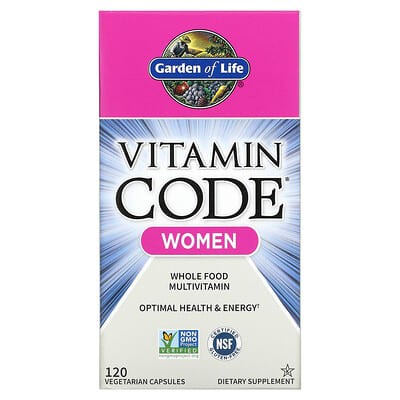

$34.29 $1.14 per serving


Product analysis
Women offers broad vitamin and mineral support for normal energy, immune and bone functions when intake is low. Unnamed blends make part of the formula difficult to assess.
AI assessment of the formula, label and price. How scoring works
Nutrient Quality41
Some mineral preparations are well identified, but several yeast-based sources do not fully establish the nutrient form. Unnamed blends also leave part of the ingredient quality uncertain.
Ingredient Transparency83
Amounts and most stated sources or forms are disclosed. Vitamin K declarations are not fully reconciled, and two blends lack individually identified components.
Value For Money33
The serving cost compares poorly for several nutrients, including vitamin K, iron and selenium. Many other ingredient contributions lack reliable comparisons, limiting the complete value picture.
Customer Satisfaction90
Customer ratings are very positive across a large review base. The extensive feedback gives useful support to the satisfaction picture without proving health benefits.
Product Focus10
The clearest role is filling nutrient gaps to support normal metabolism, immune function and bone nutrition. The broad formula and unnamed blends do not establish extra benefits once nutrient needs are met.
- Format
Capsule - Container
- 120 Capsule(s)
- Per serving
- $1.14
- Also available
 Women$58.26
- Customer rating
- 4.7 · 9,168 ratings
Goals

Impact
Highest effect
Folate · 800 mcg DFEVitamin B12 · 40.1 mcgVitamin D · 50 mcgVitamin K · 20 mcgBoron · 1 mgSelenium · 55 mcgZinc · 7.7 mgVitamin C · 90 mg
The B vitamins and folate provide nutritional availability when intake is low. Iron can help fill a dietary gap that would otherwise contribute to anaemia and fatigue. Iodine contributes to adequate intake needed to avoid deficiency-related thyroid problems. Other declared nutrients broaden nutritional availability, while larger amounts and special forms do not establish better outcomes above adequacy.
How this product is rated for Everyday Health
Ingredient fit80
Relevant declared nutrients contribute to nutritional support. Some small nutrient amounts are present but not counted, which limits the formula's contribution.
Goal fit
The relevant declared nutrients connect with general-health nutrition; additional purposes and ingredients limit how exclusively the formula addresses this goal.
Dose adequacy
Vitamin K's unresolved quantity limits the amount comparison; known nutrient amounts make varying contributions.
Pathways100
The strongest association is with energy metabolism cofactors. Contributions extend across several functional areas.
Depth
The strongest connection is energy metabolism cofactors, reflecting ingredient associations rather than demonstrated changes in health outcomes.
Breadth
Several nutrient-related functional areas meet the saved coverage threshold.
Evidence82
Vitamin B9 (Folate) leads the counted contribution. The evidence supports nutritional availability without establishing improved outcomes beyond adequate intake.
Evidence strength
Vitamin B9 (Folate) provides the strongest counted contribution, with practical relevance limited to nutritional availability when intake is low.
Studied preparation
The counted preparations are accepted in the nutrient comparison; chemical form and delivery do not establish additional health benefit.
Formulation logic98
No required partner or configured conflict was found. Vitamin K's unresolved quantity limits the amount comparison.
Partner coverage
No required partner is missing for the counted ingredients; this does not establish an added benefit from combining them.
Conflicts
No configured formulation conflict was found at the supplied nutrient amounts and partner declarations.
Effective doses
Vitamin K does not meet the amount threshold because its quantity is unresolved; the remaining counted ingredients meet it.
Coenzyme Q10 Not classified
No linked studies yet.

Impact
Highest effect
Vitamin C · 90 mgZinc · 7.7 mgVitamin A · 1080 mcgVitamin D · 50 mcgSelenium · 55 mcg
Vitamin A supports barrier nutrition, while zinc, vitamin D and selenium contribute to normal immune function. Iron, B6, B12 and folate can help when low intake impairs immune cells, without establishing routine infection prevention above adequacy. Vitamin E receives saved credit despite mixed, population-specific evidence. Vitamin C did not qualify at its declared amount; bromelain and ginger remain unconfirmed in the supplied ingredient inventory.
How this product is rated for Immunity
Ingredient fit60
Relevant nutrients provide varying contributions within a broad formula, with unresolved ingredients limiting additional attribution.
Goal fit
Relevant immune nutrients share the formula with numerous other actives.
Dose adequacy
Credited amounts contribute unevenly; vitamin C is below the threshold and bromelain and ginger remain unconfirmed.
Pathways100
Lymphocyte function and immune regulation is the strongest covered area. Barrier defense, immune regulation and oxidative balance reach substantial coverage.
Depth
Lymphocyte function and immune regulation has the strongest combined coverage.
Breadth
Barrier defense, immune regulation and oxidative balance reach substantial coverage.
Evidence100
Zinc leads the saved support finding. Credited preparations meet the saved criteria, within the specific evidence limits described for their roles.
Evidence strength
Zinc provides the strongest saved support; that position does not establish a probability of protection.
Studied preparation
Credited preparations meet the saved criteria, without establishing superiority of individual nutrient forms.
Formulation logic100
Credited ingredients clear the saved amount threshold and have no assessed missing partner or conflict.
Partner coverage
Credited ingredients work alone or have their relevant partners.
Conflicts
No assessed ingredient conflict was triggered.
Effective doses
All credited ingredients clear the saved minimum amount threshold, which is not proof of clinical effectiveness.

Impact
High effect
Vitamin K · 20 mcgVitamin D · 50 mcgManganese · 2.3 mgBoron · 1 mgZinc · 7.7 mgVitamin C · 90 mg
Vitamin D supports calcium absorption and deficiency-related mineralization; larger amounts do not establish extra fracture protection in adults with adequate status. Vitamin C supports normal collagen formation; correcting low intake is distinct from extra bone benefit when intake is adequate.
How this product is rated for Bone Health
Ingredient fit61
Relevant ingredients sit within a broader formula, so only part of the product is specifically connected to bone health. Amounts provide only partial support against the saved references; small or unresolved amounts limit what can be attributed to the formula.
Goal fit
Relevant ingredients sit within a broader formula, so only part of the product is specifically connected to bone health.
Dose adequacy
Amounts provide only partial support against the saved references; small or unresolved amounts limit what can be attributed to the formula.
Pathways80
The main recorded connection is calcium absorption and regulation. Coverage is concentrated in a limited set of bone-related processes, leaving other aspects without substantial support.
Depth
The strongest recorded connection concerns calcium absorption and regulation, with substantial coverage from the included ingredients.
Breadth
Coverage is concentrated in a limited set of bone-related processes, leaving other aspects without substantial support.
Evidence98
Zinc provides the strongest recorded evidence. The qualifying preparations match the supplied evidence.
Evidence strength
Zinc provides the strongest recorded ingredient evidence at a qualifying amount; its population and outcome limitations still apply.
Studied preparation
The qualifying preparations match those recognized in the supplied evidence; this does not show that the finished product was tested.
Formulation logic97
A supporting partner is missing for Vitamin D. Shared rubric rule, limiting the combination’s support. No listed formulation conflict was matched in the supplied findings. This is limited to the specified checks.
Partner coverage
A supporting partner is missing for Vitamin D. Shared rubric rule, limiting the combination’s support.
Conflicts
No listed formulation conflict was matched in the supplied findings. This is limited to the specified checks.
Effective doses
All ingredients included in this finding meet its minimum amount threshold; the threshold is not proof of clinical effectiveness.

Impact
High effect
Vitamin K · 20 mcgVitamin D · 50 mcgCoenzyme Q-10 · 425 mcgSelenium · 55 mcgVitamin B12 · 40.1 mcgVitamin B6 · 3.4 mgVitamin E · 15 mgFolate · 800 mcg DFENiacin · 16 mgVitamin C · 90 mg
Folate contributes to homocysteine metabolism, the main area recognized in the saved findings, but lowering homocysteine does not establish fewer cardiovascular events. Thiamin and selenium can fill nutritional gaps relevant to deficiency-related heart disease; extra benefit is not established when intake is adequate. The K1 and MK-4 declarations do not establish the MK-7 preparation associated with limited arterial-stiffness findings. Other low-amount actives do not contribute to the saved findings.
How this product is rated for Cardiovascular Support
Ingredient fit63
The qualifying nutrients provide the relevant contribution, with partial overall amount recognition. The broader formula or differing active amounts limits focus.
Goal fit
Some ingredients relate to cardiovascular support, while other actives broaden the formula beyond this goal.
Dose adequacy
Four ingredients meet the inclusion threshold; several other relevant actives are too low to contribute.
Pathways58
The strongest saved coverage is for homocysteine metabolism. Coverage meets the breadth threshold only for homocysteine metabolism.
Depth
The strongest saved coverage is for homocysteine metabolism.
Breadth
Coverage meets the breadth threshold only for homocysteine metabolism.
Evidence69
Folate leads the saved evidence finding, but homocysteine lowering does not establish routine cardiovascular-event reduction.
Evidence strength
Folate leads the saved evidence finding, but homocysteine lowering does not establish routine cardiovascular-event reduction.
Studied preparation
The qualifying ingredients receive preparation recognition in the saved findings; this does not establish that the whole product was tested.
Formulation logic100
The qualifying ingredients meet the inclusion threshold without a missing required partner. No configured conflict was identified.
Partner coverage
No missing required partner reduces the qualifying contributions.
Conflicts
No configured ingredient conflict was identified in the supplied findings.
Effective doses
The qualifying nutrients meet the minimum amount threshold used for inclusion; that threshold does not prove clinical effectiveness.

Impact
High effect
Coenzyme Q-10 · 425 mcgFolate · 800 mcg DFEVitamin B12 · 40.1 mcgVitamin K · 20 mcgVitamin D · 50 mcg
Vitamin D supports muscle function when deficiency is corrected, while vitamin B12 helps prevent neurological problems caused by low B12. Vitamin C supports collagen formation when intake is low; selenium and vitamin E participate in antioxidant defence. These nutritional roles do not establish additional anti-aging benefits when nutrient intake is adequate.
How this product is rated for Longevity
Ingredient fit59
The ingredient selection and amounts provide a partial picture of how this formula relates to age-related outcomes.
Goal fit
Relevant ingredients sit within a broader formula, so only part of its composition relates to this goal.
Dose adequacy
The included amounts only partly meet the saved amount references; unknown amounts cannot establish a contribution.
Pathways50
The represented mechanisms describe ingredient roles; they do not themselves establish preservation of function or longer life.
Depth
The strongest represented mechanism is antioxidant defence, a mechanistic connection rather than proof of slower aging.
Breadth
Coverage is concentrated in one mechanism rather than spread across several aging-related functions.
Evidence83
The human findings remain specific to the ingredient, preparation and outcome described.
Evidence strength
Vitamin D supplies the strongest included evidence contribution, while its specific human-outcome limitations still apply.
Studied preparation
The saved findings recognize the included preparations; this does not expand their supported outcomes or populations.
Formulation logic100
Partner requirements, identified conflicts and minimum amounts are considered separately, without assuming combination benefits.
Partner coverage
The included contributors can act independently or have the required partner; this does not establish added benefit from combining them.
Conflicts
No matching ingredient conflict was identified in the supplied assessment.
Effective doses
All included contributors meet the saved minimum amount threshold, which is not a proven minimum effective human dose.
Boron Not classified
No linked studies yet.
Ingredients
| Ingredient | Amount per serving | Score |
|---|---|---|
Vitamin A (Beta-Carotene) | 1080 mcg | |
Vitamin C (S. cerevisiae) | 90 mg | |
Vitamin D (D3) | 50 mcg | |
Vitamin E (D-Alpha-Tocopherol) | 15 mg | |
Vitamin K (K1) | 156 mcg | |
Thiamine | 3.24 mg | |
Riboflavin | 3.12 mg | |
Niacin (Niacinamide) | 16 mg | |
Vitamin B6 (S. cerevisiae) | 3.4 mg | |
Folate (S. cerevisiae) | 800 mcg DFE | |
Vitamin B12 (Methylcobalamin) | 40.1 mcg | |
Biotin (Saccharomyces cerevisiae) | 30 mcg | |
Pantothenic Acid (S. cerevisiae) | 10 mg | |
Iron (Brown Rice Chelate) | 8.1 mg | |
Iodine (organic Sea Kelp) | 75 mcg | |
Zinc (Brown Rice Chelate) | 7.7 mg | |
Selenium (S. cerevisiae) | 55 mcg | |
Manganese (Brown Rice Chelate) | 2.3 mg | |
Chromium (S. cerevisiae) | 35 mcg | |
Molybdenum (S. cerevisiae) | 45 mcg | |
Vitamin K2 (Menaquinone-4) | 20 mcg | |
CoQ10 | 425 mcg | |
Boron (S. cerevisiae) | 1 mg | |
Vanadium (S. cerevisiae) | 10 mcg | |
Raw Organic Fruit & Vegetable Blend | 586 mg | |
Raw Probiotic & Enzyme Blend | 40 mg | |
RAW Antioxidant & Immune Support Complex | 20 mg |
Selenium (S. cerevisiae) · 55 mcg OverallScore62
Each serving supplies 55 mcg of selenium from selenium-enriched yeast. The whole-product price works out to roughly $4.16 per 200 mcg of selenium.
How this ingredient is rated
Active Ingredient Quality & Bioavailability81
Selenium-enriched yeast is the identified source.
Selenium Chemical Form
Selenium-enriched yeast is the identified source, providing selenium in a yeast matrix.
Form Transparency & Isomer Specificity
The source is identified as selenium-enriched yeast.
Dose, Safety & Label Transparency70
A serving contains 55 mcg of selenium, a relatively small amount.
Dosage Efficacy Sweet Spot
A serving supplies 55 mcg of selenium, a relatively small amount.
Safety Margin & UL Adherence
The recorded serving amount does not exceed the limit used in the evaluation.
Value10
The whole-product price works out to roughly $4.16 per 200 mcg of selenium.
Price per 200 mcg Serving
The whole-product price works out to roughly $4.16 per 200 mcg of selenium.
Iron (Brown Rice Chelate) · 8.1 mg OverallScore32
A serving provides 8.1 mg iron, a small amount. Zinc is also listed, which the evaluation flags as a possible competitor for iron absorption.
How this ingredient is rated
Active Ingredient Quality & Bioavailability0
The available facts do not identify the iron form. Zinc is also listed, which the evaluation flags as a possible competitor for iron absorption.
Iron Chemical Form & Bioavailability
The available facts do not identify the iron form.
Absorption Support & Blocker Avoidance
Zinc is also listed, which the evaluation flags as a possible competitor for iron absorption.
Dose, Safety & Label Transparency70
The label lists 8.1 mg iron per serving, a small amount.
Elemental Iron Label Clarity
The label lists 8.1 mg iron per serving.
Dosage Effectiveness & Safety Range
A serving provides 8.1 mg iron, a small amount.
Value20
A whole-product serving costs about $1.14 and is labeled with 8.1 mg iron.
Price per Effective Serving
A whole-product serving costs about $1.14 and is labeled with 8.1 mg iron.
Boron (S. cerevisiae) · 1 mg OverallScore34
Each serving supplies 1 mg of boron, an amount the evaluation places at the maintenance level. The chemical form is not established in the saved facts.
How this ingredient is rated
Active Ingredient Quality & Bioavailability0
The saved facts do not establish the boron form or a trademarked or purity marker.
Boron Form & Bioavailability
The chemical form of boron is not established in the saved facts.
Trademarked & High-Purity Sources
The saved facts do not establish a trademarked source or a specific purity marker.
Dose, Safety & Label Transparency80
The label states 1 mg of boron per serving. The evaluation places that amount at the maintenance level.
Elemental Dose Transparency
The boron amount is stated as 1 mg per serving, separate from the source compound.
Dosage Efficacy & Safety Margin
The evaluation places 1 mg of boron per serving at the maintenance level.
Value10
Based on the whole-product serving price, 3 mg of boron costs about $3.43.
Price per 3mg Elemental Boron
Based on the whole-product serving price, 3 mg of boron costs about $3.43.
Alternative products
Report alternatives
Sources
Published studies used for the product analysis and the top-ranked studies for each ingredient and goal.
- [Comparative study of the urinary excretion of boron, calcium, magnesium and phosphorus in postmenopausal women with and without osteoporosis].
- Effect of dietary boron on mineral, estrogen, and testosterone metabolism in postmenopausal women.
- The relationship between boron and magnesium status and bone mineral density in the human: a review.
- Effects of boron supplementation on bone mineral density and dietary, blood, and urinary calcium, phosphorus, magnesium, and boron in female athletes.
- Metabolic responses of postmenopausal women to supplemental dietary boron and aluminum during usual and low magnesium intake: boron, calcium, and magnesium absorption and retention and blood mineral concentrations
- Association between RBC folate and lumbar bone mineral density in postmenopausal women, a cross-sectional study from NHANES 2009-2018.
- Genetic variants modify the associations of concentrations of methylmalonic acid, vitamin B-12, vitamin B-6, and folate with bone mineral density.
- Adequate Intake and Supplementation of B Vitamins, in Particular Folic Acid, can Play a Protective Role in Bone Health.
- Relation of homocysteine, folate, and vitamin B12 to bone mineral density of postmenopausal women.
- Dietary intake of folate, but not vitamin B2 or B12, is associated with increased bone mineral density 5 years after the menopause: results from a 10-year follow-up study in early postmenopausal women.
- Risk of Environmental Chemicals on Bone Fractures Is Independent of Low Bone Mass in US Adults: Insights from 2017 to 2018 NHANES.
- The Manganese-Bone Connection: Investigating the Role of Manganese in Bone Health.
- Associations of multiple metals with bone mineral density: A population-based study in US adults.
- Sex-specific associations of urinary mixed-metal concentrations with femoral bone mineral density among older people: an NHANES (2017-2020) analysis.
- Relationship between blood manganese and bone mineral density and bone mineral content in adults: A population-based cross-sectional study.
- Evaluating the Protective Role of Vitamin A Supplementation in Periodontal Health: A Comprehensive Systematic Review and Meta-Analysis.
- Dietary vitamin A intake and bone health in the elderly: the Rotterdam Study.
- Vitamin A and its dervatives effect on bone mineral density, a systematic review.
- Association of vitamins with bone mineral density and osteoporosis measured by dual-energy x-ray absorptiometry: a cross-sectional study.
- Association of dietary consumption and serum levels of vitamin A and β-carotene with bone mineral density in Chinese adults.