
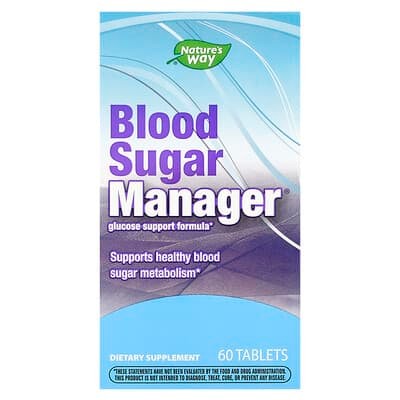

$20.15 $0.67 per serving


Product analysis
Blood Sugar Manager provides nutrients that can help fill dietary gaps and support normal energy metabolism. Its nutritional roles do not establish the blood-sugar benefit suggested by its name.
AI assessment of the formula, label and price. How scoring works
Nutrient Quality49
Several B-vitamin preparations are clearly identified, providing the strongest basis for judging the forms used. Quality advantages remain uncertain for much of the mineral and plant mixture.
Ingredient Transparency69
Ingredient amounts are stated and most forms are named. Some unspecified forms and missing mixture details make the more complex additions harder to compare.
Value For Money42
Value is mixed, with vitamin B6 and biotin comparing more favorably than niacin, vitamin B5 and choline. Value remains uncertain for several other ingredients.
Customer Satisfaction74
Customer ratings are strongly positive across several hundred reviews. They indicate satisfaction without proving blood-sugar effects.
Product Focus45
The clearest support is for normal metabolism and nutritional adequacy. The broad mixture does not establish blood-sugar management or an extra energy boost once nutrient needs are met.
- Format
Tablet - Container
- 60 Tablet(s)
- Per serving
- $0.67
- Customer rating
- 4.6 · 412 ratings
Goals

Impact
High effect
Biotin · 400 mcgNiacin · 37 mgVitamin B12 · 375 mcgRiboflavin · 56 mgThiamin · 56 mgVitamin B5 · 37 mgVitamin B6 · 25 mgZinc · 15 mgMagnesium · 200 mg
B vitamins help the body use carbohydrate, fat and protein for normal energy production, while magnesium and zinc support normal metabolic functions. These roles do not establish faster energy expenditure when intake is adequate. The formula's saved findings largely reflect these nutrient amounts; benefits relating to blood sugar are a separate outcome from increasing metabolic rate.
How this product is rated for Metabolism Support
Ingredient fit72
B vitamins and minerals provide the ingredient connections retained in the saved findings. Their amount comparisons describe the declared serving rather than a demonstrated metabolism-boosting regimen.
Goal fit
B vitamins and minerals account for the goal-related ingredient findings, while the product's range of other uses and other active ingredients make it less focused on this goal.
Dose adequacy
The declared amounts receive partial amount findings overall; meeting these comparisons does not establish a proven calorie-burning dose.
Pathways0
No measured energy-expenditure pathway receives a contribution in the saved findings. None meets the saved coverage threshold.
Depth
No measured energy-expenditure pathway receives a contribution in the saved findings.
Breadth
No pathway meets the saved coverage threshold; this is distinct from proving the ingredients have no biological effects.
Evidence100
Vitamin B1 (Thiamin) provides the strongest saved evidence finding among the qualifying amounts; this does not itself demonstrate a general metabolism boost.
Evidence strength
Vitamin B1 (Thiamin) provides the strongest saved evidence finding among the qualifying amounts; this does not itself demonstrate a general metabolism boost.
Studied preparation
The qualifying ingredients are treated as matching studied preparations in the saved findings; preparation matching alone does not establish a rise in energy expenditure.
Formulation logic100
The retained ingredients have no missing required partner or matched configured conflict. They meet the saved amount criterion, which does not establish additional calorie burning.
Partner coverage
The included ingredient contributions do not lack a required partner; this does not establish extra benefit from combining them.
Conflicts
No configured ingredient conflict was matched in the supplied facts; this finding does not establish overall safety.
Effective doses
All ingredients retained for this amount check meet its comparison criterion; that criterion is not a proven dose for increased calorie burning.

Impact
Moderate effect
Vitamin B5 · 37 mgMagnesium · 200 mgRiboflavin · 56 mgThiamin · 56 mgVitamin B12 · 375 mcg
B vitamins support normal energy metabolism and blood formation, while 200 mg of magnesium may help fill a dietary gap associated with tiredness. These nutritional roles do not imply an immediate stimulant effect or additional energy once needs are met.
How this product is rated for Energy
Ingredient fit68
The mix contains energy-related ingredients alongside actives with less direct support for this goal. The relevant amounts largely meet the saved dose comparisons, with some smaller or unresolved contributions.
Goal fit
The mix contains energy-related ingredients alongside actives with less direct support for this goal.
Dose adequacy
The relevant amounts largely meet the saved dose comparisons, with some smaller or unresolved contributions.
Pathways0
The saved finding identifies nutritional contributions but no coverage of the listed alertness, muscle, mitochondrial, stress-fatigue or blood-flow areas. None of the listed energy areas reaches the saved coverage benchmark.
Depth
The saved finding identifies nutritional contributions but no coverage of the listed alertness, muscle, mitochondrial, stress-fatigue or blood-flow areas.
Breadth
None of the listed energy areas reaches the saved coverage benchmark.
Evidence88
Magnesium provides the strongest support in the supplied finding, within the population and nutritional limits of its evidence. The relevant ingredients meeting the saved amount benchmark have accepted preparation support.
Evidence strength
Magnesium provides the strongest support in the supplied finding, within the population and nutritional limits of its evidence.
Studied preparation
The relevant ingredients meeting the saved amount benchmark have accepted preparation support.
Formulation logic100
The relevant ingredients can contribute alone or have the needed partner present. No conflict was flagged by the supplied ingredient checks. 8 of 8 included ingredients reach the saved minimum amount benchmark.
Partner coverage
The relevant ingredients can contribute alone or have the needed partner present.
Conflicts
No conflict was flagged by the supplied ingredient checks.
Effective doses
8 of 8 included ingredients reach the saved minimum amount benchmark.
Vitamin B5 Not classified
No linked studies yet.

Impact
Highest effect
Folate · 600 mcg DFEVitamin B12 · 375 mcgMagnesium · 200 mgZinc · 15 mg
B vitamins, folate and magnesium provide nutrients involved in metabolism and blood formation. Zinc adds a nutritional contribution relevant to immune functions, but these ingredients are most useful for filling low intakes. The supplied general-health information does not establish blood-sugar management benefits from this formula or extra benefit from high B-vitamin amounts.
How this product is rated for Everyday Health
Ingredient fit73
Relevant nutrients contribute to this goal, while other actives add no established general-health contribution in the supplied findings. The counted ingredients supply differing amounts relative to their saved comparisons, so their nutritional contributions vary.
Goal fit
Relevant nutrients contribute to this goal, while other actives add no established general-health contribution in the supplied findings.
Dose adequacy
The counted ingredients supply differing amounts relative to their saved comparisons, so their nutritional contributions vary.
Pathways80
The strongest saved contribution concerns energy metabolism cofactors, reflecting the relevant nutrient amounts rather than a guaranteed health outcome. Two areas contribute meaningfully in the saved findings, reflecting the mix of relevant nutrients.
Depth
The strongest saved contribution concerns energy metabolism cofactors, reflecting the relevant nutrient amounts rather than a guaranteed health outcome.
Breadth
Two areas contribute meaningfully in the saved findings, reflecting the mix of relevant nutrients.
Evidence86
Magnesium leads the saved evidence finding; its supported role here is conditional nutrient availability rather than additional benefit above adequate intake.
Evidence strength
Magnesium leads the saved evidence finding; its supported role here is conditional nutrient availability rather than additional benefit above adequate intake.
Studied preparation
The counted preparations satisfy the saved preparation check; this does not establish superiority of their forms or delivery methods.
Formulation logic100
The counted ingredients can contribute independently or have the partners required by the supplied findings. No configured ingredient conflict was identified in the supplied findings.
Partner coverage
The counted ingredients can contribute independently or have the partners required by the supplied findings.
Conflicts
No configured ingredient conflict was identified in the supplied findings.
Effective doses
All ingredients counted in this check meet its minimum amount criterion; that criterion does not prove a clinically effective dose.

Impact
High effect
Magnesium · 200 mgVitamin B12 · 375 mcgVitamin B6 · 25 mgFolate · 600 mcg DFE
Folate, B6 and B12 participate in homocysteine metabolism, but lowering this blood marker does not generally establish fewer major cardiac events. Thiamin supports normal function and matters when intake is deficient; selenium’s heart-related role is also tied to deficiency. Magnesium adds limited, inconsistent blood-pressure support.
How this product is rated for Heart Health
Ingredient fit61
The formula includes relevant nutrients, though its broad nutritional purpose and uneven amounts limit heart-specific focus.
Goal fit
Several nutrients relate to heart function, within a broader formulation serving many nutritional purposes.
Dose adequacy
Declared amounts contribute unevenly; the saved finding reflects the nutrients that qualify, without implying proven heart protection.
Pathways60
The strongest saved contribution concerns homocysteine metabolism, chiefly from B vitamins. Coverage is concentrated in homocysteine metabolism, rather than spread across several heart-related processes.
Depth
The strongest saved contribution concerns homocysteine metabolism, chiefly from B vitamins.
Breadth
Coverage is concentrated in homocysteine metabolism, rather than spread across several heart-related processes.
Evidence89
The strongest saved contributor is a nutrient with a qualified role; homocysteine changes do not establish general cardiac-event prevention.
Evidence strength
The strongest saved contributor is a nutrient with a qualified role; homocysteine changes do not establish general cardiac-event prevention.
Studied preparation
The saved finding recognizes qualifying nutrient preparations; their forms alone do not establish superior heart-health effects.
Formulation logic100
The counted ingredients have no missing required partners or configured conflicts, and meet the saved minimum amount criterion.
Partner coverage
The counted ingredients do not lack a required partner in the saved findings; this does not demonstrate added benefit from combining them.
Conflicts
No configured stimulant or high-sodium conflict was identified in the supplied facts.
Effective doses
The counted ingredients meet the saved minimum amount criterion, which does not establish a proven clinical dose.

Impact
Moderate effect
Biotin · 400 mcgZinc · 15 mg
Zinc may help reduce diffuse shedding when a zinc shortage is behind it. That benefit concerns correcting low zinc, rather than stimulating extra growth in someone who already gets enough. The other nutrients don't turn that conditional benefit into a reliable way to regrow hair.
How this product is rated for Hair Health
Ingredient fit60
Zinc provides a conditional connection to shedding caused by low zinc. Other ingredients have differing roles and do not automatically add hair-regrowth benefits.
Goal fit
Zinc relates to deficiency-associated shedding; ingredients aimed at other uses do not necessarily improve hair growth.
Dose adequacy
Vitamin B12: 375 mcg; Zinc: 15 mg; Vitamin B7 (Biotin): 400 mcg per selected serving; these amounts are comparisons, not a promise of hair growth.
Pathways4
Copper has a role in connective-tissue biology, but that role does not demonstrate routine oral hair regrowth.
Depth
Copper has a role in connective-tissue biology, but that role does not demonstrate routine oral hair regrowth.
Breadth
Connective-tissue biology is relevant to hair structure but does not show broad effects on the causes of hair loss.
Evidence98
Zinc’s useful hair connection is correction of low zinc associated with shedding; routine regrowth in adults getting enough remains uncertain.
Evidence strength
Zinc’s useful hair connection is correction of low zinc associated with shedding; routine regrowth in adults getting enough remains uncertain.
Studied preparation
Zinc’s useful hair connection is correction of low zinc associated with shedding; routine regrowth in adults getting enough remains uncertain.
Formulation logic100
No particular ingredient conflict or missing required partner is identified. That does not imply an added benefit from combining the ingredients.
Partner coverage
No required ingredient partner is identified as missing.
Conflicts
No particular ingredient conflict is identified.
Effective doses
Zinc has a declared amount, but that does not guarantee hair regrowth.
Ingredients
| Ingredient | Amount per serving | Score |
|---|---|---|
Total Carbohydrate | 1 Gram(s) | |
Thiamine (Thiamine Hydrochloride) | 56 mg | |
Riboflavin | 56 mg | |
Niacin (Niacinamide) | 37 mg | |
Vitamin B6 (Pyridoxine Hydrochloride) | 25 mg | |
Folate | 600 mcg DFE | |
Vitamin B12 (Methylcobalamin) | 375 mcg | |
Biotin | 400 mcg | |
Pantothenic Acid (Calcium D-Pantothenate) | 37 mg | |
Choline (Choline Bitartrate) | 30 mg | |
Magnesium (Magnesium Oxide) | 200 mg | |
Zinc (Zinc Gluconate) | 15 mg | |
Copper (Copper Gluconate) | 1 mg | |
Sodium | 5 mg | |
Alpha-Lipoic Acid | 250 mg | |
Bitter Melon Fruit Extract | 200 mg | |
Gymnema leaf extract | 200 mg | |
Bayberry Bark, Leaf Extract (Bayberry Bark Extract, Bayberry Leaf Extract) | 100 mg | |
Cinnamon Bark Extract (Cinnamomum aromaticum bark Extract, Flavonoids) | 100 mg | |
Bilberry fruit extract | 40 mg | |
Vanadium (Vanadyl Sulfate) | 200 mcg |
Niacin (Niacinamide) · 37 mg OverallScore65
A serving provides 37 mg of niacin as niacinamide. Niacinamide is generally less associated with flushing than nicotinic acid.
How this ingredient is rated
Active Ingredient Quality & Bioavailability86
The niacin is supplied as niacinamide, a standard form of vitamin B3.
Niacin Form & Goal Alignment
Niacinamide provides niacin in a standard form for general use.
Precursor Source Quality
The identified source is niacinamide; the available facts do not identify an NR or NMN precursor.
Dose, Safety & Label Transparency67
A serving supplies 37 mg of niacin as niacinamide. Niacinamide is generally less associated with flushing than nicotinic acid.
Clarity of Chemical Form
The niacin amount and niacinamide form are identified in the stored information.
Form-Specific Dosage Efficacy
A serving supplies 37 mg of niacin as niacinamide.
Flush Risk & Safety Labeling
Niacinamide is generally less associated with flushing than nicotinic acid; the available facts do not identify a no-flush claim.
Value20
The whole-product price is about $0.67 per serving, a high price when comparing niacin alone.
Price Per Effective Serving
The whole-product price is about $0.67 per serving, a high price when comparing niacin alone.
Thiamin (Thiamine Hydrochloride) · 56 mg OverallScore76
Each serving provides 56 mg of thiamin as thiamine hydrochloride, a standard water-soluble form. The whole-product price is about $1.20 per 100 mg of thiamin, which the evaluation considers high.
How this ingredient is rated
Active Ingredient Quality & Bioavailability70
Thiamine Hydrochloride is a standard water-soluble form of thiamin.
Thiamin Chemical Form
Thiamine Hydrochloride is a standard water-soluble form of thiamin.
Excipient Purity
The evaluation flagged no configured artificial colors or sweeteners; that does not establish the absence of other excipients.
Dose, Safety & Label Transparency100
The label specifies 56 mg of thiamin per serving, a high amount in the evaluation.
Thiamin Dosage Potency
The labeled 56 mg of thiamin per serving is a high amount in the evaluation.
Label Transparency & Proprietary Blends
The label specifies 56 mg of thiamin per serving.
Value40
At about $1.20 per 100 mg of thiamin, based on the whole-product price, the cost is high in the evaluation.
Price per Declared Dose
At about $1.20 per 100 mg of thiamin, based on the whole-product price, the cost is high in the evaluation.
Vanadium (Vanadyl Sulfate) · 200 mcg OverallScore72
A serving provides 200 mcg of vanadium as vanadyl sulfate. The whole-product serving costs about $0.67.
How this ingredient is rated
Active Ingredient Quality & Bioavailability56
The vanadium is supplied as vanadyl sulfate. Manufacturing and testing standards are not available in the saved facts.
Vanadium Form Quality
The vanadium form is vanadyl sulfate.
Manufacturing & Purity Signals
The saved information does not show a manufacturing standard or third-party testing claim.
Dose, Safety & Label Transparency100
The serving supplies 200 mcg of vanadium, an amount within the evaluation’s favored bands. The vanadium amount is stated as 200 mcg per serving, with vanadyl sulfate named as its source.
Dose Efficacy & Safety Balance
The serving supplies 200 mcg of vanadium, an amount within the evaluation’s favored bands.
Elemental Weight Transparency
The vanadium amount is stated as 200 mcg per serving, with vanadyl sulfate named as its source.
Value50
A whole-product serving costs about $0.67 and supplies 200 mcg of vanadium.
Price Per Serving Efficiency
A whole-product serving costs about $0.67 and supplies 200 mcg of vanadium.
Alternative products
Report alternatives
Sources
Published studies used for the product analysis and the top-ranked studies for each ingredient and goal.
- Magnesium-L-threonate improves sleep quality and daytime functioning in adults with self-reported sleep problems: A randomized controlled trial.
- Total magnesium intake and risk of frailty in older women.
- Red blood cell magnesium and chronic fatigue syndrome.
- Exercise, magnesium and immune function.
- Physicochemical properties of and volatile compounds in riboflavin fortified cloudy apple juice; study of its effect on job fatigue among Egyptian construction workers.
- Vitamin B status in patients with chronic fatigue syndrome.
- B-vitamins, related vitamers, and metabolites in patients with quiescent inflammatory bowel disease and chronic fatigue treated with high dose oral thiamine.
- Metabolic features of chronic fatigue syndrome.
- Effectiveness of Riboflavin in Inherited Metabolic Diseases: A Systematic Review
- Influence of thiamin supplementation on the health and general well-being of an elderly Irish population with marginal thiamin deficiency.
- Randomised clinical trial: high-dose oral thiamine versus placebo for chronic fatigue in patients with quiescent inflammatory bowel disease.
- Dietary reference values for thiamin.
- Effects of thiamine supplementation on exercise-induced fatigue.
- Long-term maintenance treatment with 300 mg thiamine for fatigue in patients with inflammatory bowel disease: results from an open-label extension of the TARIF study.
- Vanadium exposure-induced neurobehavioral alterations among Chinese workers.
- A cross-sectional analysis of air pollution in primary schools and children fatigue.
- A new perspective on vitamin B12 deficiency in rheumatology: a case-based review.
- Effects of Vitamin B12 Supplementation on Cognitive Function, Depressive Symptoms, and Fatigue: A Systematic Review, Meta-Analysis, and Meta-Regression.
- Patients' experiences with methylcobalamin injections in amyotrophic lateral sclerosis.
- Cobalamin deficiency: clinical picture and radiological findings.