
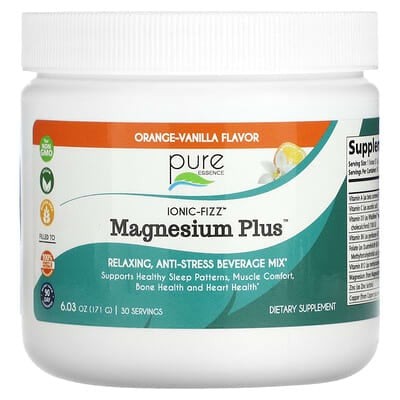
Magnesium Plus Orange-Vanilla Flavor

Goals
$25.41 $0.84 per serving


Product analysis
Magnesium Plus Orange-Vanilla Flavor can help fill a magnesium gap to support normal muscle function, energy use and bone maintenance. Its unidentified blend leaves part of the formula unclear.
AI assessment of the formula, label and price. How scoring works
Nutrient Quality44
The magnesium carbonate form offers limited absorption potential, while the folate and potassium forms are more favorable. The quality of several other preparations remains uncertain, so the combination does not establish better absorption as a whole.
Ingredient Transparency74
Amounts and most ingredient forms are listed, making much of the formula easy to check. The blend components are not identified, so its total amount does not tell you what it contains.
Value For Money41
The potassium contribution offers favorable value, but the magnesium form offers poor value at the serving price. Value for many of the added ingredients remains uncertain, so the wider mixture does not establish a better buy.
Customer Satisfaction79
Customers generally rate the product positively, with a review pool of hundreds. These ratings describe satisfaction rather than proving effectiveness or safety.
Product Focus28
Magnesium supplies the clearest reason to choose the formula, particularly for filling a dietary gap. The many added ingredients and unidentified blend make its wider health aims harder to judge.
- Format
Powder - Container
- 6 Ounce(s)
- Per serving
- $0.84
- Also available
 Magnesium Plus Orange-Vanilla Flavor$37.01
- Customer rating
- 4.8 · 478 ratings
Goals

Impact
Moderate effect
Vitamin D · 2.5 mcgMagnesium · 300 mgVitamin B12 · 30 mcgPotassium · 100 mg
Magnesium provides a substantial nutritional contribution, alongside B6, B12, folate and vitamin C for needs relevant to fatigue. The potential benefit is greatest when filling a dietary gap rather than providing extra energy in a well-nourished adult.
How this product is rated for Energy
Ingredient fit68
The selection spans several purposes, with part of its ingredients relevant to nutritional energy support. The assessed amounts largely match the saved ingredient comparisons.
Goal fit
The selection spans several purposes, with part of its ingredients relevant to nutritional energy support.
Dose adequacy
The assessed amounts largely match the saved ingredient comparisons.
Pathways0
The saved findings identify no contribution across the reviewed energy mechanisms. No reviewed mechanism reaches the saved coverage threshold.
Depth
The saved findings identify no contribution across the reviewed energy mechanisms.
Breadth
No reviewed mechanism reaches the saved coverage threshold.
Evidence88
Magnesium provides the strongest saved ingredient finding, with the practical benefit dependent on nutritional need. The qualifying preparations match the saved reviewed comparisons.
Evidence strength
Magnesium provides the strongest saved ingredient finding, with the practical benefit dependent on nutritional need.
Studied preparation
The qualifying preparations match the saved reviewed comparisons.
Formulation logic100
No missing required ingredient partner was identified. No configured ingredient conflict was identified in the saved findings. All ingredients assessed for amounts reach the saved minimum comparison level.
Partner coverage
No missing required ingredient partner was identified.
Conflicts
No configured ingredient conflict was identified in the saved findings.
Effective doses
All ingredients assessed for amounts reach the saved minimum comparison level.

Impact
Highest effect
Folate · 50 mcgVitamin B12 · 30 mcgVitamin D · 2.5 mcgMagnesium · 300 mgBoron · 500 mcgZinc · 2 mgVitamin C · 250 mg
Magnesium supplies a substantial nutrient contribution that can help fill a dietary gap. Its connection to general health is nutritional availability, without establishing extra benefit when intake is adequate. The declared form does not establish superior outcomes, and a serving amount is not a measure of absorption. Vitamin C and B6 add nutrient availability.
How this product is rated for Everyday Health
Ingredient fit71
Relevant ingredients form only part of a formula that also addresses other goals.
Goal fit
Relevant ingredients form only part of a formula that also addresses other goals.
Dose adequacy
The included amounts partly meet the saved references; an unresolved amount cannot establish a dose contribution.
Pathways80
The strongest represented mechanism is energy metabolism cofactors. This describes ingredient roles rather than demonstrated health improvement.
Depth
The strongest represented mechanism is energy metabolism cofactors. This describes ingredient roles rather than demonstrated health improvement.
Breadth
Several mechanisms are represented, without establishing an equally broad range of health benefits.
Evidence86
Magnesium supplies the strongest included evidence contribution; preparation and population limitations still apply.
Evidence strength
Magnesium supplies the strongest included evidence contribution; preparation and population limitations still apply.
Studied preparation
The included preparations match the saved references, without transferring nutrient availability into broader health benefits.
Formulation logic100
No matching ingredient conflict was identified in the supplied findings.
Partner coverage
The included contributors can act independently or have their required partner; this does not establish combination synergy.
Conflicts
No matching ingredient conflict was identified in the supplied findings.
Effective doses
All included contributors meet the saved minimum amount threshold, which is not a proven minimum effective dose.

Impact
High effect
Potassium · 100 mgMagnesium · 300 mgVitamin D · 2.5 mcgVitamin B12 · 30 mcgVitamin B6 · 1 mgFolate · 50 mcgVitamin C · 250 mg
Magnesium contributes to vascular function, although findings for arterial stiffness and blood pressure are inconsistent and more plausible with low magnesium status or elevated blood pressure. Potassium may help blood pressure when habitual intake is low; the supplied serving remains below the exposures in the cited trials. The main connection is mineral support for vascular tone, with limited support for broader cardiovascular effects.
How this product is rated for Cardiovascular Support
Ingredient fit55
The formula has a mineral contribution to vascular support alongside ingredients serving other purposes.
Goal fit
Relevant nutrients share the formula with other actives, so its focus extends beyond cardiovascular support.
Dose adequacy
Magnesium and potassium contribute at disclosed amounts, although potassium remains below the daily exposures in the supplied trials.
Pathways58
Vascular tone and sodium balance are the strongest area. The covered mechanisms do not establish prevention of cardiovascular events.
Depth
Vascular tone and sodium balance are the strongest area.
Breadth
Only vascular tone meets the saved coverage threshold; antioxidant-related coverage remains limited.
Evidence86
Potassium leads the saved evidence findings, but its blood-pressure benefit depends partly on low habitual intake.
Evidence strength
Potassium leads the saved evidence findings, but its blood-pressure benefit depends partly on low habitual intake.
Studied preparation
The credited ingredients were treated as matching reviewed preparations; that match does not resolve limits on cardiovascular benefit.
Formulation logic100
The credited ingredients have no unmet partner requirement, and the supplied checks found no matched conflict. Their counted amounts meet the saved minimum contribution threshold.
Partner coverage
No credited ingredient has an unmet partner requirement; this does not establish added benefit from combining them.
Conflicts
No conflict was matched by the supplied checks.
Effective doses
All counted ingredients meet the saved minimum amount threshold; this is not a proven effective dose or a dosing recommendation.

Impact
High effect
Magnesium · 300 mgVitamin B12 · 30 mcgVitamin B6 · 1 mgFolate · 50 mcgVitamin D · 2.5 mcg
Magnesium has a limited connection to blood-pressure support, with small and inconsistent effects in the supplied evidence. Potassium may also support blood pressure depending on baseline intake and blood pressure, but this serving does not establish a studied daily replacement regimen. The declared magnesium form does not establish superior cardiovascular effects. One serving does not establish the repeated exposure used in trials.
How this product is rated for Heart Health
Ingredient fit53
Magnesium supplies a meaningful declared amount for the limited blood-pressure comparison.
Goal fit
The formula has relevant ingredients alongside a wider range of ingredients serving other purposes.
Dose adequacy
The declared amounts receive a partial contribution; some are below the exposure scale used for the relevant comparisons.
Pathways56
The strongest represented route is electrolyte and vascular-tone balance. This route does not by itself establish prevention of cardiovascular events.
Depth
The strongest represented route is electrolyte and vascular-tone balance, which describes a biological route rather than a demonstrated reduction in heart events.
Breadth
Only electrolyte and vascular-tone balance is substantially represented; coverage of other listed routes is limited or absent.
Evidence89
The evidence concerns limited, population-specific vascular or nutrient findings.
Evidence strength
Magnesium provides the leading saved evidence contribution, with benefits limited to the specific population and outcome described.
Studied preparation
The contributing preparations are accepted as studied in the supplied findings; that does not establish product-level trial equivalence.
Formulation logic100
The contributing ingredients have no missing required partners or configured conflicts.
Partner coverage
The contributing ingredients have no missing required partners in the supplied findings.
Conflicts
No configured ingredient conflict was identified in the supplied facts.
Effective doses
All contributing ingredients meet the minimum amount criterion used in the saved findings; that criterion is not a proven effective clinical dose.

Impact
High effect
Magnesium · 300 mgVitamin D · 2.5 mcgCopper · 0.25 mgManganese · 1 mgBoron · 500 mcgZinc · 2 mgVitamin C · 250 mg
Magnesium provides the main mineral contribution, and vitamin C and copper support the collagen framework of bone, especially when intake is low. Their normal roles do not establish extra bone strength when nutrition is adequate. Potassium bicarbonate cannot inherit the mixed bone-density findings from potassium citrate trials. Bamboo's mass does not establish a usable silicon amount, and the small vitamin D quantity supplies limited exposure.
How this product is rated for Bone Health
Ingredient fit70
The credited nutrients give the product a focused bone-health connection. The counted amounts provide partial exposure overall against the saved comparison benchmarks.
Goal fit
The credited nutrients give the product a focused bone-health connection.
Dose adequacy
The counted amounts provide partial exposure overall against the saved comparison benchmarks.
Pathways51
The strongest saved finding concerns bone mineral supply. The saved support is concentrated in one pathway.
Depth
The strongest saved finding concerns bone mineral supply.
Breadth
The saved support is concentrated in one pathway.
Evidence93
Magnesium leads the saved evidence finding; its strongest supported role is nutritional gap filling, without reliable routine fracture-prevention evidence.
Evidence strength
Magnesium leads the saved evidence finding; its strongest supported role is nutritional gap filling, without reliable routine fracture-prevention evidence.
Studied preparation
Potassium's preparation is not accepted as studied; potassium citrate findings cannot be transferred to this declaration.
Formulation logic100
No counted ingredient lacks a required partner in the saved finding; this does not establish added combination benefits. All counted ingredients meet the saved amount threshold; that threshold does not establish clinical effectiveness.
Partner coverage
No counted ingredient lacks a required partner in the saved finding; this does not establish added combination benefits.
Conflicts
No configured ingredient conflict was triggered by the supplied facts.
Effective doses
All counted ingredients meet the saved amount threshold; that threshold does not establish clinical effectiveness.

Impact
High effect
Magnesium · 300 mg
Magnesium supplies the main connection to sleep, with human findings suggesting possible modest improvements in people reporting poor sleep. The evidence is uncertain and does not establish an immediate sleep-inducing effect or a benefit for already well-sleeping adults. This serving supplies 300 mg as magnesium carbonate. Findings from a bisglycinate trial do not establish that carbonate has the same effect, while the other nutrients do not add established sleep benefits at these amounts.
How this product is rated for Sleep Support
Ingredient fit53
Magnesium is the only ingredient counted toward sleep at this serving amount. The wider nutrient blend makes the formula less specifically focused on sleep.
Goal fit
Magnesium has a relevant connection, but the numerous other actives broaden the formula beyond sleep.
Dose adequacy
The 300 mg magnesium serving is near the upper-support part of the saved amount curve.
Pathways47
The saved contribution is concentrated in neural calming through magnesium, without broad coverage of other sleep routes.
Depth
Neural calming is the strongest and only substantially covered route.
Breadth
Only neural calming reaches the saved coverage threshold.
Evidence98
Magnesium supplies the evidence foundation, although human sleep findings remain uncertain and preparation-specific.
Evidence strength
Magnesium is the strongest supported counted ingredient; that ranking does not imply a large clinical effect.
Studied preparation
The saved findings accept the magnesium preparation without proving carbonate equivalent to the specific preparations tested clinically.
Formulation logic100
Magnesium does not require a partner, and no evaluated conflict was found. Zinc, B6 and vitamin D are below the saved amount threshold.
Partner coverage
Magnesium can contribute independently.
Conflicts
No evaluated ingredient conflict was identified.
Effective doses
Magnesium reaches the saved amount threshold; zinc, B6 and vitamin D do not.
Ingredients
| Ingredient | Amount per serving | Score |
|---|---|---|
Vitamin A (Beta-Carotene) | 150 mcg | |
Vitamin C (Ascorbic Acid) | 250 mg | |
Vitamin D3 | 2.5 mcg | |
Vitamin B6 (Pyridoxine Hydrochloride) | 1 mg | |
Folate (L-5-Methyltetrahydrofolate) | 50 mcg | |
Vitamin B12 (Methylcobalamin) | 30 mcg | |
Magnesium (Magnesium Carbonate) | 300 mg | |
Zinc (Zinc Lactate) | 2 mg | |
Copper (Copper Gluconate) | 0.25 mg | |
Manganese (Manganese Gluconate) | 1 mg | |
Potassium (Potassium Bicarbonate) | 100 mg | |
Bamboo extract | 60 mg | |
ionic Sea Minerals | 10 mg | |
Boron (Boron Citrate) | 500 mcg |
Folate (L-5-Methyltetrahydrofolate) · 50 mcg OverallScore48
A serving lists 50 mcg of folate with L-5-MTHF and its glucosamine salt. The available information does not establish DFE or a comparable single-source amount.
How this ingredient is rated
Active Ingredient Quality & Bioavailability100
L-5-MTHF and its glucosamine salt are identified; their proportions are not established in the available information.
Folate Form Hierarchy
The identified forms are L-5-MTHF and its glucosamine salt, both forms of active folate; their proportions are unknown.
Patented Sources & Isomeric Purity
The available information indicates a branded folate source.
Dose, Safety & Label Transparency0
The serving lists 50 mcg of folate, but the mixed-source amount has no established DFE basis for this assessment.
Folate Dosage by Declared Basis
The stated 50 mcg is a mixed-source folate amount; DFE and a comparable single-source basis are not established.
Value40
The whole-product serving costs about $0.85.
Price per Bioavailable Serving
The whole-product serving costs about $0.85.
Potassium (Potassium Bicarbonate) · 100 mg OverallScore78
A serving supplies 100 mg of potassium as bicarbonate, a form favored by the evaluation. The whole-product serving costs about $0.85.
How this ingredient is rated
Active Ingredient Quality & Bioavailability100
Potassium bicarbonate is the named form.
Potassium Form Quality
Bicarbonate is favored by the evaluation’s form policy, though the form alone does not establish better absorption.
Dose, Safety & Label Transparency46
The serving contains 100 mg of potassium. The saved facts do not show explicit elemental-potassium wording.
Potassium Dosage Potency
A serving supplies a relatively modest 100 mg of potassium.
Elemental Yield Transparency
A potassium amount is stated, but the saved facts do not show the explicit wording “elemental potassium.”
Value100
The whole-product serving price is relatively low.
Potassium Value Efficiency
A serving of the whole product costs about $0.85.
Magnesium (Magnesium Carbonate) · 300 mg OverallScore48
A serving provides 300 mg of magnesium as magnesium carbonate. The whole-product serving costs about $0.85.
How this ingredient is rated
Active Ingredient Quality & Bioavailability14
The magnesium is supplied as magnesium carbonate.
Magnesium Form & Absorption Potential
The named form is magnesium carbonate.
Patented Materials & Chelation Quality
No qualifying branded or fully chelated claim is identified in the saved facts.
Dose, Safety & Label Transparency100
The serving provides 300 mg of elemental magnesium. The evaluation records vitamin B6, vitamin D or boron in a positive amount, but the saved facts do not specify which.
Elemental Yield Transparency
The amount of elemental magnesium is stated as 300 mg per serving.
Therapeutic Dosage Alignment
Each serving provides 300 mg of magnesium.
Synergistic Formulation Logic
The evaluation records vitamin B6, vitamin D or boron in a positive amount, but the saved facts do not specify which.
Value10
The whole-product serving costs about $0.85.
Price Per Elemental Quality
The whole-product serving costs about $0.85.
Alternative products
Report alternatives
Sources
Published studies used for the product analysis and the top-ranked studies for each ingredient and goal.
- [Comparative study of the urinary excretion of boron, calcium, magnesium and phosphorus in postmenopausal women with and without osteoporosis].
- Effect of dietary boron on mineral, estrogen, and testosterone metabolism in postmenopausal women.
- The relationship between boron and magnesium status and bone mineral density in the human: a review.
- Effects of boron supplementation on bone mineral density and dietary, blood, and urinary calcium, phosphorus, magnesium, and boron in female athletes.
- Metabolic responses of postmenopausal women to supplemental dietary boron and aluminum during usual and low magnesium intake: boron, calcium, and magnesium absorption and retention and blood mineral concentrations
- The Association between Dietary and Circulating Copper Levels and Osteoporosis: a Scoping Review.
- Association between dietary copper, iron, zinc, selenium intake and osteopenia or osteoporosis in elderly hypertensive patients: a retrospective cohort study.
- Associations of dietary copper intake with total bone mineral density and lumbar spine bone mineral density in American adults.
- The association between dietary mineral intake and bone mineral density: a cross-sectional study.
- Association between dietary copper intake and bone mineral density in children and adolescents aged 8-19 years: A cross-sectional study.
- Association between RBC folate and lumbar bone mineral density in postmenopausal women, a cross-sectional study from NHANES 2009-2018.
- Genetic variants modify the associations of concentrations of methylmalonic acid, vitamin B-12, vitamin B-6, and folate with bone mineral density.
- Adequate Intake and Supplementation of B Vitamins, in Particular Folic Acid, can Play a Protective Role in Bone Health.
- Relation of homocysteine, folate, and vitamin B12 to bone mineral density of postmenopausal women.
- Dietary intake of folate, but not vitamin B2 or B12, is associated with increased bone mineral density 5 years after the menopause: results from a 10-year follow-up study in early postmenopausal women.
- Association between Serum Magnesium and Fractures: A Systematic Review and Meta-Analysis of Observational Studies.
- Bioabsorbable Magnesium-Based Materials Potential and Safety in Bone Surgery: A Systematic Review.
- Vascularized bone grafting fixed by biodegradable magnesium screw for treating osteonecrosis of the femoral head.
- An update on magnesium and bone health.
- Sex-specific differences in the association of magnesium intake with femoral neck bone mineral density among older adults.