
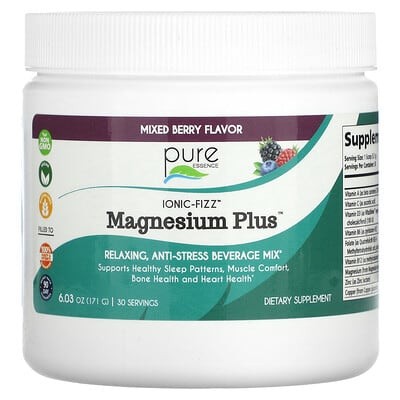
Magnesium Plus Mixed Berry Flavor

Goals
$22.32 $0.74 per serving


Product analysis
Magnesium Plus Mixed Berry Flavor offers magnesium and additional nutrients for normal muscle, nerve and energy functions when intake is low. The unnamed blend prevents a complete view of what each component contributes.
AI assessment of the formula, label and price. How scoring works
Nutrient Quality42
The folate and potassium preparations are favorable, but magnesium carbonate is a weaker choice for absorption. Unclear plant preparations and blend contents leave additional quality questions unresolved.
Ingredient Transparency71
Amounts and most vitamin and mineral forms are stated. Several plant preparations and the blend remain unclear, including the identity of individual blend components.
Value For Money42
The potassium comparison is favorable, while magnesium offers relatively poor value and folate is less compelling. Unavailable comparisons for other ingredients limit the full value judgment.
Customer Satisfaction76
Customer feedback is very positive across several hundred reviews. The feedback describes satisfaction without proving health benefits.
Product Focus24
Magnesium is the main contributor to normal muscle, nerve and energy functions. The 300 mg serving is substantial, while additional calming or exercise benefits remain uncertain and the unnamed blend limits a complete assessment.
- Format
Powder - Container
- 6 Ounce(s)
- Per serving
- $0.74
- Also available
 Magnesium Plus Orange-Vanilla Flavor$37.01
- Customer rating
- 4.7 · 394 ratings
Goals

Impact
Moderate effect
Vitamin D · 2.5 mcgMagnesium · 300 mgVitamin B12 · 30 mcgPotassium · 100 mg

Impact
High effect
Folate · 50 mcgVitamin B12 · 30 mcgVitamin D · 2.5 mcgMagnesium · 300 mgBoron · 500 mcgZinc · 2 mgVitamin C · 250 mg

Impact
High effect
Potassium · 100 mgMagnesium · 300 mgVitamin D · 2.5 mcgVitamin B12 · 30 mcgVitamin B6 · 1 mgFolate · 50 mcgVitamin C · 250 mg

Impact
High effect
Magnesium · 300 mgVitamin B12 · 30 mcgVitamin B6 · 1 mgFolate · 50 mcgVitamin D · 2.5 mcg

Impact
High effect
Magnesium · 300 mgVitamin D · 2.5 mcgCopper · 0.25 mgManganese · 1 mgBoron · 500 mcgZinc · 2 mgVitamin C · 250 mg

Impact
High effect
Magnesium · 300 mg
Ingredients
| Ingredient | Amount per serving | Score |
|---|---|---|
Vitamin A (Beta-Carotene) | 150 mcg | |
Vitamin C (Ascorbic Acid) | 250 mg | |
Vitamin D3 | 2.5 mcg | |
Vitamin B6 (Pyridoxine Hydrochloride) | 1 mg | |
Folate (L-5-Methyltetrahydrofolate) | 50 mcg | |
Vitamin B12 (Methylcobalamin) | 30 mcg | |
Magnesium (Magnesium Carbonate) | 300 mg | |
Zinc (Zinc Lactate) | 2 mg | |
Copper (Copper Gluconate) | 0.25 mg | |
Manganese (Manganese Gluconate) | 1 mg | |
Potassium (Potassium Bicarbonate) | 100 mg | |
Bamboo extract | 60 mg | |
ionic Sea Minerals | 10 mg | |
Beet root powder | 8 mg | |
Grape skin extract | 7 mg | |
Boron (Boron Citrate) | 500 mcg |
Folate (L-5-Methyltetrahydrofolate) · 50 mcg OverallScore46
Potassium (Potassium Bicarbonate) · 100 mg OverallScore65
Magnesium (Magnesium Carbonate) · 300 mg OverallScore58
Alternative products
Report alternatives
Sources
Published studies used for the product analysis and the top-ranked studies for each ingredient and goal.
- [Comparative study of the urinary excretion of boron, calcium, magnesium and phosphorus in postmenopausal women with and without osteoporosis].
- Effect of dietary boron on mineral, estrogen, and testosterone metabolism in postmenopausal women.
- The relationship between boron and magnesium status and bone mineral density in the human: a review.
- Effects of boron supplementation on bone mineral density and dietary, blood, and urinary calcium, phosphorus, magnesium, and boron in female athletes.
- Metabolic responses of postmenopausal women to supplemental dietary boron and aluminum during usual and low magnesium intake: boron, calcium, and magnesium absorption and retention and blood mineral concentrations
- The Association between Dietary and Circulating Copper Levels and Osteoporosis: a Scoping Review.
- Association between dietary copper, iron, zinc, selenium intake and osteopenia or osteoporosis in elderly hypertensive patients: a retrospective cohort study.
- Associations of dietary copper intake with total bone mineral density and lumbar spine bone mineral density in American adults.
- The association between dietary mineral intake and bone mineral density: a cross-sectional study.
- Association between dietary copper intake and bone mineral density in children and adolescents aged 8-19 years: A cross-sectional study.
- Association between RBC folate and lumbar bone mineral density in postmenopausal women, a cross-sectional study from NHANES 2009-2018.
- Genetic variants modify the associations of concentrations of methylmalonic acid, vitamin B-12, vitamin B-6, and folate with bone mineral density.
- Adequate Intake and Supplementation of B Vitamins, in Particular Folic Acid, can Play a Protective Role in Bone Health.
- Relation of homocysteine, folate, and vitamin B12 to bone mineral density of postmenopausal women.
- Dietary intake of folate, but not vitamin B2 or B12, is associated with increased bone mineral density 5 years after the menopause: results from a 10-year follow-up study in early postmenopausal women.
- Association between Serum Magnesium and Fractures: A Systematic Review and Meta-Analysis of Observational Studies.
- Bioabsorbable Magnesium-Based Materials Potential and Safety in Bone Surgery: A Systematic Review.
- Vascularized bone grafting fixed by biodegradable magnesium screw for treating osteonecrosis of the femoral head.
- An update on magnesium and bone health.
- Sex-specific differences in the association of magnesium intake with femoral neck bone mineral density among older adults.