Nutrient quality
The formula offers broad maintenance coverage, but many nutrients use conventional or vaguely yeast-bound forms. Energy-related amounts are generally modest, and the iron-free design narrows support for users with low iron status.
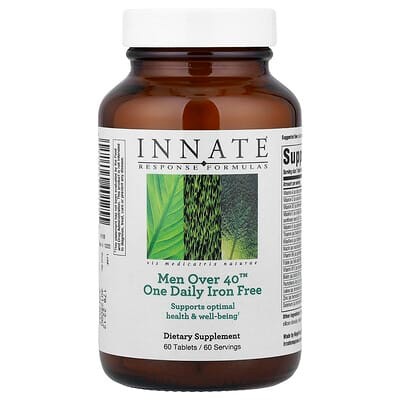
 Vitacost Vitacost | $ 47.53 | |
 Pure Formulas Pure Formulas | $ 49.99 | |
| Vitacost | $ 47.53 | |
 iHerb iHerb | $ 37.49 |
Iodine, B vitamins, vitamin D, zinc, and other micronutrients support routine nutrient-to-energy metabolism when dietary intake is incomplete. The iron-free design may suit men and others specifically advised to avoid supplemental iron.
Most amounts are aimed at maintenance rather than a focused energy effect. Iodine reaches a useful daily amount, while B12, thiamine, riboflavin, chromium, and molybdenum offer limited target-specific depth.
Several minerals are associated with yeast rather than a clearly defined chemical form. The 90 mg food-and-herb blend hides its contents and amounts, so the formula should be judged mainly on its disclosed vitamins and minerals.
The formula offers broad maintenance coverage, but many nutrients use conventional or vaguely yeast-bound forms. Energy-related amounts are generally modest, and the iron-free design narrows support for users with low iron status.
Many active amounts are listed, but duplicate niacin and folate entries make totals difficult to interpret. The food-and-herb blend hides its components, and inactive tablet ingredients are absent.
Aggregate customer metrics indicate strong satisfaction from a moderate sample. Missing feedback details prevent judging repeated complaints or whether experiences match the intended use.
The iron-free one-daily format provides convenient maintenance coverage. A high serving cost, conventional forms, and an opaque blend make value weak.
B vitamins and iodine support routine fuel conversion and thyroid-related metabolism. The iron-free age-focused multivitamin does not target acute alertness or stamina.
Iodine reaches maintenance level, while B12, riboflavin, and thiamin remain below targeted energy amounts. Yeast-bound minerals and a proprietary food-and-herb blend limit precise form assessment.
| Ingredient | Amount per serving |
|---|---|
Vitamin A (Beta Carotene) | 338 mcg RAE |
Vitamin C (Ascorbic Acid) | 60 mg |
Vitamin D3 (Cholecalciferol) | 10 mcg |
Vitamin E (D-Alpha-Tocopherol) | 12 mg |
Vitamin K (Phytonadione) | 15 mcg |
Thiamine (Thiamine HCl) | 4 mg |
Riboflavin (organic Brown Rice) | 3 mg |
Niacin (Niacinamide, S. cerevisiae) | 20 mg NE |
Vitamin B6 (Pyridoxine HCl) | 3 mg |
Folate (Broccoli, Folic Acid) | 680 mcg DFE |
Vitamin B12 (Cyanocobalamin) | 15 mcg |
Biotin (Brown Rice) | 80 mcg |
Pantothenic Acid (Calcium D-Pantothenate) | 10 mg |
Iodine (Saccharomyces cerevisiae) | 150 mcg |
Zinc (Saccharomyces cerevisiae) | 15 mg |
Selenium (Saccharomyces cerevisiae) | 14 mcg |
Copper (S. cerevisiae) | 0.3 mg |
Manganese (Saccharomyces cerevisiae) | 1 mg |
Chromium (S. cerevisiae) | 60 mcg |
Molybdenum (Saccharomyces cerevisiae) | 40 mcg |
Boron (S. cerevisiae) | 500 mcg |
Nourishing Food & Herb Blend | 90 mg |
Yeast-bound iodine is clearly sourced but has less certain absorption than potassium iodide. The clearly stated 150 mcg serving meets daily-support needs and remains safely below the upper limit. A higher midrange serving cost and limited selenium support produce only fair iodine value.
The yeast-bound form lacks a defined chelating ligand, while no source branding adds quality verification. The low amount offers limited support beyond basic nutrition, and the amount remains comfortably within the safety limit. The above-median cost provides average broader-formula value.
Yeast-derived chromium offers limited form assurance, while no branded source adds validation. The amount is suitable only for nutritional maintenance. The cost per standard chromium amount is high.
Published studies used for the product analysis and the top-ranked studies for each ingredient and goal.