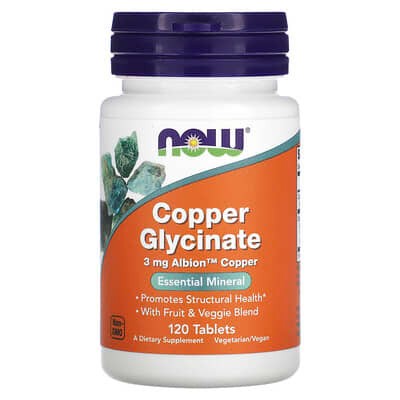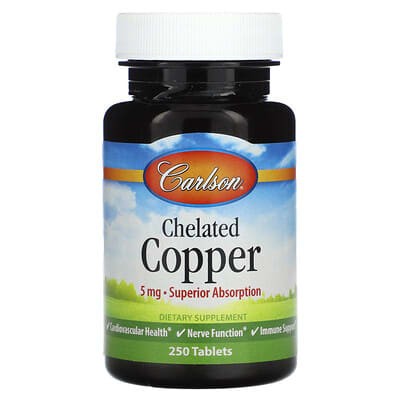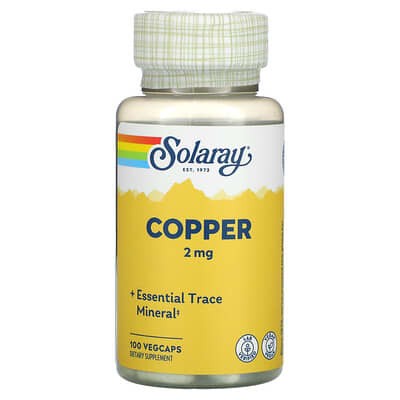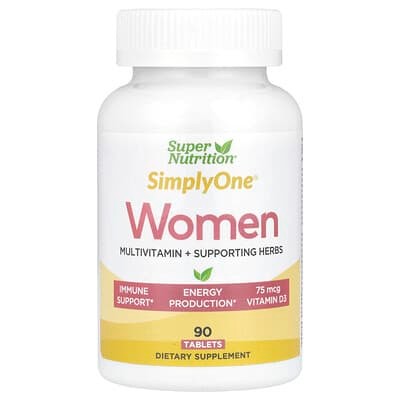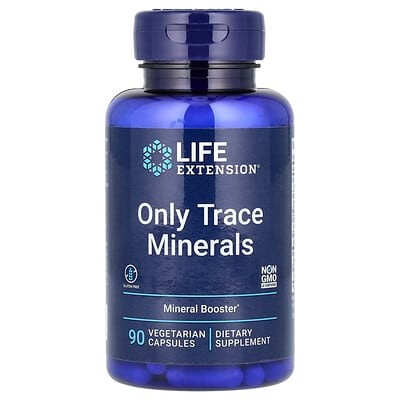
Copper

mineral

Copper is involved in maintaining healthy bone, blood vessels, and connective tissues, while also supporting the formation of red blood cells. It serves as a cofactor for enzymes that facilitate energy production and the structural cross-linking of collagen and elastin. This mineral contributes to immune system function and provides antioxidant support by assisting the enzyme superoxide dismutase. It also plays a role in brain health and nerve function through its involvement in the synthesis of neurotransmitters. Effective iron metabolism relies on copper to help the body absorb and utilize iron. It assists in transporting iron for red blood cell production, making it important for energy levels and preventing certain types of deficiency.

Natural sources
Shellfish (oysters, crab, lobster)Nuts (cashews, almonds, peanuts)Seeds (sesame, sunflower)Whole grainsLegumes (lentils, beans)Dark chocolateOrgan meats (liver)MushroomsAvocado

Ingredient forms

No public comparison lists found.

Timing & Intake
AnytimeWith food
Taking copper with food may help reduce the risk of digestive upset.
Daily Intake
RDA (Men)1 mg
RDA (Women)1 mg
RDI1 mg
Optimal Dosage
Minimum1 mg
Maximum3 mg
Safety & Toxicity
Upper Limit (UL)10 mg
Toxicity Threshold60 mg
Toxicity EffectLiver damage, kidney failure
4 safety notes
  • Individuals with Wilson's disease, a genetic disorder causing copper accumulation, must avoid copper supplementation.
  • Do not exceed recommended doses, as excessive copper intake can be toxic and lead to adverse health effects.
  • Consult a healthcare professional before supplementing with copper, especially if pregnant, nursing, have a pre-existing medical condition, or are taking other medications.
  • Copper supplementation should be balanced with zinc intake, as high doses of one can affect the other's absorption.
Goals
Bone Health
Impact
High effect
Typical dose:1–3 mg

Copper's role via the enzyme lysyl oxidase is not just decent, but very effective and critical for creating a strong, flexible collagen framework in bone. Proper cross-linking is essential to prevent brittleness, making Copper's contribution high-impact for bone quality.

Focuses on
Bone mineral densityCollagen cross-linkingBone matrix integritySkeletal developmentMineral homeostasis
Most relevant for
People seeking to maintain structural bone integrity through adequate intake of essential trace minerals.

Potential benefits

  • Collagen Matrix Support.Copper is a necessary cofactor for lysyl oxidase, an enzyme that cross-links collagen and elastin to provide the bone matrix with essential tensile strength and flexibility.
  • Support for Bone Density.Large observational studies consistently link higher dietary copper intake with improved bone mineral density in the lumbar spine and total body across various age groups.
  • Maintenance of Bone Turnover.Unconfirmed. Limited evidence suggests that preventing marginal copper deficiency may help maintain a balance between bone formation and breakdown, though the direct impact of supplements on bone strength is unproven.

Limitations

  • Inconsistent Serum Findings.Research on blood levels is conflicting; while low copper is linked to bone loss, some studies associate high serum copper with increased fracture risk or lower density, particularly in men and adolescents.
  • Observational Evidence Base.Most supportive data comes from dietary surveys which cannot confirm that copper alone, rather than overall diet and lifestyle, is responsible for better bone outcomes.
  • Lack of Fracture Prevention Data.There is a lack of long-term clinical trials demonstrating that copper supplementation successfully reduces the risk of fractures in populations with adequate copper status.
Things to consider

Excessive copper intake or high serum levels may be associated with increased fracture risk. Copper and zinc compete for absorption, so high doses of one can potentially lead to a deficiency in the other.

Study evidence

20 studies

Copper is needed for normal bone health, and deficiency can cause bone abnormalities. Dietary and blood-level studies show mixed relationships with bone density and fractures, so the available evidence does not establish that extra copper strengthens bones in people with adequate copper status.
View goal
Skin Health
Impact
High effect
Typical dose:1–3 mg

Copper is required by the enzyme lysyl oxidase, which cross-links collagen and elastin fibers, giving skin its strength and elasticity. It also functions as a cofactor for the antioxidant enzyme superoxide dismutase. As a trace mineral, it is foundational but needed in small, balanced amounts, often alongside zinc.

Focuses on
Collagen synthesisWound healingSkin elasticityFine line appearanceAntioxidant defense
Most relevant for
Individuals seeking to support skin structure and repair, particularly through targeted topical applications or foundational mineral balance.

Potential benefits

  • Wound Healing Support (Topical).Clinical studies show that copper-impregnated dressings can support the healing of complex or stagnated wounds, including diabetic ulcers, by promoting tissue regeneration.
  • Reduction in Fine Lines (Contact).Evidence suggests that consistent use of copper-oxide infused pillowcases may reduce the appearance of facial wrinkles and fine lines by facilitating skin regeneration.
  • Enhanced Skin Elasticity (Contact).Research using copper-infused textiles, such as socks, indicates that prolonged skin contact with copper particles can significantly improve skin elasticity and firmness.

Limitations

  • Unproven Oral Benefits.While copper is a necessary cofactor for skin enzymes, there is no evidence in the provided research that oral copper supplements improve general skin health or appearance.
  • Delivery Method Specificity.The observed benefits for healing and elasticity are specific to direct skin contact with copper-infused materials and may not apply to other forms of copper.
  • Inconsistent Clinical Data.Studies regarding copper levels in skin conditions like acne or psoriasis have produced conflicting results, making its role in treating these diseases uncertain.
Things to consider

Copper can act as a weak sensitizer and may cause allergic contact dermatitis in susceptible individuals. It is important to maintain a proper balance with zinc intake to avoid mineral deficiencies.

Study evidence

16 studies

Copper is involved in skin repair, and copper-containing dressings and textiles have shown benefits for wound healing or skin appearance. These findings concern products applied to the skin and do not establish that taking extra copper improves skin health; occasional contact allergy is possible.

View goal
Vision Support
Impact
High effect
Typical dose:1–2 mg

High-dose zinc supplementation, as recommended in the AREDS2 formula for vision support, can interfere with copper absorption and lead to a deficiency. Including a small amount of copper is not for direct vision benefits but is a crucial safety and efficacy measure to balance the zinc intake.

Focuses on
AMD Progression RiskNutritional BalanceGlaucoma Risk AssociationMineral Support
Most relevant for
People using high-dose zinc supplements for age-related macular health who need to prevent mineral imbalances.

Potential benefits

  • Nutritional Balance with Zinc.Prevents mineral deficiency caused by high-dose zinc supplementation, which is a standard safety measure in eye health protocols like AREDS2.
  • Macular Health Association.Unconfirmed. Observational studies link higher dietary copper intake to a reduced risk of progressing to late-stage age-related macular degeneration, though this is not proven for copper supplements alone.
  • Glaucoma Risk Support.Unconfirmed. Some longitudinal research indicates that higher copper intake may be associated with a lower incidence of glaucoma, though further clinical validation is required.

Limitations

  • Isolated Efficacy Unknown.Copper is rarely studied as a standalone supplement for vision; its benefits are typically observed as part of multi-nutrient antioxidant formulas.
  • Myopia Progression Risk.Higher blood levels of copper have been associated with increased myopia progression in children, suggesting a complex role in eye growth.
  • Observational Data Constraints.Much of the supportive evidence is based on dietary intake rather than supplementation, which may reflect overall healthier eating habits.
Things to consider

Supplemental copper is primarily used to offset the copper-depleting effects of high-dose zinc and is not intended to improve visual sharpness on its own.

Study evidence

7 studies

Higher dietary copper intake is associated with lower risk of some age-related eye problems, but this does not prove that copper supplements improve vision. Benefits from multi-nutrient eye supplements cannot be assigned to copper alone, and blood-level findings are not uniformly favorable.

View goal
Hair Health
Impact
Moderate effect
Typical dose:1–3 mg

Copper is a cofactor for enzymes involved in cross-linking collagen for hair follicle strength and producing melanin for hair color. While important, deficiency is uncommon and it must be carefully balanced with zinc intake, making it a supportive rather than a primary supplement for most people.

Focuses on
Melanin productionFollicle strengthHair structureDeficiency correction
Most relevant for
Individuals with rare copper-handling disorders or confirmed nutritional deficiencies affecting hair texture.

Potential benefits

  • Support for Hair Pigmentation.Unconfirmed. Copper is required for enzymes that produce melanin, but taking extra copper has not been proven to prevent or reverse graying in the general population.
  • Structural Follicle Integrity.Unconfirmed. It acts as a cofactor for cross-linking collagen in hair follicles; however, benefits for hair strength from oral supplements remain unproven in healthy adults.

Limitations

  • Limited General Applicability.Clinical evidence for hair improvement is restricted to rare genetic disorders and does not apply to healthy individuals using standard supplements.
  • No Benefit for Alopecia.Research indicates that serum copper levels are not significantly altered in patients with alopecia areata compared to healthy controls.
  • External Oxidative Risk.Laboratory studies show that copper buildup on hair fibers may accelerate damage when hair is exposed to UV light or chemical dyes.
Things to consider

Maintain a careful balance with zinc intake, as high levels of one can cause a deficiency in the other. External copper on hair from water or environment may increase UV-related fragility.

Study evidence

4 studies

Copper has not been shown to improve hair health through ordinary supplementation in the supplied evidence. Benefits involve medical treatment of a rare copper-handling disorder, while laboratory findings about copper-related hair damage concern copper on hair fibers rather than oral supplements.

View goal

Studies

Research connections will load here.
Sources

Up to five highest-ranked published examples per goal. Study counts and charts include all published studies for the connection.

  1. The Association between Dietary and Circulating Copper Levels and Osteoporosis: a Scoping Review.
    Ju Y; Xiong W; Pang Y; Chen Z; Hou J; Zheng S; Li Z; Liu T; Xia H; Xia M; Zhong Y; Li J; Jiang X · Biological trace element research · 2026
    Scoping review18 studies pooledBone Health
  2. Association between dietary copper, iron, zinc, selenium intake and osteopenia or osteoporosis in elderly hypertensive patients: a retrospective cohort study.
    Chen M; Jia L; Gao R · Frontiers in nutrition · 2024
    Cohort study5,286 participantsBone Health
  3. Associations of dietary copper intake with total bone mineral density and lumbar spine bone mineral density in American adults.
    Hu M; Wang Z; Li C; Zheng Y; Hu J · Medicine · 2025
    Cross-sectional studyBone Health
  4. The association between dietary mineral intake and bone mineral density: a cross-sectional study.
    Wei M; Wei J; Huang S · Journal of health, population, and nutrition · 2025
    Cross-sectional study11,520 participantsBone Health
  5. Association between dietary copper intake and bone mineral density in children and adolescents aged 8-19 years: A cross-sectional study.
    Cui A; Yan J; Li H; Fan Z; Wei X; Wang H; Zhuang Y · PloS one · 2024
    Cross-sectional study6,965 participantsBone Health
  6. Noninferiority of Copper Dressings Than Negative Pressure Wound Therapy in Healing Diabetic Wounds: A Randomized Clinical Trial.
    Melamed E; Dabbah J; Israel T; Kan I; Pinzur MS; Roth T; Borkow G · Advances in wound care · 2026
    Randomized trialSkin Health
  7. Improvement of facial skin characteristics using copper oxide containing pillowcases: a double-blind, placebo-controlled, parallel, randomized study.
    Borkow G; Gabbay J; Lyakhovitsky A; Huszar M · International journal of cosmetic science · 2010
    Randomized trial57 participantsSkin Health
  8. Radially Electrospun Fibrous Membrane Incorporated with Copper Peroxide Nanodots Capable of Self-Catalyzed Chemodynamic Therapy for Angiogenesis and Healing Acceleration of Diabetic Wounds.
    Huang Y; Qi L; Liu Z; Jiang Y; Wang J; Liu L; Li Y; Zhang L; Feng G · ACS applied materials & interfaces · 2023
    Animal experimentSkin Health
  9. Engineering copper nanoparticle/polysaccharide-immobilized cotton gauze for accelerated healing of Staphylococcus aureus-infected dermal wounds.
    Sahoo M; Banerjee T; Virkar S; Das S; Biswas S; Mitra D · Journal of materials chemistry. B · 2026
    Animal experimentSkin Health
  10. Stimulation of Healing of Non-Infected Stagnated Diabetic Wounds by Copper Oxide-Impregnated Wound Dressings.
    Melamed E; Rovitsky A; Roth T; Assa L; Borkow G · Medicina (Kaunas, Lithuania) · 2021
    Single-arm trialSkin Health
  11. What did we learn in 35 years of research on nutrition and supplements for age-related macular degeneration: a systematic review.
    Pameijer EM; Heus P; Damen JAA; Spijker R; Hooft L; Ringens PJ; Imhof SM; van Leeuwen R · Acta ophthalmologica · 2023
    Systematic review27 studies pooledVision Support
  12. Dietary Nutrient Intake and Progression to Late Age-Related Macular Degeneration in the Age-Related Eye Disease Studies 1 and 2.
    Agrón E; Mares J; Clemons TE; Swaroop A; Chew EY; Keenan TDL; AREDS and AREDS2 Research Groups · Ophthalmology · 2021
    Cohort study8,242 participantsVision Support
  13. Association between late age-related macular degeneration and dietary intake of copper, iron, zinc and selenium: a 2005-2008 NHANES cross-sectional observational study.
    Lu Y; Li C; Liu Y; Wu T; Lu P · BMC ophthalmology · 2025
    Observational study4,996 participantsVision Support
  14. Associations between dietary nutrient intake and the risk of multiple age-related ocular diseases: evidence from longitudinal analysis.
    Yang Y; Zou H · The journal of nutrition, health & aging · 2026
    Cohort study103,192 participantsVision Support
  15. Dietary habits and dietary nutrient intake in patients with age-related macular degeneration: A case-control study.
    Šalková Kráľová J; Kolář P; Kapounová Z; Veselý P; Derflerová Brázdová Z · Central European journal of public health · 2023
    Case-control study151 participantsVision Support
  16. Menkes disease and response to copper histidine: An Indian case series.
    Yoganathan S; Sudhakar SV; Arunachal G; Thomas M; Subramanian A; George R; Danda S · Annals of Indian Academy of Neurology · 2022
    Case series4 participantsHair Health
  17. Trace element levels in alopecia areata.
    Bhat YJ; Manzoor S; Khan AR; Qayoom S · Indian journal of dermatology, venereology and leprology · 2009
    Case-control study100 participantsHair Health
  18. UV damage to hair and the effect of antioxidants and metal chelators.
    Millington KR; Marsh JM · International journal of cosmetic science · 2021
    In vitro / ex vivo studyHair Health
  19. Preserving fibre health: reducing oxidative stress throughout the life of the hair fibre.
    Marsh JM; Davis MG; Lucas RL; Reilman R; Styczynski PB; Li C; Mamak M; McComb DW; Williams RE; Godfrey S; Navqi KR; Chechik V · International journal of cosmetic science · 2016
    In vitro / ex vivo studyHair Health