
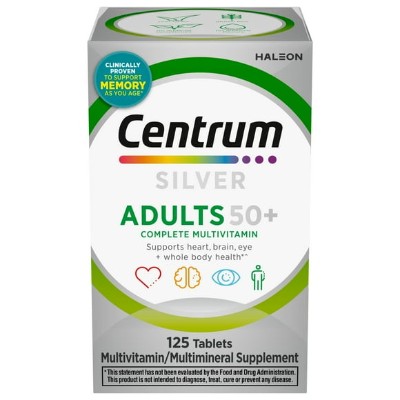

$10.99 $0.12 per serving


Product analysis
Super Multi Iron Free offers broad vitamin and mineral support for everyday nutrition and normal energy use when your diet leaves gaps.
AI assessment of the formula, label and price. How scoring works
Nutrient Quality52
Several vitamin forms are favorable, including vitamin D3 and the natural form of vitamin E. Unspecified forms and unclear mineral-blend proportions leave other parts of the formula harder to compare.
Ingredient Transparency72
Ingredient amounts are stated throughout, so the quantities are easy to compare. Several forms and the proportions in mixed calcium and magnesium sources are not specified.
Value For Money55
Value is mixed, with several vitamins offering economical amounts while vitamin B5 and vitamin D look less favorable. Value for several minerals remains uncertain, limiting a firm judgment about the whole formula.
Customer Satisfaction82
Customer feedback is positive across many ratings. That satisfaction does not demonstrate extra energy or other health benefits.
Product Focus36
The broad mix mainly helps cover dietary gaps and supports normal nutrient functions. Extra ingredients do not establish added energy, hair growth or skin benefits when nutritional needs are already met.
- Format
Tablet - Container
- 90 Tablet(s)
- Per serving
- $0.12
- Customer rating
- 4.7 · 1,113 ratings
Goals

Impact
Highest effect
Folate · 800 mcgVitamin B12 · 50 mcgVitamin D · 400 IUMagnesium · 5 mgSelenium · 20 mcgZinc · 10 mgVitamin C · 150 mg
Magnesium provides a nutritional contribution when dietary intake is low. The declared B vitamins contribute to ordinary nutrient availability, with their main connection here in metabolism. Folate and vitamin B12 contribute to nutrition related to blood formation. These nutritional roles do not establish additional health benefits when intake is already adequate.
How this product is rated for Everyday Health
Ingredient fit79
The declared nutrients provide a nutritional connection to general health. Amount support varies across contributing ingredients.
Goal fit
The declared nutrients provide general nutritional connections alongside the formula’s other ingredients.
Dose adequacy
Contributing amounts provide partial support against the saved amount references; the reference comparison does not establish a clinical dose-response.
Pathways80
The strongest connection is energy metabolism cofactors. The formula also represents the areas listed below.
Depth
The strongest represented area is energy metabolism cofactors, describing nutritional roles rather than a measured improvement in health.
Breadth
The represented areas are energy metabolism cofactors, one-carbon metabolism and blood formation.
Evidence82
Vitamin B9 (Folate) is the leading retained contribution. The supplied context supports nutritional availability when intake is low, without establishing added benefit with adequate intake.
Evidence strength
Vitamin B9 (Folate) provides the leading retained contribution; its nutritional relevance does not establish broad disease prevention.
Studied preparation
The retained preparations meet the saved checks; no superiority of chemical form or delivery follows.
Formulation logic100
No configured conflict or missing required partner was identified; the retained amount threshold does not establish clinical effectiveness.
Partner coverage
No required partner is missing among the retained ingredients; combining them does not establish extra health benefit.
Conflicts
No configured ingredient conflict was identified.
Effective doses
The retained ingredients meet the amount threshold used here, which is not proof of clinical benefit.

Impact
Moderate effect
Iodine · 100 mcgVitamin D · 400 IUVitamin B5 · 25 mgMagnesium · 5 mgRiboflavin · 25 mgThiamin · 25 mgVitamin B12 · 50 mcgPotassium · 10 mg
B vitamins and vitamin C support normal energy metabolism and nutrient needs. The relevant amounts provide nutritional support, but taking more than needed does not establish increased energy. Iodine relates to normal thyroid physiology without proving a routine energy benefit.
How this product is rated for Energy
Ingredient fit72
B vitamins and vitamin C provides the main nutritional contribution to the energy goal. The relevant known amounts provide substantial support relative to the saved comparison amounts.
Goal fit
B vitamins and vitamin C provides the main nutritional contribution to the energy goal.
Dose adequacy
The relevant known amounts provide substantial support relative to the saved comparison amounts.
Pathways0
The saved findings record nutritional contributions without direct coverage of the assessed energy mechanisms.
Depth
No assessed energy mechanism has direct coverage in the saved findings.
Breadth
No assessed route reaches the saved coverage threshold.
Evidence77
Riboflavin has the strongest evidence finding among the ingredients meeting the saved dose criterion. Benefits remain dependent on nutritional status and the setting. Most relevant preparations match the saved evidence; iodine is not matched to a studied energy preparation.
Evidence strength
Riboflavin has the strongest evidence finding among the ingredients meeting the saved dose criterion. Benefits remain dependent on nutritional status and the setting.
Studied preparation
Most relevant preparations match the saved evidence; iodine is not matched to a studied energy preparation.
Formulation logic100
The relevant ingredients can contribute without a required additional partner. No ingredient conflicts were identified.
Partner coverage
The relevant ingredients can contribute without a required additional partner.
Conflicts
No ingredient conflicts were identified in the saved assessment.
Effective doses
All ingredients included in the saved dose check meet its minimum contribution threshold.
Vitamin B5 Not classified
No linked studies yet.
Impact
Moderate effect
Zinc · 10 mgVitamin C · 150 mgSelenium · 20 mcgVitamin E · 50 IU
Vitamin C supports collagen formation and zinc contributes to normal skin repair. B vitamins add nutritional support relevant to skin, but their presence or larger amounts do not establish improved skin appearance in adequately nourished adults.
How this product is rated for Skin Health
Ingredient fit45
Skin-related ingredients are part of a broader formula with other purposes. Smaller or unresolved amounts limit the contribution in the saved dose assessment.
Goal fit
Skin-related ingredients are part of a broader formula with other purposes.
Dose adequacy
Smaller or unresolved amounts limit the contribution in the saved dose assessment.
Pathways5
The strongest saved contribution relates to epidermal barrier lipids.
Depth
The strongest saved contribution relates to epidermal barrier lipids.
Breadth
The saved findings show limited coverage across the different skin-related mechanisms.
Evidence100
Vitamin C provides the strongest evidence contribution among the assessed ingredients; this does not guarantee a visible skin benefit.
Evidence strength
Vitamin C provides the strongest evidence contribution among the assessed ingredients; this does not guarantee a visible skin benefit.
Studied preparation
The ingredients assessed at relevant amounts match preparations recognized in the saved findings.
Formulation logic93
The assessed ingredients can contribute independently or have their required partner.
Partner coverage
The assessed ingredients can contribute independently or have their required partner.
Conflicts
No configured ingredient conflicts were identified in the saved findings.
Effective doses
Some assessed ingredients fall below the saved minimum amount threshold: Vitamin A, Vitamin E.

Impact
High effect
Biotin · 25 mcgNiacin · 50 mgVitamin B12 · 50 mcgRiboflavin · 25 mgThiamin · 25 mgVitamin B5 · 25 mgVitamin B6 · 25 mgVitamin D · 400 IUZinc · 10 mgMagnesium · 5 mg
B vitamins help the body use energy from food, with thiamin supporting carbohydrate metabolism and other B vitamins serving as enzyme helpers. These normal functions do not show that extra vitamins raise energy expenditure when intake is adequate. Iodine supports thyroid hormone production; filling an iodine shortfall can restore this function, but extra iodine does not stimulate an already normal thyroid.
How this product is rated for Metabolism Support
Ingredient fit67
The formula supplies nutrients involved in normal metabolism, with varied amounts and a broader focus than direct energy expenditure.
Goal fit
Recognized metabolic nutrients contribute to the saved finding, while other actives and the product’s broader uses reduce its focus on this goal.
Dose adequacy
Declared amounts provide partial coverage of the supplied comparisons, which do not establish doses that increase calorie expenditure.
Pathways4
The connection is through insulin sensitivity and metabolic hormones, rather than demonstrated thermogenesis.
Depth
The saved finding centers on insulin sensitivity and metabolic hormones; such metabolic markers are distinct from increased calorie expenditure.
Breadth
No evaluated pathway reaches the supplied coverage threshold.
Evidence100
Evidence for normal nutrient functions supports the saved finding; it does not establish an extra metabolic boost when intake is adequate.
Evidence strength
Thiamin supplies the strongest saved evidence finding; normal carbohydrate metabolism does not demonstrate a further metabolic boost with adequate intake.
Studied preparation
The counted preparations match those recognized in the supplied comparison; this does not establish thermogenic benefit for the finished product.
Formulation logic100
No unmet partner requirement or specified conflict was identified. The counted ingredients meet the supplied minimum amount comparisons.
Partner coverage
The counted ingredients have no unmet partner requirement in the supplied findings; this does not establish additional benefit from combining them.
Conflicts
No specified ingredient conflict was identified in the supplied findings.
Effective doses
All counted ingredients meet the supplied minimum amount comparison, which is not a demonstrated threshold for increased calorie expenditure.

Impact
Moderate effect
Zinc · 10 mgVitamin E · 50 IUVitamin C · 150 mgVitamin A · 10000 IU
Riboflavin may help when a shortage contributes to eye problems. Correcting low levels is different from improving vision when you already get enough. Vitamin A also has a role in the visual cycle, including seeing in dim light, but its presence doesn't mean you'll gain sharper everyday vision.
How this product is rated for Eye Health
Ingredient fit39
Several vitamins and minerals are present, but their normal roles in the eye do not imply better eyesight from extra intake.
Goal fit
The blend includes several nutrients with eye-related roles alongside ingredients with other purposes.
Dose adequacy
Declared nutrient amounts vary, and vitamin A and vitamin E amounts are not resolved in the matching mass units.
Pathways60
Riboflavin can matter when deficiency causes eye problems; extra intake has no clear routine vision benefit.
Depth
The ingredients relate mainly to antioxidant protection in the retina and lens; that role does not guarantee clearer sight.
Breadth
The ingredients do not provide a clear basis for broad improvements across different aspects of vision.
Evidence82
Riboflavin can matter when deficiency causes eye problems; extra intake has no clear routine vision benefit.
Evidence strength
Riboflavin can matter when deficiency causes eye problems; extra intake has no clear routine vision benefit.
Studied preparation
The identified ingredient form does not by itself demonstrate improved routine vision.
Formulation logic88
No particular ingredient conflict or missing required partner is identified. Amounts and ingredient-specific limitations still matter for what you can expect.
Partner coverage
No required ingredient partner is missing from the identified combination.
Conflicts
No particular conflict between the identified ingredients is indicated.
Effective doses
Vitamin A, Vitamin E amounts are unresolved or low relative to the comparison amounts; that does not prove ineffectiveness.

Impact
Moderate effect
Biotin · 25 mcgVitamin D · 400 IUZinc · 10 mgVitamin C · 150 mg
Zinc and biotin may help with shedding caused by low levels of those nutrients. They aren't known to produce extra regrowth when your intake is already adequate. Vitamin C also plays a role in normal collagen formation, but that role doesn't mean taking it independently increases hair growth.
How this product is rated for Hair Health
Ingredient fit55
Zinc may help with shedding caused by low zinc levels.
Goal fit
Zinc may help with shedding caused by low zinc levels.
Dose adequacy
Zinc supplies 10 mg per selected serving; amount alone does not predict hair improvement.
Pathways12
The ingredients relate most closely to follicle antioxidant protection; this does not predict the size of a hair benefit.
Depth
The ingredients relate most closely to follicle antioxidant protection; this does not predict the size of a hair benefit.
Breadth
The ingredients do not provide equally broad action across all the specified hair-related processes.
Evidence97
Iodine cannot be assumed equivalent to the named preparations associated with hair benefits.
Evidence strength
Zinc may help with shedding caused by low zinc levels.
Studied preparation
Iodine cannot be assumed equivalent to the named preparations associated with hair benefits.
Formulation logic94
No required partner is missing and no particular ingredient conflict is identified. This does not imply an added benefit from combining ingredients.
Partner coverage
No missing required ingredient partner is identified.
Conflicts
No particular ingredient conflict is identified.
Effective doses
Zinc supplies 10 mg per selected serving; this is not a promise of hair regrowth.
Ingredients
| Ingredient | Amount per serving | Score |
|---|---|---|
Vitamin A (Beta-Carotene) | 10000 IU | |
Vitamin C (Ascorbic Acid) | 150 mg | |
Vitamin D3 (Cholecalciferol) | 400 IU | |
Vitamin E (D-Alpha-Tocopheryl Acid Succinate) | 50 IU | |
Thiamine (Thiamine Hydrochloride) | 25 mg | |
Riboflavin | 25 mg | |
Niacin (Niacinamide) | 50 mg | |
Vitamin B6 (Pyridoxine Hydrochloride) | 25 mg | |
Folic Acid | 800 mcg | |
Vitamin B12 (Cyanocobalamin) | 50 mcg | |
Biotin | 25 mcg | |
Pantothenic Acid (Calcium Pantothenate) | 25 mg | |
Calcium (Calcium Carbonate, Calcium Citrate) | 125 mg | |
Iodine (Kelp) | 100 mcg | |
Magnesium (Magnesium Citrate, Magnesium Oxide) | 50 mg | |
Zinc (Zinc Citrate) | 10 mg | |
Selenium (Selenium Chelate) | 20 mcg | |
Magnesium (Magnesium Citrate) | 5 mg | |
Chromium (Chromium Chelate) | 100 mcg | |
Potassium (Potassium Citrate) | 10 mg | |
Choline (Choline Bitartrate) | 50 mg | |
Para-Aminobenzoic Acid | 25 mg | |
Inositol | 50 mg | |
Glutamic Acid Hydrochloride | 25 mg |
PABA · 25 mg OverallScore84
Each serving supplies 25 mg of PABA, a moderate amount in the evaluation. The whole-product price is about $0.49 per 100 mg of PABA, a moderate cost for the quantity.
How this ingredient is rated
Active Ingredient Quality & Bioavailability80
PABA is identified in the saved facts, with no specific source or grade recorded.
PABA Source & Grade
The ingredient is named as PABA; the saved facts do not specify a quality grade or establish purity.
Dose, Safety & Label Transparency95
The PABA amount is individually disclosed.
PABA Dosage Alignment
The 25 mg per serving is a moderate amount in the evaluation.
Label Disclosure Clarity
PABA is individually listed at 25 mg per serving.
Additive and Excipient Quality
No artificial dyes, titanium dioxide, or hydrogenated oils were identified in the recorded other ingredients.
Value70
The whole-product cost is moderate when compared by PABA quantity.
Price per 100mg PABA
The whole-product price works out to about $0.49 per 100 mg of PABA.
Niacin (Niacinamide) · 50 mg OverallScore73
Vitamin B6 (Pyridoxine Hydrochloride) · 25 mg OverallScore84
Alternative products
Report alternatives
Sources
Published studies used for the product analysis and the top-ranked studies for each ingredient and goal.
- Association of radioactive iodine treatment with survivorship symptoms and primary care utilisation in women of reproductive age with thyroid cancer: a retrospective cohort study.
- Energy level and fatigue after surgery for thyroid cancer: A population-based study of patient-reported outcomes.
- Health-Related Quality of Life in Differentiated Thyroid Cancer Survivors: A Cross-Sectional Study From Turkey.
- Magnesium-L-threonate improves sleep quality and daytime functioning in adults with self-reported sleep problems: A randomized controlled trial.
- Total magnesium intake and risk of frailty in older women.
- Red blood cell magnesium and chronic fatigue syndrome.
- Exercise, magnesium and immune function.
- [Efficacy of potassium N-acetylaminosuccinate (Cogitum) in the treatment of asthenic syndrome: results of double-blind placebo-controlled trial].
- Human resting energy expenditure in relation to dietary potassium.
- Physicochemical properties of and volatile compounds in riboflavin fortified cloudy apple juice; study of its effect on job fatigue among Egyptian construction workers.
- Vitamin B status in patients with chronic fatigue syndrome.
- B-vitamins, related vitamers, and metabolites in patients with quiescent inflammatory bowel disease and chronic fatigue treated with high dose oral thiamine.
- Metabolic features of chronic fatigue syndrome.
- Effectiveness of Riboflavin in Inherited Metabolic Diseases: A Systematic Review
- Influence of thiamin supplementation on the health and general well-being of an elderly Irish population with marginal thiamin deficiency.
- Randomised clinical trial: high-dose oral thiamine versus placebo for chronic fatigue in patients with quiescent inflammatory bowel disease.
- Dietary reference values for thiamin.
- Effects of thiamine supplementation on exercise-induced fatigue.
- Long-term maintenance treatment with 300 mg thiamine for fatigue in patients with inflammatory bowel disease: results from an open-label extension of the TARIF study.
- A new perspective on vitamin B12 deficiency in rheumatology: a case-based review.