
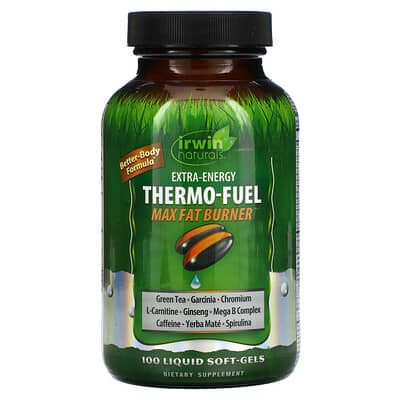
Extra-Energy Thermo-Fuel Max Fat Burner

Goals
$21.10 $0.63 per serving


Product analysis
Extra-Energy Thermo-Fuel Max Fat Burner offers caffeine-related support for short-term alertness. Missing quantities and unclear ingredient preparations make the full formula difficult to compare.
AI assessment of the formula, label and price. How scoring works
Nutrient Quality20
Most ingredient forms are not disclosed, including the individual omega-3 preparations. The quality of the combined nutrient and plant preparations cannot be established confidently.
Ingredient Transparency52
Several quantities and nearly all individual preparations are omitted. The named ingredient forms do not resolve the amounts of every component.
Value For Money31
The full serving cost is less favorable when judged for EPA or DHA alone. Value for most other ingredients remains uncertain.
Customer Satisfaction65
Customer ratings are positive. A moderately sized review pool gives a useful view of buyer satisfaction.
Product Focus35
Caffeine provides the clearest connection to short-term alertness and attention. The unknown guarana contribution leaves total stimulant exposure unclear, and wider fat-burning or healthy-aging benefits remain uncertain.
- Format
Softgel - Container
- 100 Softgel(s)
- Per serving
- $0.63
- Customer rating
- 4.3 · 149 ratings
Goals

Impact
Moderate effect
Vitamin B5 · 18 mgRiboflavin · 0.5 mgThiamin · 0.4 mgVitamin B12 · 1.5 mcgFish Oil · 1050 mgCaffeine · 75 mg
L-Tyrosine Not classified
No linked studies yet.
Vitamin B5 Not classified
No linked studies yet.

Impact
Moderate effect
Vitamin B12 · 1.5 mcgCaffeine · 75 mg
DHA (Docosahexaenoic Acid) Not classified
No linked studies yet.
L-Tyrosine Not classified
No linked studies yet.

Impact
Limited evidence
Fish Oil · 1050 mgVitamin E · 3.4 mgVitamin C · 8 mgGreen Tea · 300 mg

Impact
Moderate effect
Vitamin C · 8 mgSelenium · 17 mcgGreen Tea · 300 mgVitamin E · 3.4 mg

Impact
High effect
Thiamin · 0.4 mgVitamin B12 · 1.5 mcgEPA (Eicosapentaenoic Acid) · 189 mgGreen Tea · 300 mg
DHA (Docosahexaenoic Acid) Not classified
No linked studies yet.
L-Tyrosine Not classified
No linked studies yet.

Impact
Moderate effect
Vitamin B12 · 1.5 mcgGreen Tea · 300 mg
Ingredients
| Ingredient | Amount per serving | Score |
|---|---|---|
Calories | 20 Calorie(s) | |
Total Fat | 1.5 Gram(s) | |
Cholesterol | 5 mg | |
Total Carbohydrates | 1 Gram(s) | |
Protein | 1 Gram(s) | |
Vitamin C (Ascorbic Acid) | 8 mg | |
Vitamin E (D-Alpha-Tocopherol) | 3.4 mg | |
Thiamine (Thiamine Hydrochloride) | 0.4 mg | |
Riboflavin | 0.5 mg | |
Niacin (Niacinamide) | 7 mg | |
Vitamin B12 (Cyanocobalamin) | 1.5 mcg | |
Pantothenic Acid (D-Calcium Pantothenate) | 18 mg | |
Calcium | 30 mg | |
Selenium (Selenium Aspartate) | 17 mcg | |
Chromium (Chromium Picolinate) | 100 mcg | |
Fish Oil (Anchovy, Sardine) | 1050 mg | |
Eicosapentaenoic Acid | 189 mg | |
Docosahexaenoic Acid | 126 mg | |
Green Tea Leaf Extract | 300 mg | |
Epigallocatechin Gallate | 150 mg | |
Extra Energy Complex | 185 mg | |
Caffeine (Green Coffee) | 75 mg | |
Eleuthero Root Extract (Eleutherosides) | 0 NP | |
Cayenne fruit extract | 0 NP | |
Guarana seed extract | 0 NP | |
Mate (Yerba Mate) extract | 0 NP | |
Garcinia Fruit, Rind Extract (Garcinia cambogia Fruit Extract, Garcinia cambogia Rind Extract) | 150 mg | |
Hydroxycitric Acid | 75 mg | |
L-Carnitine (L-Carnitine Fumarate) | 35 mg | |
L-Tyrosine | 35 mg | |
Asian Ginseng root extract | 30 mg | |
Spirulina, Powder | 20 mg | |
BioPerine Complex | 3 mg | |
BioPerine (Black Pepper Fruit Extract) | 0 NP | |
Ginger Rhizome Extract (Gingerols) | 0 NP |
Green Tea · 300 mg OverallScore61
The 300 mg of green tea leaf extract has 50% EGCG. The cost per 200 mg of declared EGCG is high. A 75 mg caffeine amount is stated, but the whole-product total is unclear.
How this ingredient is rated
Composition and Label Disclosure100
The 300 mg of green tea leaf extract has 50% EGCG.
Declared Green Tea Marker Concentration
The 300 mg of green tea leaf extract has 50% EGCG.
Composition and Label Disclosure40
A 75 mg caffeine amount is stated, but the whole-product total is unclear.
Whole-Product Caffeine Disclosure
A 75 mg caffeine amount is stated, but the whole-product total is unclear.
Commercial Price and Usability25
The cost per 200 mg of declared EGCG is high.
Cost per 200 mg Declared EGCG
The cost per 200 mg of declared EGCG is high.
Chromium (Chromium Picolinate) · 100 mcg OverallScore47
A serving provides 100 mcg chromium, a moderate amount, with a high cost per 200 mcg. It uses Chromium Picolinate. The chromium amount is stated, but the source compound weight is not separately given.
How this ingredient is rated
Active Ingredient Quality & Bioavailability70
It uses Chromium Picolinate. No branded chromium source is specified.
Chromium Chemical Form
It uses Chromium Picolinate.
Branded & Trademarked Sources
No branded chromium source is specified.
Dose, Safety & Label Transparency43
The serving supplies 100 mcg chromium. The chromium amount is stated, but the source compound weight is not separately given.
Elemental Chromium Dosage
The serving provides 100 mcg chromium, a moderate amount.
Label Transparency & Disclosure
The chromium amount is stated, but the source compound weight is not separately given.
Value10
The cost per 200 mcg of chromium is high.
Price per 200 mcg Chromium
The cost per 200 mcg of chromium is high.
EPA (Eicosapentaenoic Acid) · 189 mg OverallScore38
Each serving provides 189 mg of EPA at a high cost per gram of EPA. The EPA molecular form is not specified in the available information. No oil purification or specific contaminant testing claim is apparent in the available information.
How this ingredient is rated
Active Ingredient Quality & Bioavailability41
The EPA molecular form is not specified in the available information. EPA makes up about 18% of the fish oil.
Molecular Form and Bioavailability
The EPA molecular form is not specified in the available information.
EPA Concentration Density
EPA makes up about 18% of the fish oil.
Oxidation Protection
Tocopherol is included, though actual protection from oxidation is not established.
Dose, Safety & Label Transparency45
Each serving provides 189 mg of EPA and 126 mg of DHA. No oil purification or specific contaminant testing claim is apparent in the available information.
Absolute EPA Dose per Serving
Each serving provides 189 mg of EPA.
EPA-Centric Ratio
The serving contains 126 mg of DHA, less than the EPA amount.
Purity and Contaminant Testing
No oil purification or specific contaminant testing claim is apparent in the available information.
Value20
The cost per gram of EPA is high.
Price per Gram of EPA
The cost per gram of EPA is high.
Alternative products
Report alternatives
Sources
Published studies used for the product analysis and the top-ranked studies for each ingredient and goal.
- No benefit adding eleutherococcus senticosus to stress management training in stress-related fatigue/weakness, impaired work or concentration, a randomized controlled study.
- Blood polyunsaturated omega-3 fatty acids, brain atrophy, cognitive decline, and dementia risk.
- Thirteen-year prospective study between fish consumption, long-chain n-3 fatty acids intakes and cognitive function.
- Serum ω-3 Fatty Acids and Cognitive Domains in Community-Dwelling Older Adults from the NuAge Study: Exploring the Associations with Other Fatty Acids and Sex.
- Breast milk EPA associated with infant distractibility when EPA level is low.
- Association of Red Blood Cell Omega-3 Fatty Acids With MRI Markers and Cognitive Function in Midlife: The Framingham Heart Study.
- Safety and efficacy of cognitive training plus epigallocatechin-3-gallate in young adults with Down's syndrome (TESDAD): a double-blind, randomised, placebo-controlled, phase 2 trial.
- Association between tea consumption and risk of cognitive disorders: A dose-response meta-analysis of observational studies.
- Investigating the Impact of Tea Consumption on Cognitive Function and Exploring Tea-Genetic Interactions in Older Adults Aged 65-105 Years: Findings from the 2002-2018 CLHLS Data.
- Consumption of green tea, but not black tea or coffee, is associated with reduced risk of cognitive decline.
- Green Tea Consumption and the Risk of Incident Dementia in Elderly Japanese: The Ohsaki Cohort 2006 Study.
- Cognitive effects of guarana supplementation with maximal intensity cycling.
- Cognitive Performance Enhancement Induced by Caffeine, Carbohydrate and Guarana Mouth Rinsing during Submaximal Exercise.
- Improved cognitive performance in human volunteers following administration of guarana (Paullinia cupana) extract: comparison and interaction with Panax ginseng.
- The effect of plant active substances on cognitive function in healthy older adults: a systematic review and network meta-analysis of randomized controlled trials.
- Effect of Guarana (Paullinia cupana) on Cognitive Performance: A Systematic Review and Meta-Analysis.
- Thiamine supplementation holds neurocognitive benefits for breastfed infants during the first year of life.
- What is the impact of thiamine deficiency on cognitive function in patients with alcohol use disorder? - A systematic review.
- Association between dietary vitamin B1 intake and cognitive function among older adults: a cross-sectional study.
- Association of vitamin B1 intake with geriatric cognitive function: An analysis of the National Health and Nutrition Examination Survey (NHANES) from 2011 to 2014.