Casein Protein Not classified
No linked studies yet.
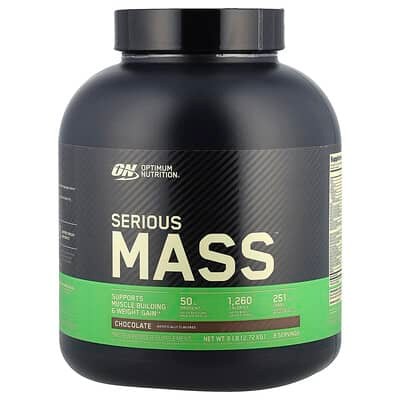
The large calorie and carbohydrate contribution suits people trying to add substantial food energy alongside training. A serving lists 1,250 calories, 252 g carbohydrate and 50 g protein, making portion size central to whether it fits. Protein supports exercise-related repair, while 3 g creatine monohydrate may support repeated hard efforts with regular use.
The vitamin and mineral additions can help fill intake gaps, but they are secondary to the calorie, protein and creatine contribution. Calcium at 600 mg and phosphorus at 590 mg add substantial mineral amounts, while vitamin D at 5 mcg provides a smaller contribution. The 8 mg iron uses ferrous fumarate, which has stomach-tolerance limitations, and the high calcium content may compete with its absorption.
The ingredient findings also record 9 g added sugar and an artificial sweetener marker. Choline's usable yield and some mineral-source proportions remain unclear, limiting close comparisons of the extras. Many added nutrients offer poor individual value at the whole-serving cost, while the supplied information does not establish how competitively the main calories and protein are priced.
Serious Mass Chocolate supplies protein for muscle repair and creatine for repeated high-intensity exercise with sustained use. Many of its added vitamin and mineral portions offer less favorable value.
AI assessment of the formula, label and price. How scoring works
The forms vary in quality, with favorable active biotin, B5 and zinc alongside less favorable copper and some mineral mixtures. Many other forms remain unspecified or cannot be reliably compared here.
Total nutrient amounts and many forms are disclosed. The calcium and phosphorus source proportions remain unspecified, and total protein does not establish separate whey or casein amounts.
Many added nutrients offer less favorable value at the serving cost, especially selenium, chromium and glutamine. Value for the main protein and carbohydrate portions remains uncertain.
Customers generally rate it favorably. A very large review base gives that satisfaction pattern broad support.
Protein supports exercise-related nutrition, and creatine supports repeated high-intensity efforts with sustained use. The broad vitamin and mineral mix is most useful when it fills dietary gaps rather than adding to already adequate intake.
 Serious Mass Chocolate Peanut Butter$56.99

No linked studies yet.
No linked studies yet.



| Ingredient | Amount per serving | Score |
|---|---|---|
Calories | 1250 Calorie(s) | |
Total Fat | 4.5 Gram(s) | |
Cholesterol | 110 mg | |
Total Carbohydrates | 252 Gram(s) | |
Protein | 50 Gram(s) | |
Vitamin A (Beta-Carotene) | 750 mcg | |
Vitamin C (Ascorbic Acid) | 60 mg | |
Vitamin D (Cholecalciferol) | 5 mcg | |
Vitamin E (D-Alpha-Tocopherol Succinate) | 20 mg | |
Thiamine (Thiamine Mononitrate) | 4.8 mg | |
Riboflavin | 4 mg | |
Niacin (Niacinamide) | 50 mg | |
Vitamin B6 (Pyridoxine Hydrochloride) | 5 mg | |
Folate | 680 mcg DFE | |
Vitamin B12 (Cyanocobalamin) | 10 mcg | |
Biotin (D-Biotin) | 300 mcg | |
Pantothenic Acid (D-Calcium Pantothenate) | 25 mg | |
Choline (Choline Bitartrate) | 250 mg | |
Calcium (Calcium Citrate, Dicalcium Phosphate) | 600 mg | |
Iron (Ferrous Fumarate) | 8 mg | |
Phosphorus (Dicalcium Phosphate, Dipotassium Phosphate) | 590 mg | |
Iodine (Potassium Iodide) | 53 mcg | |
Magnesium (Magnesium Aspartate) | 140 mg | |
Zinc (Zinc Citrate) | 15 mg | |
Selenium (Selenomethionine) | 70 mcg | |
Copper (Copper Gluconate) | 1 mg | |
Manganese (Manganese Amino Acid Chelate) | 2 mg | |
Chromium (Chromium Polynicotinate) | 120 mcg | |
Molybdenum (Molybdenum Amino Acid Chelate) | 75 mcg | |
Sodium | 570 mg | |
Potassium (Dipotassium Phosphate) | 1430 mg | |
Creatine Monohydrate | 3 Gram(s) | |
L-Glutamine | 500 mg | |
Inositol | 250 mg | |
PABA | 5 mg |
Published studies used for the product analysis and the top-ranked studies for each ingredient and goal.