Casein Protein Not classified
No linked studies yet.
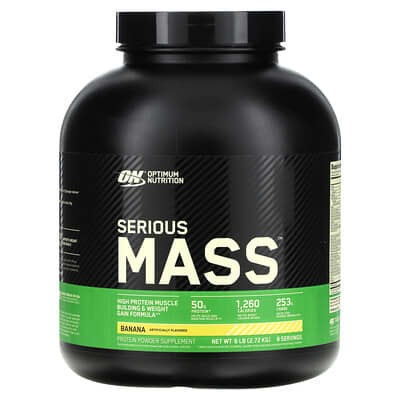
Serious Mass Banana supplies protein for muscle-repair nutrition alongside a broad vitamin and mineral mix. Its unnamed blend contents make the complete formula difficult to compare.
AI assessment of the formula, label and price. How scoring works
Some identified B vitamins and minerals have favorable forms, while other mineral forms offer fewer quality advantages. Unspecified protein and additional ingredient forms limit confidence in the complete mix.
Serving amounts and many nutrient forms are disclosed. Some forms and blend components are unidentified, making a complete comparison difficult.
Most available ingredient comparisons indicate a relatively expensive serving. Protein-specific value and several other contributions lack enough information for a dependable comparison.
Customer feedback is very positive on average. Hundreds of ratings provide a useful satisfaction picture, without establishing fitness or nutritional benefits.
Protein and several nutrients have relevant roles in fitness nutrition and filling dietary gaps. The many additional ingredients give the formula a broad purpose and make individual contributions harder to judge.
 Serious Mass Chocolate$48.49

Creatine supports repeated high-intensity exercise when the declared monohydrate amount and sustained intake match the evidence. Declared protein contributes to muscle-repair nutrition; extra benefit depends on the rest of the diet, and total protein does not establish whey or casein shares.
No linked studies yet.
Calcium and magnesium support bone mineral nutrition when dietary intake is low. Phosphorus is another bone constituent, though additional benefit is not established when intake is adequate. Copper helps cross-link the bone collagen matrix in deficiency; zinc and manganese have supporting roles without established independent routine bone benefits. Vitamin D is present at a small amount per serving and makes no contribution in the saved findings; potassium phosphate cannot inherit potassium-citrate trial results.

Folate and the B vitamins provide nutrients relevant to normal metabolism and blood formation. Vitamin D adds a nutritional contribution relevant to bone and mineral health. Zinc and Selenium add further nutritional contributions. Iron can help fill a gap associated with anaemia and fatigue. These contributions matter when dietary intake is inadequate; additional benefits above adequate intake are not established.

Zinc, vitamin A and selenium provide the clearest links to normal immune function here, including immune-cell activity, protective barriers and antioxidant systems. Copper, iron, vitamins B6 and B12, and folate can help restore immune functions impaired by low intake or deficiency. Vitamin C and D are present in smaller amounts than those counted in the saved findings. The broader nutrient formula does not establish added infection protection when intake is already adequate.
Choline contributes to liver fat export, while selenium supports antioxidant enzymes and folate participates in methyl-group metabolism. Selenium’s mercury and folate’s arsenic findings concern particular exposed or low-nutrient populations. Glutamine’s gut-barrier findings came from a specific intestinal condition and a different repeated regimen, so its 500 mg per serving does not establish routine toxin clearance.
No linked studies yet.
No linked studies yet.

Zinc, iron and biotin can support hair when insufficient intake contributes to shedding. Copper supports pigmentation and vitamin C supports collagen formation and iron absorption. Their normal functions do not establish extra growth with adequate nutrition, and selenium's antioxidant biology does not by itself prove a hair benefit.
| Ingredient | Amount per serving | Score |
|---|---|---|
Calories | 1250 Calorie(s) | |
Total Fat | 3.5 Gram(s) | |
Cholesterol | 105 mg | |
Total Carbohydrate | 254 Gram(s) | |
Protein | 50 Gram(s) | |
Vitamin A (Beta-Carotene) | 940 mcg | |
Vitamin C (Ascorbic Acid) | 60 mg | |
Vitamin D (Cholecalciferol) | 5 mcg | |
Vitamin E (D-Alpha-Tocopheryl Succinate) | 20 mg | |
Thiamin (Thiamine Mononitrate) | 4.8 mg | |
Riboflavin | 4 mg | |
Niacin (Niacinamide) | 50 mg | |
Vitamin B6 (Pyridoxine Hydrochloride) | 5 mg | |
Folate | 680 mcg DFE | |
Vitamin B12 (Cyanocobalamin) | 11 mcg | |
Biotin (D-Biotin) | 300 mcg | |
Pantothenic Acid (Calcium D-Pantothenate) | 25.6 mg | |
Choline (Choline Bitartrate) | 250 mg | |
Calcium (Calcium Citrate, Dicalcium Phosphate) | 640 mg | |
Iron (Ferrous Fumarate) | 6 mg | |
Phosphorus (Dipotassium Phosphate, Dicalcium Phosphate) | 490 mg | |
Iodine (Potassium Iodide) | 53 mcg | |
Magnesium (Magnesium Aspartate) | 125 mg | |
Zinc (Zinc Citrate) | 15 mg | |
Selenium (Selenomethionine) | 71 mcg | |
Copper (Copper Gluconate) | 1 mg | |
Manganese (Manganese Amino Acid Chelate) | 2 mg | |
Chromium (Chromium Polynicotinate) | 120 mcg | |
Molybdenum (Molybdenum Amino Acid Chelate) | 80 mcg | |
Sodium | 570 mg | |
Potassium (Dipotassium Phosphate) | 890 mg | |
Creatine Monohydrate | 3 Gram(s) | |
L-Glutamine | 500 mg | |
Inositol | 250 mg | |
Para-Aminobenzoic Acid | 5 mg |
Published studies used for the product analysis and the top-ranked studies for each ingredient and goal.