
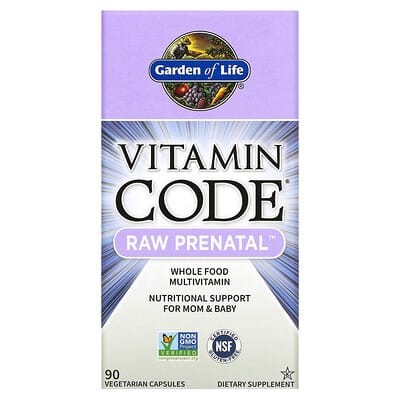

$34.29 $1.14 per serving


Product analysis
Raw Prenatal brings a wide range of nutrients together for pregnancy nutrition. Two blends leave some of the mixture unidentified, making the full formula harder to check.
AI assessment of the formula, label and price. How scoring works
Nutrient Quality44
Vitamin K includes MK-7, and the selenium and manganese sources are favorable features. Quality is less clear for several other nutrients, particularly the iodine and molybdenum sources, and the unidentified blends.
Ingredient Transparency84
Amounts and most ingredient forms are stated, so much of the label can be checked directly. The two blends still leave some components unidentified.
Value For Money33
The known nutrient comparisons suggest an expensive way to obtain several of the individual nutrients. Value for much of the remaining formula is uncertain.
Customer Satisfaction93
Customer ratings are very positive across an extensive body of feedback. That gives a broad picture of satisfaction, without establishing suitability for an individual pregnancy.
Product Focus10
The formula covers a broad range of intended uses around pregnancy nutrition. Unidentified blend components make it difficult to establish the full active mixture or how well it serves those uses.
- Format
Capsule - Container
- 90 Capsule(s)
- Per serving
- $1.14
- Also available
 Raw Prenatal$50.39
- Customer rating
- 4.8 · 17,395 ratings
Goals

Impact
High effect
Folate · 800 mcg DFEVitamin B12 · 2.8 mcgVitamin D · 35 mcgVitamin K · 50 mcgSelenium · 70 mcgZinc · 13 mgVitamin C · 120 mg
B vitamins contribute to normal energy metabolism, while folate and iron support blood formation. Iodine can help meet thyroid-related nutrient needs when intake is low. The selected one-capsule serving provides partial nutrient amounts; several vitamins and minerals fall below the saved contribution thresholds, which does not make them nutritionally useless. These roles do not establish extra benefit when dietary intake is adequate.
How this product is rated for Everyday Health
Ingredient fit68
The recognized ingredients are focused on the supported roles, although links to several goals broaden the product's positioning. The selected serving provides partial amounts of the recognized nutrients. This describes nutrient contribution, not a proven clinical response.
Goal fit
The recognized ingredients are focused on the supported roles, although links to several goals broaden the product's positioning.
Dose adequacy
The selected serving provides partial amounts of the recognized nutrients. This describes nutrient contribution, not a proven clinical response.
Pathways73
Energy metabolism and blood formation are the two main areas recognized; other areas did not reach the saved coverage threshold.
Depth
The strongest recognized area is blood formation and related metabolism.
Breadth
Energy metabolism and blood formation are the two main areas recognized; other areas did not reach the saved coverage threshold.
Evidence82
Folate drives the strongest saved evidence finding. Its supported role does not establish additional benefit above adequate nutrient intake.
Evidence strength
Folate drives the strongest saved evidence finding. Its supported role does not establish additional benefit above adequate nutrient intake.
Studied preparation
The saved result recognizes the preparations of the ingredients meeting its amount threshold; this does not establish superiority of particular forms.
Formulation logic97
The recognized ingredients have no missing required partners, and no configured conflict was triggered. Most recognized nutrients meet the saved amount threshold; vitamin K falls below it.
Partner coverage
The recognized ingredients work independently or have their required partners; this does not establish extra benefit from combining them.
Conflicts
No configured ingredient conflict was triggered by the supplied facts; this finding is limited to the evaluated combinations.
Effective doses
Most recognized nutrients meet the saved amount threshold; vitamin K falls below it.

Impact
Moderate effect
Biotin · 35 mcgVitamin D · 35 mcgZinc · 13 mgIron · 27 mgVitamin C · 120 mg
Iron may help with diffuse shedding when a shortage of iron is behind it. The amount on a label can't tell you whether your iron stores are low or which replacement regimen you need. Taking iron when you already have enough isn't expected to produce extra hair regrowth.
How this product is rated for Hair Health
Ingredient fit48
Zinc is most relevant to shedding associated with low zinc intake.
Goal fit
Zinc is most relevant to shedding associated with low zinc intake.
Dose adequacy
Thiamin (B1): 0.47 mg; Riboflavin (B2): 0.53 mg; Pantothenic acid (B5): 2.33 mg. These are amounts per selected label serving, not instructions for daily use.
Pathways0
No specific hair-related pathway is identified. A nutrient role alone does not imply hair regrowth.
Depth
No specific hair-related pathway is identified for these ingredients.
Breadth
The ingredients do not demonstrate broad action across the named hair-related processes.
Evidence76
Zinc is most relevant to shedding associated with low zinc intake.
Evidence strength
Zinc is most relevant to shedding associated with low zinc intake.
Studied preparation
The iodine preparation has uncertain direct benefit for hair loss.
Formulation logic100
No missing ingredient partner or particular conflict is identified. The ingredient amounts do not by themselves guarantee improved hair growth.
Partner coverage
No missing ingredient partner is identified for the ingredients described here.
Conflicts
No particular ingredient conflict is identified.
Effective doses
The known amounts allow comparison with ingredient-specific reference amounts; this does not guarantee a hair benefit.

Impact
Moderate effect
Vitamin C · 120 mgZinc · 13 mgVitamin A · 1300 mcgVitamin D · 35 mcgSelenium · 70 mcg
Folate, B6 and B12 support normal immune-cell function, with iron also relevant when a nutritional shortfall affects immunity. Vitamins A and D, zinc and selenium provide nutritional support for immune function; these roles do not imply extra protection once needs are met. The ginger and bromelain records remain unconfirmed.
How this product is rated for Immunity
Ingredient fit49
Focus share 44.4 from 4 credited ingredients and 10 off-goal actives (Biotin, Chromium, Iodine, Manganese, Molybdenum, Niacin, Riboflavin, Thiamin, Vitamin B5, Vitamin K); link focus 52.5 from 9 linked goals. Goal focus = 70% × share + 30% × link focus The saved amount assessment is partial; unresolved individual amounts limit the assessed contribution.
Goal fit
Focus share 44.4 from 4 credited ingredients and 10 off-goal actives (Biotin, Chromium, Iodine, Manganese, Molybdenum, Niacin, Riboflavin, Thiamin, Vitamin B5, Vitamin K); link focus 52.5 from 9 linked goals. Goal focus = 70% × share + 30% × link focus
Dose adequacy
The saved amount assessment is partial; unresolved individual amounts limit the assessed contribution.
Pathways0
No assessed immune pathway has meaningful coverage. 0 of 3 target areas meet the saved coverage threshold.
Depth
No assessed immune pathway has meaningful coverage.
Breadth
0 of 3 target areas meet the saved coverage threshold.
Evidence68
Iron is the strongest evidence contributor at an eligible amount in the saved findings. The eligible ingredients match preparations accepted in the saved assessment.
Evidence strength
Iron is the strongest evidence contributor at an eligible amount in the saved findings.
Studied preparation
The eligible ingredients match preparations accepted in the saved assessment.
Formulation logic100
The assessed ingredients can contribute alone or have their required partners. No configured ingredient conflicts were identified in the supplied facts. 4 of 4 assessed ingredients meet the saved minimum amount threshold.
Partner coverage
The assessed ingredients can contribute alone or have their required partners.
Conflicts
No configured ingredient conflicts were identified in the supplied facts.
Effective doses
4 of 4 assessed ingredients meet the saved minimum amount threshold.

Impact
Moderate effect
Vitamin K · 50 mcgVitamin D · 35 mcgManganese · 2.6 mgZinc · 13 mgVitamin C · 120 mg
Vitamin D supports calcium absorption and normal bone mineralization; the serving supplies about 11.7 mcg. Vitamin C supports normal collagen formation, while zinc and manganese have roles in bone-related processes. Their nutritional roles are clearest when they fill dietary gaps, and the supplied evidence does not imply routine fracture reduction from extra intake.
Vitamin K includes separately declared K1 and MK-7 amounts. The MK-7 amount is small compared with the exposure in the supplied bone-density trial, so its contribution remains limited.
How this product is rated for Bone Health
Ingredient fit37
3 ingredients contribute to the saved bone assessment alongside 11 other actives, giving a broader nutritional focus. The saved amount comparison is limited by small or unresolved quantities.
Goal fit
3 ingredients contribute to the saved bone assessment alongside 11 other actives, giving a broader nutritional focus.
Dose adequacy
The saved amount comparison is limited by small or unresolved quantities.
Pathways12
The strongest saved connection is calcium absorption and regulation, with partial coverage at the declared amounts. No assessed bone pathway reaches the saved threshold for substantial coverage.
Depth
The strongest saved connection is calcium absorption and regulation, with partial coverage at the declared amounts.
Breadth
No assessed bone pathway reaches the saved threshold for substantial coverage.
Evidence93
Vitamin D leads the saved evidence comparison among ingredients with sufficient assessed amounts. The 3 assessed ingredient preparations at sufficient amounts match the saved evidence criteria.
Evidence strength
Vitamin D leads the saved evidence comparison among ingredients with sufficient assessed amounts.
Studied preparation
The 3 assessed ingredient preparations at sufficient amounts match the saved evidence criteria.
Formulation logic92
The saved assessment flags Vitamin D as an insufficient partner contribution. 3 of 3 assessed ingredients meet the saved minimum amount comparison.
Partner coverage
The saved assessment flags Vitamin D as an insufficient partner contribution.
Conflicts
No ingredient conflict was identified in the saved assessment.
Effective doses
3 of 3 assessed ingredients meet the saved minimum amount comparison.

Impact
Moderate effect
Iodine · 290 mcgVitamin D · 35 mcgVitamin B5 · 7 mgRiboflavin · 1.6 mgThiamin · 1.4 mgVitamin B12 · 2.8 mcgIron · 27 mg
Iron and folate support normal blood-related nutrient functions, while B vitamins help the body use food for energy. The selected serving provides 9 mg iron and about 267 mcg DFE folate, giving partial nutritional support where intake is low.
Iodine supports thyroid hormone production and vitamin D supports normal function, but no deficiency or extra energy benefit can be assumed from the amounts alone.
How this product is rated for Energy
Ingredient fit49
Several relevant nutrients sit within a broad prenatal formula. The relevant ingredients provide a limited saved exposure match.
Goal fit
Several relevant nutrients sit within a broad prenatal formula.
Dose adequacy
The relevant ingredients provide a limited saved exposure match.
Pathways0
The saved findings show no meaningful coverage of the core energy pathways.
Depth
The saved findings show no meaningful coverage of the core energy pathways.
Breadth
No core area reaches the saved meaningful-coverage threshold.
Evidence96
Iron leads the saved evidence finding. Most effective ingredients match the saved preparation references; iodine does not.
Evidence strength
Iron is the strongest effective ingredient in the saved finding.
Studied preparation
Most effective ingredients match the saved preparation references; iodine does not.
Formulation logic100
The assessed ingredients have no missing required partner or listed conflict. All 6 assessed ingredient exposures reach the saved minimum level.
Partner coverage
The assessed ingredients can contribute alone or have their required partner.
Conflicts
No listed conflict was found in the supplied assessment.
Effective doses
All 6 assessed ingredient exposures reach the saved minimum level.
Vitamin B5 Not classified
No linked studies yet.

Impact
Moderate effect
Vitamin K · 50 mcgVitamin B12 · 2.8 mcgVitamin B6 · 2 mgFolate · 800 mcg DFEVitamin D · 35 mcg
Folate contributes to normal homocysteine metabolism, while thiamin supports normal heart function. B6 and B12 support related nutrient processes but contribute little at the assessed amounts; vitamin D and selenium add smaller nutritional contributions. The saved findings concern general adult heart-health support rather than pregnancy-specific outcomes.
How this product is rated for Heart Health
Ingredient fit35
The formula mainly addresses broader nutrition or other purposes, with a limited focus on heart health. Small or undisclosed amounts limit the contribution in the saved serving comparison.
Goal fit
The formula mainly addresses broader nutrition or other purposes, with a limited focus on heart health.
Dose adequacy
Small or undisclosed amounts limit the contribution in the saved serving comparison.
Pathways13
The clearest contribution involves homocysteine clearance, with partial coverage in the saved findings. Support remains focused, with no assessed heart-health mechanism reaching the saved coverage threshold.
Depth
The clearest contribution involves homocysteine clearance, with partial coverage in the saved findings.
Breadth
Support remains focused, with no assessed heart-health mechanism reaching the saved coverage threshold.
Evidence89
Vitamin B9 (Folate) supplies the strongest relevant evidence at a counted amount, with benefits limited to the particular nutritional or intermediate outcomes assessed. The preparation counted here matches that recognized in the supplied evidence.
Evidence strength
Vitamin B9 (Folate) supplies the strongest relevant evidence at a counted amount, with benefits limited to the particular nutritional or intermediate outcomes assessed.
Studied preparation
The preparation counted here matches that recognized in the supplied evidence.
Formulation logic100
The counted ingredients can contribute independently or have their needed partner. No configured ingredient conflict was identified in the saved assessment. The ingredients counted here reach meaningful amounts in the saved serving comparison.
Partner coverage
The counted ingredients can contribute independently or have their needed partner.
Conflicts
No configured ingredient conflict was identified in the saved assessment.
Effective doses
The ingredients counted here reach meaningful amounts in the saved serving comparison.
Ingredients
| Ingredient | Amount per serving | Score |
|---|---|---|
Vitamin A (Beta-Carotene) | 1300 mcg | |
Vitamin C (organic Amla) | 120 mg | |
Vitamin D (Vitamin D3) | 35 mcg | |
Vitamin E (D-Alpha-Tocopherol) | 19 mg | |
Vitamin K (K1) | 90 mcg | |
Thiamine | 1.4 mg | |
Riboflavin | 1.6 mg | |
Niacin (Niacinamide) | 18 mg | |
Vitamin B6 (S. cerevisiae) | 2 mg | |
Folate (S. cerevisiae) | 800 mcg DFE | |
Vitamin B12 (Methylcobalamin) | 2.8 mcg | |
Biotin (S. cerevisiae) | 35 mcg | |
Pantothenic Acid (S. cerevisiae) | 7 mg | |
Iron (Brown Rice Chelate) | 27 mg | |
Iodine (organic Sea Kelp) | 290 mcg | |
Zinc (Brown Rice Chelate) | 13 mg | |
Selenium (S. cerevisiae) | 70 mcg | |
Manganese (Brown Rice Chelate) | 2.6 mg | |
Chromium (S. cerevisiae) | 18 mcg | |
Molybdenum (Brown Rice Chelate) | 50 mcg | |
Vitamin K2 (Menaquinone-7) | 50 mcg | |
Raw Organic Fruit & Vegetable Blend | 715 mg | |
Prenatal Digestive Blend | 52 mg |
Iodine (organic Sea Kelp) · 290 mcg OverallScore68
A serving provides 290 mcg of iodine from a marine source, an amount consistent with daily support. The chemical form is not resolved in the saved information, which limits comparison of the form.
How this ingredient is rated
Active Ingredient Quality & Bioavailability61
The saved facts identify a marine iodine source with an organic or clean-water marker, but leave its chemical form unresolved. The exact sourcing marker is not provided.
Iodine Form & Bioavailability
The iodine comes from a marine source, but its chemical form is not resolved in the saved information.
Marine Source Purity & Sourcing
The saved facts flag an organic or clean-water marker for the marine source; the specific marker is not given or independently verified.
Dose, Safety & Label Transparency100
The serving provides 290 mcg of iodine, an amount consistent with daily support. The amount is disclosed and does not exceed the evaluated upper limit.
Dosage Efficacy for Daily Support
The 290 mcg of iodine per serving is consistent with daily support.
Dosage Safety & Upper Limits
The declared 290 mcg of iodine per serving does not exceed the evaluated upper limit.
Elemental Iodine Transparency
The iodine amount is given as 290 mcg per serving, although the chemical form is not resolved in the saved facts.
Value20
The whole-product serving costs about $1.14.
Price Per Effective Serving
The whole-product serving costs about $1.14.
Iron (Brown Rice Chelate) · 27 mg OverallScore44
A serving supplies 27 mg of iron, but its chemical form is unknown. Zinc is also listed, which the evaluation flags as a potential competitor for iron absorption.
How this ingredient is rated
Active Ingredient Quality & Bioavailability0
The chemical form of iron is unknown.
Iron Chemical Form & Bioavailability
The saved facts do not identify an iron compound, so its form cannot be assessed.
Absorption Support & Blocker Avoidance
Zinc is also listed, alongside 120 mg of vitamin C; the evaluation flags zinc as a possible competitor for iron absorption.
Dose, Safety & Label Transparency100
The amount of iron is specified as 27 mg per serving.
Elemental Iron Label Clarity
The saved facts identify 27 mg of iron itself per serving.
Dosage Effectiveness & Safety Range
A serving provides 27 mg of iron.
Value20
The whole-product serving price is relatively high.
Price per Effective Serving
A serving of the whole product costs about $1.14.
Manganese (Brown Rice Chelate) · 2.6 mg OverallScore66
A serving provides 2.6 mg of manganese as a chelate. The particular chelating compound is not specified in the available facts, limiting comparisons with named forms.
How this ingredient is rated
Active Ingredient Quality & Bioavailability70
The recorded source is manganese chelate, with no specific chelating compound identified.
Manganese Chemical Form
Manganese chelate is named, but the specific chelating compound is unavailable in the saved facts.
Dose, Safety & Label Transparency86
The serving supplies 2.6 mg of elemental manganese.
Manganese Dosage Efficacy & Safety
A serving supplies 2.6 mg of manganese.
Elemental Weight Disclosure
The saved facts give 2.6 mg as the elemental manganese amount per serving.
Value20
A whole-product serving costs about $1.14.
Price per Serving vs. Median
A whole-product serving costs about $1.14.
Alternative products
Report alternatives
Sources
Published studies used for the product analysis and the top-ranked studies for each ingredient and goal.
- Association between RBC folate and lumbar bone mineral density in postmenopausal women, a cross-sectional study from NHANES 2009-2018.
- Genetic variants modify the associations of concentrations of methylmalonic acid, vitamin B-12, vitamin B-6, and folate with bone mineral density.
- Adequate Intake and Supplementation of B Vitamins, in Particular Folic Acid, can Play a Protective Role in Bone Health.
- Relation of homocysteine, folate, and vitamin B12 to bone mineral density of postmenopausal women.
- Dietary intake of folate, but not vitamin B2 or B12, is associated with increased bone mineral density 5 years after the menopause: results from a 10-year follow-up study in early postmenopausal women.
- Risk of Environmental Chemicals on Bone Fractures Is Independent of Low Bone Mass in US Adults: Insights from 2017 to 2018 NHANES.
- The Manganese-Bone Connection: Investigating the Role of Manganese in Bone Health.
- Associations of multiple metals with bone mineral density: A population-based study in US adults.
- Sex-specific associations of urinary mixed-metal concentrations with femoral bone mineral density among older people: an NHANES (2017-2020) analysis.
- Relationship between blood manganese and bone mineral density and bone mineral content in adults: A population-based cross-sectional study.
- Evaluating the Protective Role of Vitamin A Supplementation in Periodontal Health: A Comprehensive Systematic Review and Meta-Analysis.
- Dietary vitamin A intake and bone health in the elderly: the Rotterdam Study.
- Vitamin A and its dervatives effect on bone mineral density, a systematic review.
- Association of vitamins with bone mineral density and osteoporosis measured by dual-energy x-ray absorptiometry: a cross-sectional study.
- Association of dietary consumption and serum levels of vitamin A and β-carotene with bone mineral density in Chinese adults.
- Effect of Vitamin B12 and Folic Acid Supplementation on Bone Mineral Density and Quantitative Ultrasound Parameters in Older People with an Elevated Plasma Homocysteine Level: B-PROOF, a Randomized Controlled Trial.
- Plasma B vitamins, homocysteine, and their relation with bone loss and hip fracture in elderly men and women.
- Relation between homocysteine and B-vitamin status indicators and bone mineral density in older Americans.
- The role of B-vitamin intake, B-vitamin-rich dietary patterns, the B-vitamin deficiency index in bone mineral density among school-aged children.
- Hyperhomocysteinemia is Associated with Inflammation, Bone Resorption, Vitamin B12 and Folate Deficiency and MTHFR C677T Polymorphism in Postmenopausal Women with Decreased Bone Mineral Density.