
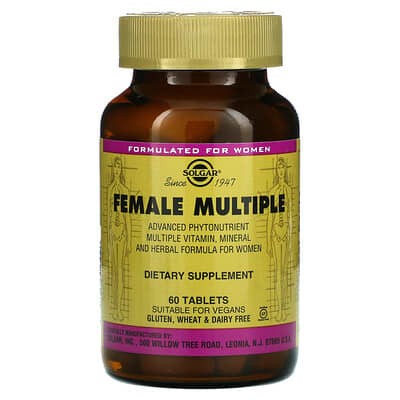


About this product
Broad vitamin and mineral coverage may help when several dietary gaps affect normal energy use or immune function. Iron at 18 mg is relevant when inadequate iron contributes to tiredness, and its bisglycinate source has favorable absorption and stomach-tolerance characteristics. Extra B vitamins do not establish greater energy or concentration once nutritional needs are met.
The mineral blends combine chelated sources with oxide forms without disclosing their shares. Calcium at 400 mg may interfere with iron absorption in the same serving, while the 100 mg choline-bitartrate declaration does not establish 100 mg of choline itself. Repeated source rows and separate B-vitamin declarations should not be added into assumed nutrient totals.
The herbal additions make a daily multivitamin more complicated without establishing broad hormone, weight or detox benefits. Black cohosh carries a rare liver-injury concern, and milk thistle lacks the marker information needed to judge its active content. The high cost and 50 mg B6 amount make careful matching to individual needs more useful than choosing it for its long ingredient list.
Pros
Iron bisglycinate offers a clearly identified chelated iron source Zinc and copper amounts are both available for comparison Iodine source and amount are clearly identified
Cons
Mineral mixtures include oxide forms with undisclosed proportions Calcium in the same serving may reduce iron absorption Milk thistle lacks a stated active-marker concentration High cost and many extra actives reduce focus on a specific need
Warnings
Black cohosh carries a rare liver-injury concern; people with liver problems should review that ingredient before choosing daily use. The 50 mg B6 serving is above the low daily range favored in the supplied guidance; avoid adding another B6 supplement without reviewing total intake. The 18 mg iron serving should match a real iron need rather than be added automatically when iron intake and stores are already adequate.






