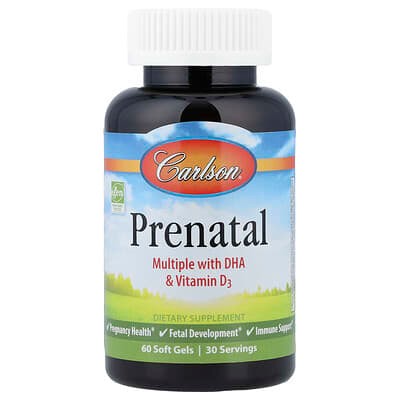


About this product
The clearest use is filling nutritional gaps affecting normal blood formation and energy metabolism. Iron at 27 mg, folate at 1,333 mcg DFE and B12 at 32 mcg are relevant to those functions, but extra energy or concentration benefits are not established when intake is adequate. The prenatal name alone does not confirm that every amount suits an individual's pregnancy needs.
Several mineral choices are helpful: iron is supplied as bisglycinate, iodine as 150 mcg potassium iodide, and 15 mg zinc is paired with a disclosed 2 mg copper. Vitamin D3 at 40 mcg and magnesium at 100 mg contribute to normal bone nutrition, while calcium is too limited and ambiguously repeated to view this as a substantial calcium supplement. Vitamin K is K1, so its presence should not be interpreted as an MK-7-specific benefit.
Important label details still need checking before choosing it for prenatal coverage. The 1 g fish-oil amount does not establish EPA or DHA exposure, and repeated vitamin A entries leave the total and preformed share unclear; the folate form is also unspecified. Many individual nutrients offer limited value within the mixture, and higher-dose comparisons for biotin or niacinamide do not establish a need to increase those amounts for prenatal use.
Pros
Iron bisglycinate supplies a clearly stated 27 mg dose Potassium iodide provides a disclosed 150 mcg iodine amount Both zinc and copper amounts are available Vitamin D is identified as cholecalciferol
Cons
Fish-oil weight does not establish the EPA or DHA amount The folate form is not specified Calcium is limited and repeated across several source entries Many individual nutrients offer limited value at the serving cost Zinc in the same serving can compete with iron absorption
Warnings
Verify the total vitamin A amount and the share supplied as vitamin A palmitate before combining this prenatal with another vitamin A supplement; the repeated entries leave the combined intake unclear.