
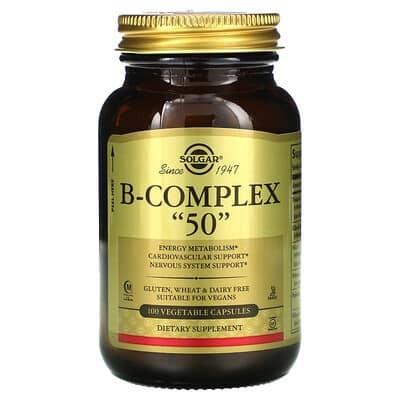
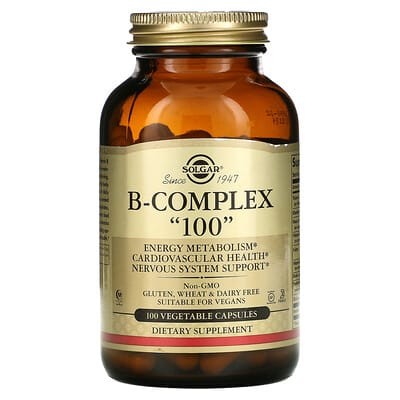
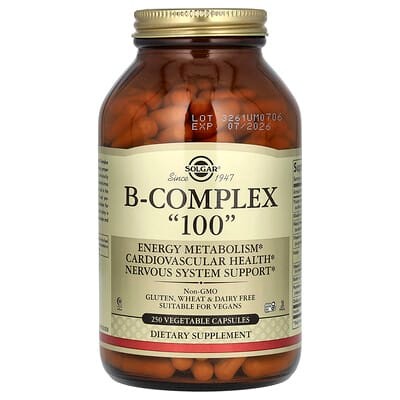
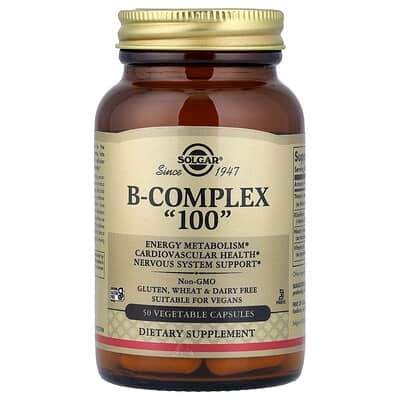
Nutrient quality
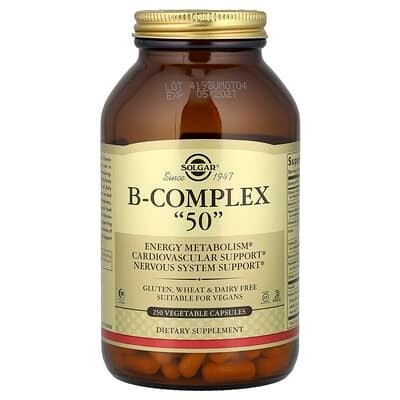
The formula relies on pyridoxine hydrochloride, cyanocobalamin, and other conventional B-vitamin forms. The high vitamin B6 amount creates a meaningful neuropathy concern with long-term use.
.
 Walmart Walmart | $ 28.29 | |
 Vitacost Vitacost | $ 27.39 | |
| Vitacost | $ 27.39 | |
 Daily Vita Daily Vita | $ 27.44 | |
 iHerb iHerb | $ 25.87 |
Most major B vitamins are supplied at high amounts, with folate, B12, D-biotin, pantothenic acid, choline, and inositol also included. The formula is broad enough for general B-complex use without unrelated ingredients.
Pyridoxine hydrochloride, cyanocobalamin, and unspecified folate are functional but less desirable than active forms. Choline bitartrate is present at only 21 mg and should not be treated as a meaningful choline serving.
A 50 mg vitamin B6 amount is unnecessarily aggressive for everyday maintenance. The one-capsule format is easy to use, but the large package encourages prolonged exposure to a dose better reserved for a defined need.
The formula relies on pyridoxine hydrochloride, cyanocobalamin, and other conventional B-vitamin forms. The high vitamin B6 amount creates a meaningful neuropathy concern with long-term use.
.Named vitamins have exact amounts, while the herbal blend components do not. A small herbal blend hides its ingredients, though it is not central to the formula.
.The supplied aggregate rating is very strong. No complaint themes or purpose-specific experience details are supplied.
.The formula offers reasonable value despite important quality or dose trade-offs. The tiny herbal blend and modest choline add little to the core formula.
.
A complete B-complex supports the nutrient-dependent steps that convert food into cellular energy. High amounts of thiamin, riboflavin, niacin, and pantothenic acid provide focused metabolic coverage.
Standard vitamin forms and a B12 amount below the targeted energy threshold limit the advantage over basic deficiency support. The concentrated vitamin B6 amount also makes long-term daily use less suitable without a clear need.
No linked studies yet.

The high-potency B-vitamin blend supplies several cofactors used to turn food into cellular energy. Its role is foundational, so it is more relevant to correcting inadequate intake than directly raising metabolic rate.
Amounts are substantial and fully disclosed, but most vitamins use standard precursor forms. The focused formula is coherent, although it does not cover thermogenesis, thyroid support, or glycemic control.
| Ingredient | Amount per serving |
|---|---|
Thiamine (Thiamine Mononitrate, Vitamin B1) | 50 mg |
Riboflavin (Vitamin B2) | 50 mg |
Niacin (Niacinamide, Vitamin B3) | 50 mg |
Vitamin B6 (Pyridoxine Hydrochloride) | 50 mg |
Folate | 666 mcg DFE |
Vitamin B12 (Cyanocobalamin) | 50 mcg |
Biotin (D-Biotin) | 50 mcg |
Pantothenic Acid (D-Calcium Pantothenate, Vitamin B5) | 50 mg |
Choline (Choline Bitartrate) | 21 mg |
Inositol | 50 mg |
Herbal Powdered Blend | 3.5 mg |
The B-complex uses clearly named niacinamide at a useful general-support amount. A standard capsule offers no special release control, but niacinamide itself has low flush potential. The large package delivers particularly favorable value per serving.
Pyridoxine hydrochloride is less metabolically ready than P-5-P, but riboflavin may help support conversion. The 50 mg serving is well aligned with the preferred dose range and needs only one capsule. Low serving cost offers strong value.
Standard riboflavin requires enzymatic conversion before it becomes metabolically active, while the capsule should dissolve readily. The amount reaches the high-potency range for metabolic support. The low serving cost makes the clearly stated dose highly efficient.
Published studies used for the product analysis and the top-ranked studies for each ingredient and goal.