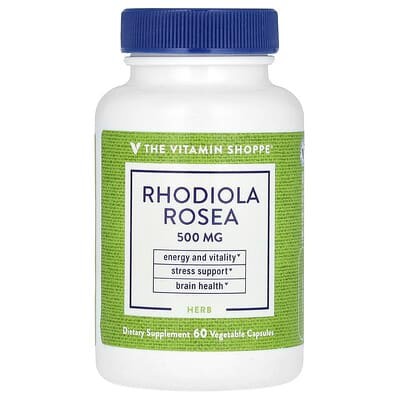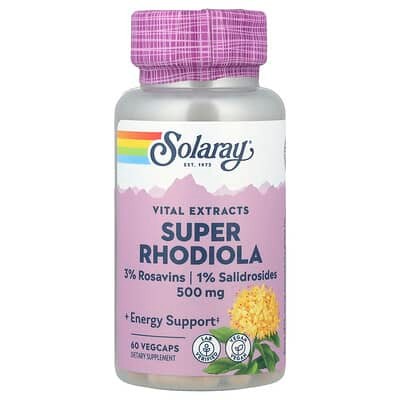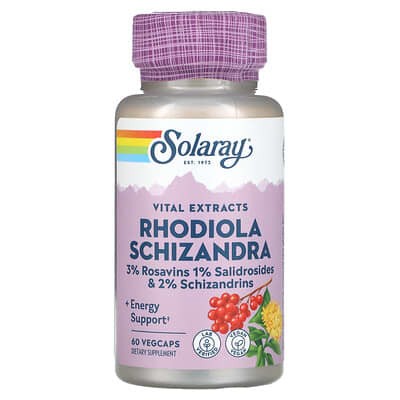
Rhodiola

Description

Rhodiola rosea is a perennial flowering plant in the family Crassulaceae, commonly known as golden root, roseroot, or arctic root. It grows in cold, high-altitude regions of Europe and Asia. As an adaptogen, Rhodiola helps to balance the body's stress response system (HPA axis), enhancing resilience to various stressors, whether physical, chemical, or environmental. Its primary active compounds, salidrosides and rosavins, are believed to contribute to its beneficial effects. These compounds may influence neurotransmitters like serotonin, dopamine, and norepinephrine, which play crucial roles in mood, energy, and cognitive function. Rhodiola is often used to combat fatigue, improve mental clarity, and enhance mood, particularly during periods of increased stress. Beyond stress management, Rhodiola has been studied for its potential to improve physical performance by reducing perceived exertion and aiding in recovery. It may also support cognitive function, including attention, memory, and information processing, making it a popular choice for those seeking to enhance mental performance and reduce burnout.

Sources
Rhodiola rosea plant (roots and rhizomes)
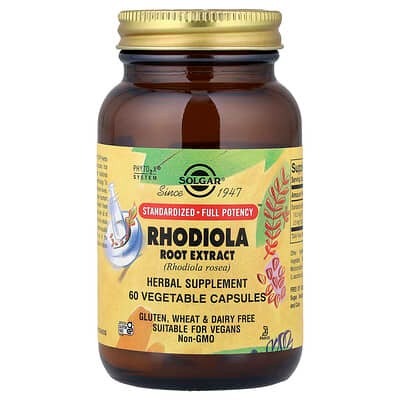
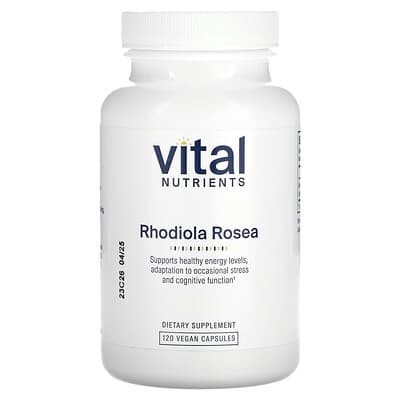
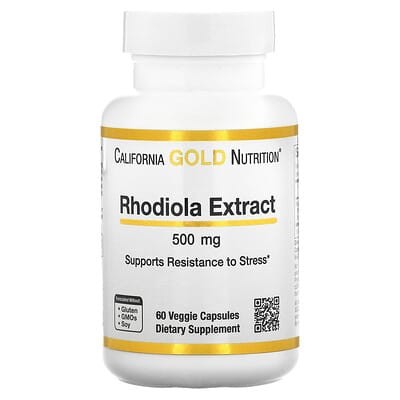
Cheapest Rhodiola supplements
Discover the most affordable Rhodiola supplements to enhance mood, energy, cognitive support, and stress relief for overall well-being.
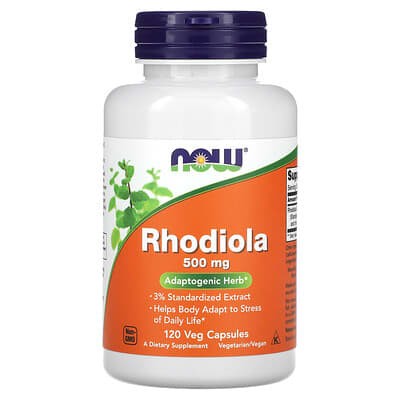
Best Rhodiola Supplements
Discover the best Rhodiola supplements to enhance mood, boost energy, support cognitive function, and aid stress relief for overall well-being and productivity.
Value Rhodiola supplements
Discover the best value Rhodiola supplements to enhance mood, boost energy, support cognitive function, and manage stress for overall well-being and productivity.
Timing & Intake
AnytimeWith foodAvoid before bedTake with Can be taken with food to minimize potential mild stomach upset, though often well-tolerated on an empty stomach.
Some individuals may experience mild stimulating effects, so it is often recommended to take it earlier in the day, preferably not too close to bedtime to avoid potential sleep disturbances.
Optimal Dosage
Minimum200 mg
Maximum600 mg
Safety & Toxicity
Goals
Cognitive Support
Cognitive Support
Impact
High effect
Typical dose:100–600 mg
Rhodiola rosea helps the body adapt to physical and mental stressors. It has an acute effect on reducing the feeling of 'burnout,' enhancing concentration, and improving mood by influencing levels of neurotransmitters like serotonin and dopamine.
View goal ->
General Health
General Health
Impact
High effect
Typical dose:200–600 mg
Rhodiola rosea works by influencing key central nervous system mediators, such as serotonin and dopamine, and modulating the HPA axis response to stress. This leads to a tangible feeling of reduced fatigue and increased mental clarity and physical endurance, making it effective for combating burnout and enhancing daily performance.
View goal ->
Mental Focus
Mental Focus
Impact
High effect
Typical dose:100–600 mg
Rhodiola rosea helps regulate the body's stress-response system, preserving levels of key neurotransmitters like dopamine and serotonin. This leads to improved concentration, mood, and mental stamina during demanding tasks.
View goal ->
Mood Support
Mood Support
Impact
High effect
Typical dose:200–600 mg
Rhodiola rosea is particularly effective for mood issues related to burnout and exhaustion. It can improve energy levels, concentration, and overall sense of well-being by influencing monoamine oxidase activity.
View goal ->
Productivity Boost
Productivity Boost
Impact
High effect
Typical dose:200–600 mg
Rhodiola rosea helps the body adapt to physical and mental stress by influencing key brain chemicals like serotonin and dopamine, and by moderating the stress hormone cortisol. This action helps preserve cognitive resources, leading to improved endurance and concentration during long or stressful tasks.
View goal ->
Price per product
Average$28.38
Median$26.89
Price per serving
Average$0.73
Median$0.63
Price per 100 mg
Average$0.44
Median$0.36
Price distribution
Price per serving distribution
Price per 100 mg
Reference amount: 100 mg
Forms
Paired ingredients
Rosavins (34)85
Rosavins are a class of phenylpropanoid glycosides, specifically rosavin, rosarin, and rosin, found exclusively in Rhodiola rosea. These compounds are widely recognized as primary active constituents, working synergistically with salidroside to exert Rhodiola's adaptogenic, anti-fatigue, and stress-protective effects. Standardization of Rhodiola extracts often focuses on ensuring a specific percentage of total rosavins (typically 3%) to guarantee potency and efficacy.
Pros
  • Primary active compound group for Rhodiola's benefits.
  • Commonly used as a standardization marker for quality extracts.
  • Strong research support for adaptogenic and anti-fatigue properties.
Cons
  • Effectiveness is enhanced when combined with salidroside, not solely isolated.
  • Specific individual roles of rosavin, rosarin, and rosin are not fully differentiated in all studies.
Per product
Avg$37.09
Med$26.57
Per serving
Avg$0.83
Med$0.59
Per 100 mg
Avg$0.34
Med$0.22
Price distribution
Salidroside (24)90
Salidroside is the most studied individual compound within the 'salidrosides' group, a critical active component of Rhodiola rosea. It possesses potent antioxidant, anti-inflammatory, neuroprotective, and adaptogenic properties. Research suggests it can modulate neurotransmitters, protect neurons from oxidative damage, and enhance the body's resistance to various stressors. It is often standardized in Rhodiola extracts (e.g., 1% salidroside) and is considered essential for the herb's therapeutic efficacy.
Pros
  • Extensive individual research supporting its distinct benefits.
  • Potent neuroprotective and antioxidant activity.
  • Crucial for Rhodiola's adaptogenic and anti-fatigue effects.
  • Key marker for product standardization and quality.
Cons
  • May require synergistic action with rosavins for full spectrum benefits.
  • Higher doses may lead to mild overstimulation in sensitive individuals.
Per product
Avg$54.20
Med$45.73
Per serving
Avg$1.21
Med$1.11
Per 100 mg
Avg$0.37
Med$0.23
Price distribution
Salidrosides (15)90
Salidroside is the most studied individual compound within the 'salidrosides' group, a critical active component of Rhodiola rosea. It possesses potent antioxidant, anti-inflammatory, neuroprotective, and adaptogenic properties. Research suggests it can modulate neurotransmitters, protect neurons from oxidative damage, and enhance the body's resistance to various stressors. It is often standardized in Rhodiola extracts (e.g., 1% salidroside) and is considered essential for the herb's therapeutic efficacy.
Pros
  • Extensive individual research supporting its distinct benefits.
  • Potent neuroprotective and antioxidant activity.
  • Crucial for Rhodiola's adaptogenic and anti-fatigue effects.
  • Key marker for product standardization and quality.
Cons
  • May require synergistic action with rosavins for full spectrum benefits.
  • Higher doses may lead to mild overstimulation in sensitive individuals.
Per product
Avg$29.72
Med$25.46
Per serving
Avg$0.77
Med$0.54
Per 100 mg
Avg$0.20
Med$0.14
Price distribution
total Rosavins (10)90
Total rosavins refers to the collective concentration of rosavin, rosarin, and rosin, the characteristic phenylpropanoid glycosides found in Rhodiola rosea. This metric is a cornerstone for ensuring the quality and efficacy of Rhodiola supplements. Most high-quality Rhodiola extracts are standardized to contain 3% total rosavins (and 1% salidroside), a ratio found in the natural root and supported by clinical research for its adaptogenic, anti-fatigue, and stress-reducing benefits.
Pros
  • Essential standardization marker for authentic and potent Rhodiola.
  • Ensures a comprehensive spectrum of key active compounds.
  • Widely researched and recognized for Rhodiola's core benefits.
Cons
  • Should ideally be combined with standardization for salidroside for full effect.
  • Relying solely on this marker might overlook other potentially beneficial minor compounds.
Per product
Avg$60.72
Med$60.75
Per serving
Avg$1.11
Med$0.94
Per 100 mg
Avg$0.29
Med$0.25
Price distribution
Rosavin (3)85
Rosavins are a class of phenylpropanoid glycosides, specifically rosavin, rosarin, and rosin, found exclusively in Rhodiola rosea. These compounds are widely recognized as primary active constituents, working synergistically with salidroside to exert Rhodiola's adaptogenic, anti-fatigue, and stress-protective effects. Standardization of Rhodiola extracts often focuses on ensuring a specific percentage of total rosavins (typically 3%) to guarantee potency and efficacy.
Pros
  • Primary active compound group for Rhodiola's benefits.
  • Commonly used as a standardization marker for quality extracts.
  • Strong research support for adaptogenic and anti-fatigue properties.
Cons
  • Effectiveness is enhanced when combined with salidroside, not solely isolated.
  • Specific individual roles of rosavin, rosarin, and rosin are not fully differentiated in all studies.
Per product
Avg$39.32
Med$38.99
Per serving
Avg$0.37
Med$0.37
Per 100 mg
Avg$0.06
Med$0.06
Price distribution
Rhodiola rosea L. Rhizome Extract (1)95
Rhodiola rosea, often referred to as 'golden root,' is a powerful adaptogenic herb native to cold, mountainous regions. Its roots are used to produce extracts rich in bioactive compounds, primarily rosavins (rosavin, rosarin, rosin) and salidroside. These compounds work synergistically to help the body adapt to various physical, chemical, and environmental stressors, reducing fatigue, enhancing mental performance, and supporting mood. High-quality Rhodiola rosea extracts are typically standardized to 3% total rosavins and 1% salidroside to ensure consistent potency.
Pros
  • Full spectrum of beneficial compounds, ensuring synergistic effects.
  • Extensive scientific research backing its adaptogenic properties.
  • Well-established history of traditional use.
  • Comprehensive benefits for stress, energy, mood, and cognition.
Cons
  • Quality can vary significantly between products; standardization is key.
  • Potential for mild side effects like jitteriness if sensitive or high dose.
Per product
Avg$44.95
Med$44.95
Per serving
Avg$1.49
Med$1.49
Per 100 mg
Avg$1.49
Med$1.49
Price distribution
Rhodiola rosea Root Extract (1)95
Rhodiola rosea, often referred to as 'golden root,' is a powerful adaptogenic herb native to cold, mountainous regions. Its roots are used to produce extracts rich in bioactive compounds, primarily rosavins (rosavin, rosarin, rosin) and salidroside. These compounds work synergistically to help the body adapt to various physical, chemical, and environmental stressors, reducing fatigue, enhancing mental performance, and supporting mood. High-quality Rhodiola rosea extracts are typically standardized to 3% total rosavins and 1% salidroside to ensure consistent potency.
Pros
  • Full spectrum of beneficial compounds, ensuring synergistic effects.
  • Extensive scientific research backing its adaptogenic properties.
  • Well-established history of traditional use.
  • Comprehensive benefits for stress, energy, mood, and cognition.
Cons
  • Quality can vary significantly between products; standardization is key.
  • Potential for mild side effects like jitteriness if sensitive or high dose.
Per product
Avg$42.50
Med$42.50
Per serving
Avg$0.94
Med$0.94
Per 10 mg
Avg$0.13
Med$0.13
Price distribution
Rosarin (1)70
Rosarin is a specific phenylpropanoid glycoside and a constituent of the 'total rosavins' found in Rhodiola rosea. Like rosavin and rosin, it contributes to the overall adaptogenic, anti-fatigue, and stress-protective effects of the herb. While its individual pharmacological profile is less delineated than salidroside or the total rosavins, it is understood to be part of the synergistic complex that gives Rhodiola its renowned benefits. Its presence is indicative of a complete Rhodiola rosacea extract.
Pros
  • Contributes to the adaptogenic and stress-reducing effects of Rhodiola.
  • Part of the key active compound group (rosavins).
Cons
  • Less individual research available compared to salidroside or total rosavins.
  • Not typically isolated and used as a standalone supplement form.
Per product
Avg$44.99
Med$44.99
Per serving
Avg$0.37
Med$0.37
Per 100 mg
Avg$0.06
Med$0.06
Price distribution
Rosin (1)70
Rosin is one of the specific phenylpropanoid glycosides that collectively make up the 'total rosavins' in Rhodiola rosea. While less extensively studied in isolation compared to salidroside or the total rosavins complex, it is understood to contribute to the herb's adaptogenic, anti-fatigue, and stress-reducing properties. Its beneficial effects are typically considered part of the synergistic action with other rosavins and salidroside.
Pros
  • Contributes to the adaptogenic effects of Rhodiola.
  • Part of the key active compound group (rosavins).
Cons
  • Limited individual research compared to salidroside or total rosavins.
  • Less effective in isolation than the full rosavins/salidroside complex.
Per product
Avg$44.99
Med$44.99
Per serving
Avg$0.37
Med$0.37
Per 100 mg
Avg$0.06
Med$0.06
Price distribution