
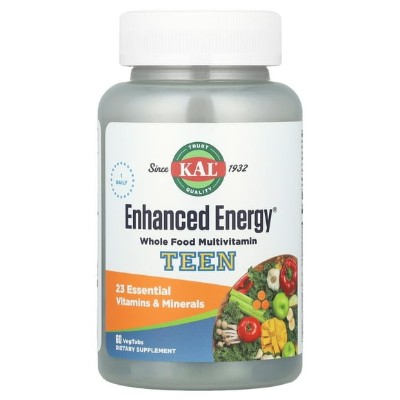
Enhanced Energy Teen Stay Sharp Multivitamin

Goals
$17.00 $0.28 per serving


Product analysis
Enhanced Energy Teen Stay Sharp Multivitamin offers broad nutrient coverage that may help fill dietary gaps. Undisclosed blend contents make it harder to judge what you are taking.
AI assessment of the formula, label and price. How scoring works
Nutrient Quality43
Ingredient quality is mixed: some vitamin and mineral forms are identified, while several blends remain unclear. The undisclosed copper proportions also prevent a confident judgement about that combination.
Ingredient Transparency71
The listed amounts and many nutrient forms are stated, helping you compare the basic nutrients. Missing blend contents and proportions make the complete formula harder to understand.
Value For Money46
Value varies between nutrients, with favourable comparisons for riboflavin and iron and less favourable ones for niacin and selenium. Several other comparisons remain uncertain, so the whole formula cannot be called a clear bargain.
Customer Satisfaction57
The small number of reviews suggests broadly positive but less consistent satisfaction. More customer feedback would make that judgement firmer.
Product Focus5
The formula covers many nutritional needs, but the adult-based evidence does not establish suitability for teenagers or improved concentration. The unusually large reported vitamin A amount needs checking before relying on the formula for a teen.
- Format
Tablet - Container
- 60 Tablet(s)
- Per serving
- $0.28
- Customer rating
- 4.0 · 19 ratings
Goals

Impact
Highest effect
Magnesium · 50 mgVitamin C · 200 mgZinc · 20 mgVitamin A · 1500 mgVitamin D · 25 mcgSelenium · 100 mcg
Zinc supports normal immune-cell function; the supplied evidence does not extend acute lozenge findings to routine use of this serving. Vitamin C contributes to immune nutrition and has modest support for shorter colds with regular use, rather than general infection prevention. Vitamin A supports normal barrier function. Copper, Folate, Vitamin B6, Vitamin B12, Selenium, Iron and Vitamin D support normal immune nutrition, with additional benefit mainly relevant when intake is low. The supplied vitamin A amount is far above the comparison range; retained credit does not establish extra benefit or suitability.
How this product is rated for Immunity
Ingredient fit62
Copper, Folate, Vitamin B6 and Vitamin B12 account for the main immune connection. Amounts and the wider formula limit how fully that connection is represented.
Goal fit
Relevant immune nutrients sit within a broader formula, so immunity is only part of its focus.
Dose adequacy
The amounts provide partial coverage of the saved comparisons; this is not a measure of the chance of benefit.
Pathways100
The strongest saved connection is barrier and antimicrobial defense. Other covered areas follow the supplied nutrient and amount findings.
Depth
The strongest saved connection is barrier and antimicrobial defense, rather than a prediction of resistance to infection.
Breadth
The main covered areas are barrier and antimicrobial defense, lymphocyte function and immune regulation, oxidative and inflammatory balance. These describe the saved findings, not proven combined clinical effects.
Evidence100
Zinc provides the clearest evidence connection. The evidence supports the described roles, without establishing general infection prevention.
Evidence strength
Zinc provides the leading evidence connection here, within the supplied limits on normal nutrition and respiratory outcomes.
Studied preparation
The counted preparations match the saved comparisons; that does not imply superior forms or infection prevention.
Formulation logic100
The counted ingredients have no unmet partner requirement or configured conflict. Their amounts meet the saved minimum comparison.
Partner coverage
The counted ingredients have no unmet partner requirement in the supplied findings.
Conflicts
No configured ingredient conflict was identified. This finding does not assess every aspect of suitability.
Effective doses
All counted ingredients meet the saved minimum amount comparison; this is not proof of an effective clinical regimen.

Impact
Highest effect
Folate · 680 mcgVitamin B12 · 250 mcgVitamin D · 25 mcgMagnesium · 50 mgVitamin K · 10 mcgSelenium · 100 mcgZinc · 20 mgVitamin C · 200 mg
B vitamins, folate and B12 provide nutrients used in normal energy metabolism and blood formation. Iron and iodine can help fill dietary gaps, while zinc and selenium contribute to normal antioxidant and immune functions. These nutritional contributions can help when intake is low, without establishing extra benefit when intake is adequate. The saved comparison uses adult nutritional references and does not establish adolescent suitability or improved concentration.
How this product is rated for Everyday Health
Ingredient fit79
Relevant nutrients contribute to the goal, while additional actives make the formula less focused on those functions. The relevant amounts provide uneven contributions, with some below the saved comparison endpoints or unresolved.
Goal fit
Relevant nutrients contribute to the goal, while additional actives make the formula less focused on those functions.
Dose adequacy
The relevant amounts provide uneven contributions, with some below the saved comparison endpoints or unresolved.
Pathways100
The strongest represented area is normal energy metabolism. The saved findings span several distinct nutritional functions.
Depth
The strongest represented area is normal energy metabolism.
Breadth
The saved findings span several distinct nutritional functions.
Evidence82
Vitamin B9 (Folate) leads the saved evidence finding; its nutritional role does not establish added benefit when intake is adequate.
Evidence strength
Vitamin B9 (Folate) leads the saved evidence finding; its nutritional role does not establish added benefit when intake is adequate.
Studied preparation
The counted preparations match the saved preparation finding, without establishing superior effects from particular forms.
Formulation logic100
The counted ingredients have their relevant partners or contribute independently, and no listed formulation conflict was triggered.
Partner coverage
The counted ingredients contribute independently or have their relevant partners; an added combined benefit is not established.
Conflicts
No listed formulation conflict was triggered; this does not establish safety of the whole formula.
Effective doses
The counted ingredients reach the saved minimum amount comparison, which is not a proven clinical benefit threshold.

Impact
High effect
Biotin · 100 mcgVitamin D · 25 mcgZinc · 20 mgIron · 9 mgVitamin C · 200 mg
Zinc, biotin and iron can help replace low nutrient intakes that can cause diffuse shedding. This connection concerns correcting a shortfall, rather than established regrowth when intake is adequate. A particular zinc salt does not establish superior hair outcomes. Vitamin C supports normal collagen formation and iron absorption, without establishing a separate regrowth effect. Excess vitamin A can worsen hair loss; the reported amount does not establish a helpful hair dose.
How this product is rated for Hair Health
Ingredient fit61
This formula combines nutrients relevant to hair nutrition with ingredients aimed at other goals. The amounts give a mixed contribution: some are below the full reference levels, which do not measure expected regrowth.
Goal fit
This formula combines nutrients relevant to hair nutrition with ingredients aimed at other goals.
Dose adequacy
The amounts give a mixed contribution: some are below the full reference levels, which do not measure expected regrowth.
Pathways60
The findings concentrate on antioxidant-related follicle functions, with limited breadth across the other specified areas.
Depth
The largest contribution concerns antioxidant-related functions around follicles; this does not establish improved hair growth.
Breadth
The findings concentrate on antioxidant-related follicle functions, with limited breadth across the other specified areas.
Evidence97
Zinc leads the supplied comparison, but its practical hair benefit is tied to correcting a shortfall.
Evidence strength
Zinc leads the supplied comparison, but its practical hair benefit is tied to correcting a shortfall.
Studied preparation
Most counted ingredients meet the preparation check; iodine lacks a match, and thyroid biology alone does not establish hair benefit.
Formulation logic98
The counted ingredients have no missing required partner or triggered conflict, but unresolved amounts limit part of the contribution.
Partner coverage
The counted ingredients have no missing required partner under the supplied checks.
Conflicts
None of the specific conflict checks was triggered; this does not establish that every ingredient or amount is suitable.
Effective doses
Vitamin B12 has unresolved amounts that limit the contribution; the other counted amounts meet the minimum comparison level.

Impact
High effect
Zinc · 20 mgVitamin C · 200 mgCopper · 1 mgSelenium · 100 mcgVitamin E · 33 mg
Vitamin C supports collagen formation and wound healing when intake is low. Zinc helps repair skin when zinc intake is inadequate. The B vitamins help prevent skin problems caused by their respective deficiencies; extra amounts do not establish added benefit with adequate nutrition. Copper supports collagen and elastin cross-linking, but added copper has no established cosmetic benefit with adequate intake.
How this product is rated for Skin Health
Ingredient fit56
The relevant ingredients primarily provide nutritional support within a broader formula. Their saved amount findings do not establish extra cosmetic benefit.
Goal fit
Relevant skin ingredients share the formula with ingredients aimed at other needs.
Dose adequacy
The credited amounts only partly meet the saved references; lower or undisclosed amounts limit their contribution.
Pathways69
The strongest saved connection is to dermal collagen matrix. Ingredient roles and limited outcome evidence should not be read as proven cosmetic improvements.
Depth
The main connection is to dermal collagen matrix, with the amount and ingredient limitations carried into the finding.
Breadth
Two targeted pathways reach the saved coverage threshold; hydration and water binding remain unsupported.
Evidence100
Vitamin C leads the saved evidence finding. The supplied scientific context limits claims to the relevant nutritional role or preparation-specific outcomes.
Evidence strength
Vitamin C provides the strongest saved evidence contribution; this does not establish broad cosmetic improvement.
Studied preparation
The credited preparations meet the saved preparation checks, while the supplied evidence still limits transfer to routine skin outcomes.
Formulation logic100
The credited ingredients need no missing partner, and no configured conflicts were identified. Those findings do not establish added benefit from combining ingredients.
Partner coverage
The credited ingredients can contribute without an additional required partner.
Conflicts
No configured ingredient conflict was identified in the supplied findings.
Effective doses
All credited ingredients meet the saved minimum amount threshold; that threshold is not a proven effective skin dose.

Impact
Moderate effect
Magnesium · 50 mgZinc · 20 mgVitamin D · 25 mcg
Zinc may help restore testosterone when low zinc is contributing to low levels. That is a benefit of correcting a shortage, rather than a reason to expect an increase when you're already getting enough. The zinc amount in a serving doesn't identify whether a shortage or low testosterone is present. Vitamin D doesn't add a clear hormone-raising benefit when vitamin D levels are already adequate.
How this product is rated for Testosterone Support
Ingredient fit46
Zinc may help restore testosterone when low zinc is responsible; extra intake does not imply an increase when zinc intake is adequate.
Goal fit
Zinc may help restore testosterone when low zinc is responsible; extra intake does not imply an increase when zinc intake is adequate.
Dose adequacy
The serving declares Zinc 20 mg; Selenium 100 mcg. These amounts don't predict an individual testosterone change.
Pathways50
The ingredients relate to testosterone production, but normal nutrient roles do not guarantee a hormone increase.
Depth
The ingredients relate to testosterone production, but normal nutrient roles do not guarantee a hormone increase.
Breadth
Connections to particular hormone processes do not demonstrate broad or lasting testosterone enhancement.
Evidence91
Zinc may help restore testosterone when low zinc is responsible; extra intake does not imply an increase when zinc intake is adequate. Nutrient status matters to how that applies.
Evidence strength
Zinc may help restore testosterone when low zinc is responsible; extra intake does not imply an increase when zinc intake is adequate.
Studied preparation
Vitamin B6 has no clear independent testosterone benefit from its cofactor role or declared form.
Formulation logic100
No particular ingredient conflict is identified in the available product facts. No required ingredient partner is missing.
Partner coverage
No required ingredient partner is missing for the relevant ingredients.
Conflicts
No particular ingredient conflict is identified in the available product facts.
Effective doses
The relevant declared amounts permit comparisons with ingredient-specific reference amounts, without showing that the serving will raise testosterone.
Vitamin B6 Not classified
No linked studies yet.

Impact
High effect
Vitamin K · 10 mcgMagnesium · 50 mgCalcium · 100 mgVitamin D · 25 mcgCopper · 1 mgManganese · 1 mgZinc · 20 mgVitamin C · 200 mg
Vitamin D supports calcium absorption and deficiency-related mineralization. Vitamin C and copper support bone collagen when intake is inadequate. Calcium, magnesium, MK-7 and potassium amounts are below the meaningful-amount thresholds in the selected serving, so they do not provide the corresponding mineral or bone-protein contributions here. The supplied comparison is for adults and does not establish a teen-specific regimen or benefit.
How this product is rated for Bone Health
Ingredient fit59
Relevant nutrients sit within a broad multivitamin, and several bone-related amounts are too small to count.
Goal fit
Relevant nutrients sit within a broad multivitamin, and several bone-related amounts are too small to count.
Dose adequacy
Calcium, magnesium, MK-7 and potassium fall below the meaningful-amount thresholds; vitamin D and several other nutrients make partial contributions.
Pathways80
Collagen-matrix functions and calcium absorption receive the strongest coverage.
Depth
Collagen-matrix functions and calcium absorption receive the strongest coverage.
Breadth
Collagen formation and absorption-related regulation receive coverage; mineral supply and bone-protein activation are uncovered.
Evidence98
Zinc leads the saved evidence finding. Nutritional or preparation-specific findings do not establish general fracture prevention.
Evidence strength
Zinc provides the strongest saved ingredient support; ordinary nutrient roles do not establish extra bone benefit when intake is adequate.
Studied preparation
The counted ingredients have accepted preparations in the supplied finding; this does not establish equal clinical benefit from every nutrient.
Formulation logic97
Vitamin D lacks a qualifying calcium partner at the selected serving amount. No checked conflict was identified.
Partner coverage
Vitamin D lacks a qualifying calcium partner at the selected serving amount.
Conflicts
No conflict covered by the supplied checks was identified.
Effective doses
All counted ingredients reach the threshold; calcium, magnesium, MK-7 and potassium remain below it.

Impact
Moderate effect
Iodine · 75 mcgVitamin D · 25 mcgVitamin B5 · 10 mgMagnesium · 50 mgRiboflavin · 10 mgThiamin · 10 mgVitamin B12 · 250 mcgIron · 9 mgPotassium · 25 mg
Iron and the B vitamins provide nutritional support relevant to fatigue when intake is inadequate. Vitamin C adds support for a nutrient need whose deficiency can cause tiredness; high amounts do not imply an extra energy boost.
Cordyceps and eleuthero source declarations remain unreconciled with the ingredient inventory, leaving their presence and contribution unresolved. The supplied assessment uses adult evidence and does not establish a teen-specific fatigue benefit.
How this product is rated for Energy
Ingredient fit55
The ingredients provide a partial connection to energy support, with amounts considered separately from normal nutrient roles.
Goal fit
The relevant ingredients sit within a formula with several intended uses, giving a partial specific match to energy support.
Dose adequacy
The assessed amounts provide a partial match to the saved exposure comparisons.
Pathways0
The saved assessment finds no substantive coverage of the specified energy mechanisms.
Depth
The saved assessment finds no substantive coverage of the specified energy mechanisms.
Breadth
None of the specified energy mechanisms reaches the saved coverage threshold.
Evidence97
The saved evidence finding is led by the assessed ingredients, with limits related to nutritional status and preparation identity.
Evidence strength
Iron leads the saved evidence comparison among ingredients meeting the amount criterion. The expected benefit remains limited by nutritional status or the research scope.
Studied preparation
Preparation matching is incomplete in the saved findings, including Iodine.
Formulation logic100
The saved assessment flags no missing required partners or ingredient conflicts; some amounts may still be small or unresolved.
Partner coverage
The assessed ingredients can stand alone or have the partners required by the saved assessment.
Conflicts
No configured ingredient conflicts were flagged.
Effective doses
12 of 12 assessed ingredients meet the saved minimum amount criterion. Meeting that criterion does not establish an energy benefit.
Vitamin B5 Not classified
No linked studies yet.
Ingredients
| Ingredient | Amount per serving | Score |
|---|---|---|
Vitamin A (Beta-Carotene, Natural) | 1500 mg | |
Vitamin C (Ascorbic Acid) | 200 mg | |
Vitamin D (Cholecalciferol) | 25 mcg | |
Vitamin E (D-Alpha-Tocopheryl Succinate) | 33 mg | |
Vitamin K (Menaquinone-7) | 10 mcg | |
Thiamine (Thiamine Hydrochloride) | 10 mg | |
Riboflavin (Riboflavin 5-Phosphate) | 10 mg | |
Niacin (Niacinamide) | 30 mg | |
Vitamin B-6 (Pyridoxal 5-Phosphate Monohydrate, Pyridoxine Hydrochloride) | 10 mg | |
Folic Acid | 680 mcg | |
Vitamin B-12 (Cyanocobalamin, Methylcobalamin) | 250 mcg | |
Biotin | 100 mcg | |
Pantothenic Acid (Calcium Pantothenate) | 10 mg | |
Calcium (Calcium Carbonate) | 100 mg | |
Iron (Ferrous Fumarate) | 9 mg | |
Iodine (organic Kelp) | 75 mcg | |
Magnesium (Magnesium Oxide) | 50 mg | |
Zinc (Zinc Citrate) | 20 mg | |
Selenium (Selenomethionine) | 100 mcg | |
Copper (Copper Amino Acid Chelate, Copper Chlorophyllin) | 1 mg | |
Manganese (Manganese Amino Acid Chelate) | 1 mg | |
Chromium (Chromium Arginate) | 100 mcg | |
Sodium | 157 mg | |
Potassium (Potassium Citrate) | 25 mg | |
Choline (Choline Bitartrate) | 9.5 mg | |
Inositol | 25 mg | |
Citrus Bioflavonoid Complex | 50 mg | |
Hesperidin | 1 mg | |
Stay Sharp Blend | 75 mg | |
Ecoganic Herbs & Superfoods | 50 mg | |
Ecoganic Veggies & Greens | 50 mg | |
Ecoganic Super Fruits | 50 mg | |
Ecoganic Raw Mushrooms | 50 mg | |
Digestive Enzymes | 50 mg | |
ActiSorb Base | 10 mg |
Selenium (Selenomethionine) · 100 mcg OverallScore62
Each serving provides 100 mcg of selenium as selenomethionine. The evaluation does not provide a separate teen-specific dose assessment.
How this ingredient is rated
Active Ingredient Quality & Bioavailability53
The selenium is identified as selenomethionine; the available name is less specific than an L-designated form.
Selenium Chemical Form
The evaluation treats selenomethionine as a generic form rather than a specifically identified L form.
Form Transparency & Isomer Specificity
The available facts identify selenomethionine, but do not specify an L isomer.
Dose, Safety & Label Transparency88
The 100 mcg per serving is assessed for daily maintenance and does not exceed the evaluation limit; a teen-specific assessment is not shown.
Dosage Efficacy Sweet Spot
The evaluation considers 100 mcg of selenium per serving suitable for daily maintenance.
Safety Margin & UL Adherence
The amount does not exceed the limit used in the evaluation; no teen-specific assessment is shown.
Value30
The full-product price works out to about $0.57 per 200 mcg of selenium; it is a comparison figure, not a separate selenium price.
Price per 200 mcg Serving
The full-product price works out to about $0.57 per 200 mcg of selenium; it is a comparison figure, not a separate selenium price.
Zinc (Zinc Citrate) · 20 mg OverallScore78
Each serving provides 20 mg of zinc as citrate, a form the evaluation views favorably for absorption. The serving also contains 1 mg of copper, giving a zinc-to-copper ratio of about 20:1.
How this ingredient is rated
Active Ingredient Quality & Bioavailability80
The zinc is zinc citrate, a form the evaluation views favorably for absorption.
Zinc Form Bioavailability
The evaluation views zinc citrate favorably for absorption.
Dose, Safety & Label Transparency85
Each serving has 20 mg zinc and 1 mg copper, a zinc-to-copper ratio of about 20:1.
Elemental Dose Transparency
The label gives 20 mg of elemental zinc per serving and identifies its source.
Zinc Dosage Safety & Effectiveness
Each serving provides 20 mg zinc, a moderate amount in the evaluation.
Zinc-to-Copper Mineral Balance
The 20 mg zinc and 1 mg copper give a ratio of about 20:1, which the evaluation views as favorable.
Value60
The whole product costs about $0.28 per serving, mid-range in the evaluation.
Price Per Serving Efficiency
The price is about $0.28 per whole-product serving.
Each serving supplies 1 mg of copper, including a named amino acid chelate, but the full source mix and proportions are uncertain. The serving also has 20 mg zinc, a ratio to copper that falls outside the balance favored in the evaluation.
How this ingredient is rated
Active Ingredient Quality & Bioavailability36
Copper amino acid chelate is identified, but another source and the proportions are unresolved.
Copper Form Bioavailability
Copper amino acid chelate is identified alongside an unresolved source; their proportions are unknown.
Elemental Copper Labeling Clarity
The copper row lists 1 mg per serving and names a source, though the complete source mix is unresolved.
Dose, Safety & Label Transparency71
The serving contains 1 mg copper and 20 mg zinc; their ratio falls outside the balance favored in the evaluation.
Copper Dosage Safety & Efficacy
Each serving supplies 1 mg of copper.
Zinc-to-Copper Balance
The serving also has 20 mg zinc; its zinc-to-copper ratio falls outside the balance favored in the evaluation.
Value80
The whole-product serving costs about $0.28.
Price Per Serving Efficiency
The whole-product serving costs about $0.28.
Alternative products
Report alternatives
Sources
Published studies used for the product analysis and the top-ranked studies for each ingredient and goal.
- What is the impact of daily oral supplementation of vitamin D3 (cholecalciferol) plus calcium on the incidence of hip fracture in older people? A systematic review and meta-analysis.
- Calcium supplementation prevents seasonal bone loss and changes in biochemical markers of bone turnover in elderly New England women: a randomized placebo-controlled trial.
- The effects of calcium supplementation (milk powder or tablets) and exercise on bone density in postmenopausal women.
- The efficacy of calcium supplementation alone in elderly Thai women over a 2-year period: a randomized controlled trial.
- Calcium-enriched foods and bone mass growth in prepubertal girls: a randomized, double-blind, placebo-controlled trial.
- The Association between Dietary and Circulating Copper Levels and Osteoporosis: a Scoping Review.
- Association between dietary copper, iron, zinc, selenium intake and osteopenia or osteoporosis in elderly hypertensive patients: a retrospective cohort study.
- Associations of dietary copper intake with total bone mineral density and lumbar spine bone mineral density in American adults.
- The association between dietary mineral intake and bone mineral density: a cross-sectional study.
- Association between dietary copper intake and bone mineral density in children and adolescents aged 8-19 years: A cross-sectional study.
- Association between RBC folate and lumbar bone mineral density in postmenopausal women, a cross-sectional study from NHANES 2009-2018.
- Genetic variants modify the associations of concentrations of methylmalonic acid, vitamin B-12, vitamin B-6, and folate with bone mineral density.
- Adequate Intake and Supplementation of B Vitamins, in Particular Folic Acid, can Play a Protective Role in Bone Health.
- Relation of homocysteine, folate, and vitamin B12 to bone mineral density of postmenopausal women.
- Dietary intake of folate, but not vitamin B2 or B12, is associated with increased bone mineral density 5 years after the menopause: results from a 10-year follow-up study in early postmenopausal women.
- Association between Serum Magnesium and Fractures: A Systematic Review and Meta-Analysis of Observational Studies.
- Bioabsorbable Magnesium-Based Materials Potential and Safety in Bone Surgery: A Systematic Review.
- Vascularized bone grafting fixed by biodegradable magnesium screw for treating osteonecrosis of the femoral head.
- An update on magnesium and bone health.
- Sex-specific differences in the association of magnesium intake with femoral neck bone mineral density among older adults.