

$20.29 $0.16 per serving


Product analysis
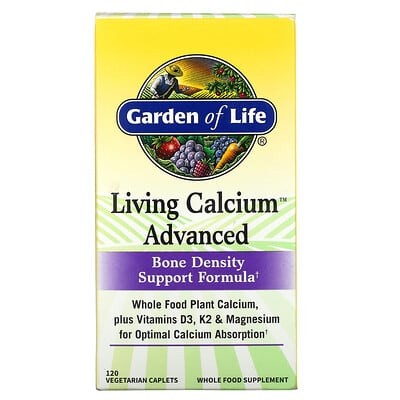
Living Calcium Advanced supplies calcium, vitamin D and magnesium that can help cover dietary gaps relevant to normal bone maintenance. Magnesium oxide is a weaker feature of its mineral forms.
AI assessment of the formula, label and price. How scoring works
Nutrient Quality31
MK-7 is a favorable feature, while magnesium oxide is a less appealing mineral form. The exact calcium and copper forms remain uncertain despite their named sources.
Ingredient Transparency94
Amounts and most ingredient forms are disclosed, with the vitamin K composition also identified. A few form details remain missing, and separate vitamin K declarations should not be assumed to form one total.
Value For Money30
The known nutrient contributions generally offer limited value for the full serving cost. Price information differs across ingredients, so the combined value picture remains uncertain.
Customer Satisfaction80
Customer ratings are positive. Thousands of reviews provide a broad view of customer opinion, without proving effectiveness or safety.
Product Focus59
Bone nutrition is the clearest purpose, with broader support tied mainly to filling nutrient gaps. The many ingredients and linked aims make it less targeted than a simple calcium supplement.
- Format
Tablet - Container
- 120 Tablet(s)
- Per serving
- $0.16
- Customer rating
- 4.5 · 1,845 ratings
Goals

Impact
Highest effect
Vitamin K · 60 mcgMagnesium · 575 mgCalcium · 1000 mgVitamin D · 15 mcgCopper · 1 mgManganese · 1 mgBoron · 3 mgZinc · 3 mg
Calcium supplies mineral for bone, with 1000 mg per serving making a substantial contribution when dietary calcium is low. Vitamin D helps the body absorb calcium and supports normal mineralization when vitamin D intake or status is low; extra intake does not establish routine fracture prevention. Magnesium contributes to normal bone metabolism when intake is low, without reliable evidence of routine fracture prevention. MK-7 supports activation of bone proteins, but bone-density findings are mixed and mainly concern postmenopausal women.
How this product is rated for Bone Health
Ingredient fit74
Bone-related nutrients sit within a broader formula containing ingredients aimed at other purposes. The serving amounts provide partial support against the saved comparison; smaller amounts limit several contributions.
Goal fit
Bone-related nutrients sit within a broader formula containing ingredients aimed at other purposes.
Dose adequacy
The serving amounts provide partial support against the saved comparison; smaller amounts limit several contributions.
Pathways100
The strongest represented area is bone mineral supply, reflecting the supplied ingredient amounts rather than proven clinical effects.
Depth
The strongest represented area is bone mineral supply, reflecting the supplied ingredient amounts rather than proven clinical effects.
Breadth
The more substantial represented areas are bone mineral supply, calcium absorption and regulation, collagen matrix formation; other areas receive less support.
Evidence100
Calcium provides the strongest supplied basis, mainly for nutritional adequacy rather than assured fracture prevention.
Evidence strength
Calcium provides the strongest supplied basis, mainly for nutritional adequacy rather than assured fracture prevention.
Studied preparation
The saved comparison recognizes the relevant preparations; this does not establish a clinical benefit for the entire product.
Formulation logic100
The relevant nutrients either stand alone in the supplied comparison or have their supporting partner present. No conflict was identified by the supplied checks.
Partner coverage
The relevant nutrients either stand alone in the supplied comparison or have their supporting partner present.
Conflicts
No conflict was identified by the supplied checks; this is not a comprehensive safety assessment.
Effective doses
All ingredients counted here clear the saved minimum amount comparison; that threshold is not a proven effective clinical dose.

Impact
Moderate effect
Vitamin D · 15 mcgMagnesium · 575 mgRiboflavin · 10 mgVitamin B12 · 200 mcg
Magnesium supports normal energy metabolism, while B12, folate, B6 and riboflavin help cover nutritional needs relevant to tiredness. The 575 mg magnesium serving exceeds the supplied nutritional benchmark, without implying extra energy benefit. Vitamin D has a more conditional fatigue link in deficient adults.
How this product is rated for Energy
Ingredient fit58
6 ingredients contribute to the saved energy assessment, alongside a broader set of active ingredients that makes the focus less specific. The contributing amounts meet only part of the saved dose benchmarks.
Goal fit
6 ingredients contribute to the saved energy assessment, alongside a broader set of active ingredients that makes the focus less specific.
Dose adequacy
The contributing amounts meet only part of the saved dose benchmarks.
Pathways0
No reviewed functional area has a recorded contribution. No functional area reaches the saved coverage threshold.
Depth
No reviewed functional area has a recorded contribution.
Breadth
No functional area reaches the saved coverage threshold.
Evidence95
Vitamin D provides the strongest qualifying evidence in the saved assessment; the relevant benefit remains limited to its reviewed outcome. The qualifying ingredients match the preparations used in the saved evidence review.
Evidence strength
Vitamin D provides the strongest qualifying evidence in the saved assessment; the relevant benefit remains limited to its reviewed outcome.
Studied preparation
The qualifying ingredients match the preparations used in the saved evidence review.
Formulation logic100
The contributing ingredients can work alone or have their required partner present. No ingredient conflicts were recorded in the saved assessment. All contributing ingredients reach the saved meaningful-dose threshold.
Partner coverage
The contributing ingredients can work alone or have their required partner present.
Conflicts
No ingredient conflicts were recorded in the saved assessment.
Effective doses
All contributing ingredients reach the saved meaningful-dose threshold.

Impact
High effect
Vitamin K · 60 mcgMagnesium · 575 mgVitamin B12 · 200 mcgVitamin B6 · 25 mgFolate · 400 mcg DFEVitamin D · 15 mcg
Magnesium contributes to electrolyte balance and blood-vessel tone, with modest and inconsistent blood-pressure effects. The separate 60 mcg MK-7 declaration is below the 180 mcg daily exposure used in selected arterial-stiffness research; the other vitamin K declaration cannot be added to it. Folate, B6 and B12 support homocysteine metabolism, but improving that marker does not generally translate into fewer major cardiac events.
How this product is rated for Heart Health
Ingredient fit59
This is a broader formula, with only some ingredients contributing to the relevant heart-health roles. The relevant amounts provide a partial exposure match; this does not establish the effects of a studied daily regimen.
Goal fit
This is a broader formula, with only some ingredients contributing to the relevant heart-health roles.
Dose adequacy
The relevant amounts provide a partial exposure match; this does not establish the effects of a studied daily regimen.
Pathways80
The strongest recorded connection is homocysteine metabolism, although homocysteine lowering does not generally establish fewer major cardiac events.
Depth
The strongest recorded connection is homocysteine metabolism, although homocysteine lowering does not generally establish fewer major cardiac events.
Breadth
Electrolyte balance and homocysteine metabolism provide the main recorded breadth; the latter is a marker rather than proven cardiac prevention.
Evidence89
The recorded evidence emphasizes folate or magnesium; B-vitamin marker changes do not establish general cardiac prevention.
Evidence strength
The recorded evidence emphasizes folate or magnesium; B-vitamin marker changes do not establish general cardiac prevention.
Studied preparation
The relevant preparation meets the saved preparation comparison; this does not establish finished-product equivalence or superior delivery.
Formulation logic100
No required partner is missing and no defined conflict was identified. The relevant ingredients meet the saved minimum amount comparison; that threshold is not proof of clinical effectiveness.
Partner coverage
No required partner is missing for the relevant ingredients; this does not imply added benefit from combining them.
Conflicts
No defined ingredient conflict was identified in the supplied findings.
Effective doses
The relevant ingredients meet the saved minimum amount comparison; that threshold is not proof of clinical effectiveness.

Impact
High effect
Vitamin K · 60 mcgMagnesium · 575 mgVitamin D · 15 mcgVitamin B12 · 200 mcgVitamin B6 · 25 mgFolate · 400 mcg DFE
Magnesium relates to vascular tone, with inconsistent marker findings and greater plausibility when magnesium is low or blood pressure is elevated. Folate, B6 and B12 relate to homocysteine metabolism, without established routine cardiovascular-event reduction. The separately declared MK-7 receives limited arterial-stiffness recognition at a partial comparison amount; K1 is separate. The 575 mg magnesium serving exceeds the comparison bound without establishing extra benefit or suitability.
How this product is rated for Cardiovascular Support
Ingredient fit59
The qualifying nutrients provide the relevant contribution, with partial overall amount recognition. The broader formula or differing active amounts limits focus.
Goal fit
Some ingredients relate to cardiovascular support, while other actives broaden the formula beyond this goal.
Dose adequacy
The qualifying nutrients receive uneven amount recognition, so the formula does not reach full amount coverage overall.
Pathways80
The strongest saved coverage is for homocysteine metabolism. Homocysteine metabolism and vascular tone meet the coverage threshold; MK-7 adds smaller coverage.
Depth
The strongest saved coverage is for homocysteine metabolism.
Breadth
Homocysteine metabolism and vascular tone meet the coverage threshold; MK-7 adds smaller coverage.
Evidence79
Magnesium leads the saved evidence finding; conditional marker support does not establish routine cardiovascular-event prevention.
Evidence strength
Magnesium leads the saved evidence finding; conditional marker support does not establish routine cardiovascular-event prevention.
Studied preparation
The qualifying ingredients receive preparation recognition in the saved findings; this does not establish that the whole product was tested.
Formulation logic100
The qualifying ingredients meet the inclusion threshold without a missing required partner. No configured conflict was identified.
Partner coverage
No missing required partner reduces the qualifying contributions.
Conflicts
No configured ingredient conflict was identified in the supplied findings.
Effective doses
The qualifying nutrients meet the minimum amount threshold used for inclusion; that threshold does not prove clinical effectiveness.

Impact
Highest effect
Folate · 400 mcg DFEVitamin B12 · 200 mcgVitamin D · 15 mcgMagnesium · 575 mgVitamin K · 60 mcgBoron · 3 mgZinc · 3 mg
Magnesium and B vitamins contribute to energy metabolism, while folate and vitamin B12 support blood formation. Calcium and vitamin D contribute to bone nutrition when intake is low. Vitamin K is present but its amount is unresolved, and the small zinc amount adds little in the saved comparison. Boron's routine general health benefit remains uncertain despite its inclusion in the saved findings.
How this product is rated for Everyday Health
Ingredient fit72
Magnesium, B vitamins, calcium and vitamin D provide the relevant nutritional contributions within a broader formula. Amounts vary across nutrients, and vitamin K has no resolved amount.
Goal fit
Magnesium, B vitamins, calcium and vitamin D provide the relevant nutritional contributions within a broader formula.
Dose adequacy
Amounts vary across nutrients, and vitamin K has no resolved amount.
Pathways100
The supported coverage includes energy metabolism, blood formation, and bone and mineral metabolism.
Depth
The strongest contribution centres on energy metabolism, blood formation, and bone and mineral metabolism.
Breadth
The supported coverage includes energy metabolism, blood formation, and bone and mineral metabolism.
Evidence86
Magnesium provides the strongest supported contribution at the supplied amount. The relevant preparations were accepted, without establishing superiority of a particular form.
Evidence strength
Magnesium provides the strongest supported contribution at the supplied amount, within the limits of its nutritional role.
Studied preparation
The relevant preparations were accepted in the supplied findings; this does not establish a special benefit from their forms.
Formulation logic97
Vitamin K's unresolved amount prevents it from meeting the amount criterion; the other included contributions meet it.
Partner coverage
The included contributions do not have an unmet required ingredient partner.
Conflicts
No listed ingredient conflict was identified in the supplied findings.
Effective doses
Vitamin K's unresolved amount prevents it from meeting the amount criterion; the other included contributions meet it.

Impact
High effect
Magnesium · 575 mgZinc · 3 mgVitamin D · 15 mcgBoron · 3 mg
The retained nutrients have normal metabolic roles, but the supplied evidence does not establish routine testosterone enhancement from magnesium, boron or B6. Vitamin D's findings are mixed and depend on population context. Zinc is below the saved inclusion threshold, and the 575 mg magnesium per serving exceeds the comparison range without proving extra benefit or suitability.
How this product is rated for Testosterone Support
Ingredient fit52
Four nutrients are retained, with zinc below the inclusion threshold.
Goal fit
Four nutrients are retained, with zinc below the inclusion threshold.
Dose adequacy
Retained amounts receive mixed recognition; magnesium exceeds the comparison endpoint without establishing greater benefit.
Pathways70
The retained findings concentrate on free-testosterone availability, without proving an increase in circulating hormones.
Depth
Free-testosterone availability reaches its comparison endpoint.
Breadth
Only free-testosterone availability reaches the coverage threshold.
Evidence79
Vitamin D leads the retained evidence finding, but the supplied testosterone results are mixed and population-dependent.
Evidence strength
Vitamin D leads the retained evidence finding, but the supplied testosterone results are mixed and population-dependent.
Studied preparation
B6 is not accepted as studied in the saved preparation finding; other retained preparations are accepted.
Formulation logic100
No required partner is missing. No configured conflict is triggered; this does not establish overall safety.
Partner coverage
No required partner is missing for retained ingredients; this does not establish added benefit from combining them.
Conflicts
No configured conflict is triggered; this does not establish overall safety.
Effective doses
All 4 retained ingredients meet the comparison amount threshold, which is not proof of an effective testosterone dose.
Vitamin B6 Not classified
No linked studies yet.
Ingredients
| Ingredient | Amount per serving | Score |
|---|---|---|
Vitamin D (Vitamin D3) | 15 mcg | |
Vitamin K (Vitamin K1) | 65 mcg | |
Riboflavin | 10 mg | |
Vitamin B6 | 25 mg | |
Folate | 400 mcg DFE | |
Vitamin B12 (Methylcobalamin) | 200 mcg | |
Calcium (Algae) | 1000 mg | |
Magnesium (Magnesium Oxide) | 575 mg | |
Zinc (Brown Rice Chelate) | 3 mg | |
Copper (Brown Rice Chelate) | 1 mg | |
Manganese (Brown Rice Chelate) | 1 mg | |
Vitamin K2 (Menaquinone-7) | 60 mcg | |
Boron (Brown Rice Chelate) | 3 mg | |
Betaine (Beets) | 50 mg | |
Calcified Red Algae | 3.5 Gram(s) |
Calcium (Algae) · 1000 mg OverallScore42
A serving supplies 1000 mg of calcium, and the evaluation suggests absorption may be less efficient at this amount. The saved facts do not identify its chemical form.
How this ingredient is rated
Active Ingredient Quality & Bioavailability30
The calcium amount is disclosed as 1000 mg per serving. The saved facts do not identify the chemical form of the calcium.
Calcium Form & Absorption Potential
The saved facts do not identify the chemical form of the calcium.
Elemental Calcium Transparency
The calcium amount is disclosed as 1000 mg per serving.
Dose, Safety & Label Transparency64
A serving supplies 1000 mg of calcium. The evaluation suggests absorption may be less efficient at this amount. No artificial additive or flow agent is flagged; sugar information is unavailable.
Absorption-Optimized Serving Dose
A serving supplies 1000 mg of calcium. The evaluation suggests absorption may be less efficient at this amount.
Formulation Purity & Additives
No artificial additive or flow agent is flagged; sugar information is unavailable.
Value20
A whole-product serving costs about $1.01.
Price Per Serving Efficiency
A whole-product serving costs about $1.01.
Vitamin K (Vitamin K1) · 65 mcg OverallScore66
A serving provides 60 mcg of K2 as MK-7 and 65 mcg of K1. A whole-product serving costs about $1.01.
How this ingredient is rated
Active Ingredient Quality & Bioavailability82
The product identifies both K1 and K2 as MK-7. MK-7 is identified, but a trans isomer is not established in the saved information.
Vitamin K Form (MK-7 vs. MK-4 vs. K1)
The product identifies both K1 and K2 as MK-7.
MK-7 Isomer Disclosure
MK-7 is identified, but a trans isomer is not established in the saved information.
Dose, Safety & Label Transparency83
The serving provides 60 mcg of MK-7 and 65 mcg of K1, each separately disclosed.
Vitamin K2 (MK-7) Dosage Efficacy
Each serving provides 60 mcg of MK-7, a moderate amount.
Form and Subtype Transparency
The amounts of K1 and MK-7 are separately stated: 65 mcg and 60 mcg per serving.
Value0
A whole-product serving costs about $1.01.
Price per Effective MK-7 Serving
A whole-product serving costs about $1.01.
Copper (Brown Rice Chelate) · 1 mg OverallScore44
A serving provides 1 mg of copper, an amount assessed favorably by the evaluation. The saved facts do not establish its chemical form, limiting comparison.
How this ingredient is rated
Active Ingredient Quality & Bioavailability30
The copper amount and a source name are recognized, but the saved facts do not establish the chemical form.
Copper Form Bioavailability
The saved facts do not establish the chemical form of copper, limiting form comparisons.
Elemental Copper Labeling Clarity
The evaluation recognizes a source name on the copper row alongside the 1 mg amount, although its chemical form is unresolved.
Dose, Safety & Label Transparency71
The selected serving provides 1 mg of copper, assessed favorably by the evaluation. The serving’s 3 mg of zinc compared with 1 mg of copper is below the balance favored by the evaluation.
Copper Dosage Safety & Efficacy
The selected serving provides 1 mg of copper, assessed favorably by the evaluation.
Zinc-to-Copper Balance
The serving’s 3 mg of zinc compared with 1 mg of copper is below the balance favored by the evaluation.
Value20
A whole-product serving costs about $1.01; the price covers the entire product serving, not copper alone.
Price Per Serving Efficiency
A whole-product serving costs about $1.01; the price covers the entire product serving, not copper alone.
Alternative products
Report alternatives
Sources
Published studies used for the product analysis and the top-ranked studies for each ingredient and goal.
- [Comparative study of the urinary excretion of boron, calcium, magnesium and phosphorus in postmenopausal women with and without osteoporosis].
- Effect of dietary boron on mineral, estrogen, and testosterone metabolism in postmenopausal women.
- The relationship between boron and magnesium status and bone mineral density in the human: a review.
- Effects of boron supplementation on bone mineral density and dietary, blood, and urinary calcium, phosphorus, magnesium, and boron in female athletes.
- Metabolic responses of postmenopausal women to supplemental dietary boron and aluminum during usual and low magnesium intake: boron, calcium, and magnesium absorption and retention and blood mineral concentrations
- What is the impact of daily oral supplementation of vitamin D3 (cholecalciferol) plus calcium on the incidence of hip fracture in older people? A systematic review and meta-analysis.
- Calcium supplementation prevents seasonal bone loss and changes in biochemical markers of bone turnover in elderly New England women: a randomized placebo-controlled trial.
- The effects of calcium supplementation (milk powder or tablets) and exercise on bone density in postmenopausal women.
- The efficacy of calcium supplementation alone in elderly Thai women over a 2-year period: a randomized controlled trial.
- Calcium-enriched foods and bone mass growth in prepubertal girls: a randomized, double-blind, placebo-controlled trial.
- The Association between Dietary and Circulating Copper Levels and Osteoporosis: a Scoping Review.
- Association between dietary copper, iron, zinc, selenium intake and osteopenia or osteoporosis in elderly hypertensive patients: a retrospective cohort study.
- Associations of dietary copper intake with total bone mineral density and lumbar spine bone mineral density in American adults.
- The association between dietary mineral intake and bone mineral density: a cross-sectional study.
- Association between dietary copper intake and bone mineral density in children and adolescents aged 8-19 years: A cross-sectional study.
- Association between RBC folate and lumbar bone mineral density in postmenopausal women, a cross-sectional study from NHANES 2009-2018.
- Genetic variants modify the associations of concentrations of methylmalonic acid, vitamin B-12, vitamin B-6, and folate with bone mineral density.
- Adequate Intake and Supplementation of B Vitamins, in Particular Folic Acid, can Play a Protective Role in Bone Health.
- Relation of homocysteine, folate, and vitamin B12 to bone mineral density of postmenopausal women.
- Dietary intake of folate, but not vitamin B2 or B12, is associated with increased bone mineral density 5 years after the menopause: results from a 10-year follow-up study in early postmenopausal women.