
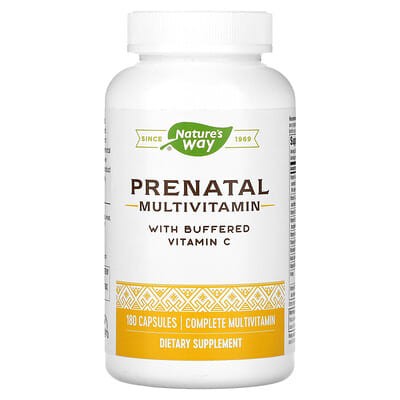

$18.31 $0.20 per serving


Product analysis
Prenatal Multivitamin supplies minerals and B vitamins for normal bone nutrition and needs linked to tiredness when intake is low. Several mixed sources lack proportions, making precise mineral-form comparisons harder.
AI assessment of the formula, label and price. How scoring works
Nutrient Quality45
B5, manganese and molybdenum have favourable form choices, and B6 is clearly identified. Unknown source proportions and an unspecified copper complex limit other quality conclusions.
Ingredient Transparency76
Listed amounts and most forms are stated, making much of the formula easier to compare. Several mixed nutrient sources lack proportions, leaving the amount of each form unclear.
Value For Money54
The serving is economical for several nutrients, including calcium and B6. B5 looks less economical, so the value depends on which nutrients matter most to you.
Customer Satisfaction83
Customer ratings are positive. Feedback comes from 1539 ratings, providing useful context for that impression.
Product Focus36
The clearest roles are normal bone nutrition and meeting needs linked to tiredness. Hair and liver-related nutrient functions do not establish routine regrowth or extra toxin clearance.
- Format
Capsule - Container
- 180 Capsule(s)
- Per serving
- $0.20
- Customer rating
- 4.7 · 1,539 ratings
Goals

Impact
Moderate effect
Biotin · 50 mcgVitamin D · 5 mcgZinc · 10 mgIron · 9 mgVitamin C · 100 mg

Impact
High effect
Vitamin K · 30 mcgMagnesium · 125 mgCalcium · 250 mgVitamin D · 5 mcgCopper · 1 mgManganese · 5 mgZinc · 10 mgVitamin C · 100 mg

Impact
Moderate effect
Iodine · 158 mcgVitamin D · 5 mcgVitamin B5 · 25 mgMagnesium · 125 mgRiboflavin · 5 mgThiamin · 5 mgVitamin B12 · 25 mcgIron · 9 mgPotassium · 45 mg
Vitamin B5 Not classified
No linked studies yet.

Impact
Moderate effect
Folate · 666 mcg DFEVitamin B12 · 25 mcgVitamin B6 · 25 mgMolybdenum · 50 mcgSelenium · 50 mcgMagnesium · 125 mgVitamin E · 67 mgZinc · 10 mgVitamin C · 100 mgRiboflavin · 5 mg
Riboflavin Not classified
No linked studies yet.
Vitamin B6 Not classified
No linked studies yet.
Ingredients
| Ingredient | Amount per serving | Score |
|---|---|---|
Vitamin A (Beta-Carotene, Retinyl Acetate) | 2475 mcg | |
Vitamin C (Calcium Ascorbate) | 100 mg | |
Vitamin D3 (Cholecalciferol) | 5 mcg | |
Vitamin E (D-Alpha-Tocopheryl Succinate) | 67 mg | |
Vitamin K (Phytonadione) | 30 mcg | |
Thiamine (Thiamine Hydrochloride) | 5 mg | |
Riboflavin | 5 mg | |
Niacin (Niacinamide) | 15 mg | |
Vitamin B6 (Pyridoxine Hydrochloride) | 25 mg | |
Folate | 666 mcg DFE | |
Vitamin B12 (Cyanocobalamin) | 25 mcg | |
Biotin | 50 mcg | |
Pantothenic Acid (Calcium D-Pantothenate) | 25 mg | |
Calcium (Calcium Carbonate, Calcium Citrate) | 250 mg | |
Iron (Ferrous Gluconate) | 9 mg | |
Iodine (Kelp, Potassium Iodide) | 158 mcg | |
Magnesium (Magnesium Aspartate, Magnesium Oxide) | 125 mg | |
Zinc (Zinc Bisglycinate) | 10 mg | |
Selenium (L-Selenomethionine) | 50 mcg | |
Copper (Copper Complex) | 1 mg | |
Manganese (Manganese Aspartate) | 5 mg | |
Molybdenum (Sodium Molybdate) | 50 mcg | |
Potassium (Potassium Chloride, Potassium Gluconate) | 45 mg | |
Kelp | 42 mg |
Calcium (Calcium Carbonate, Calcium Citrate) · 250 mg OverallScore74
Alternative products
Report alternatives
Sources
Published studies used for the product analysis and the top-ranked studies for each ingredient and goal.
- What is the impact of daily oral supplementation of vitamin D3 (cholecalciferol) plus calcium on the incidence of hip fracture in older people? A systematic review and meta-analysis.
- Calcium supplementation prevents seasonal bone loss and changes in biochemical markers of bone turnover in elderly New England women: a randomized placebo-controlled trial.
- The effects of calcium supplementation (milk powder or tablets) and exercise on bone density in postmenopausal women.
- The efficacy of calcium supplementation alone in elderly Thai women over a 2-year period: a randomized controlled trial.
- Calcium-enriched foods and bone mass growth in prepubertal girls: a randomized, double-blind, placebo-controlled trial.
- The Association between Dietary and Circulating Copper Levels and Osteoporosis: a Scoping Review.
- Association between dietary copper, iron, zinc, selenium intake and osteopenia or osteoporosis in elderly hypertensive patients: a retrospective cohort study.
- Associations of dietary copper intake with total bone mineral density and lumbar spine bone mineral density in American adults.
- The association between dietary mineral intake and bone mineral density: a cross-sectional study.
- Association between dietary copper intake and bone mineral density in children and adolescents aged 8-19 years: A cross-sectional study.
- Association between RBC folate and lumbar bone mineral density in postmenopausal women, a cross-sectional study from NHANES 2009-2018.
- Genetic variants modify the associations of concentrations of methylmalonic acid, vitamin B-12, vitamin B-6, and folate with bone mineral density.
- Adequate Intake and Supplementation of B Vitamins, in Particular Folic Acid, can Play a Protective Role in Bone Health.
- Relation of homocysteine, folate, and vitamin B12 to bone mineral density of postmenopausal women.
- Dietary intake of folate, but not vitamin B2 or B12, is associated with increased bone mineral density 5 years after the menopause: results from a 10-year follow-up study in early postmenopausal women.
- Association between Serum Magnesium and Fractures: A Systematic Review and Meta-Analysis of Observational Studies.
- Bioabsorbable Magnesium-Based Materials Potential and Safety in Bone Surgery: A Systematic Review.
- Vascularized bone grafting fixed by biodegradable magnesium screw for treating osteonecrosis of the femoral head.
- An update on magnesium and bone health.
- Sex-specific differences in the association of magnesium intake with femoral neck bone mineral density among older adults.