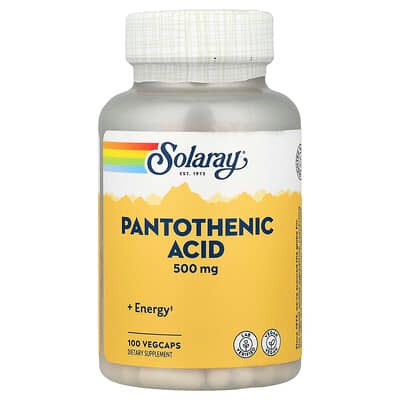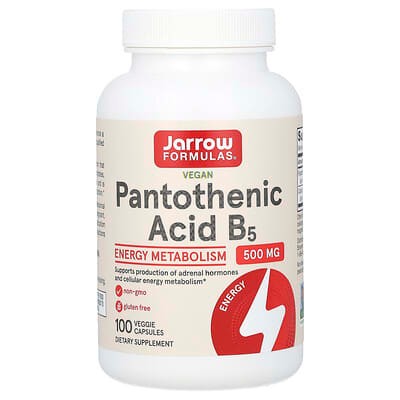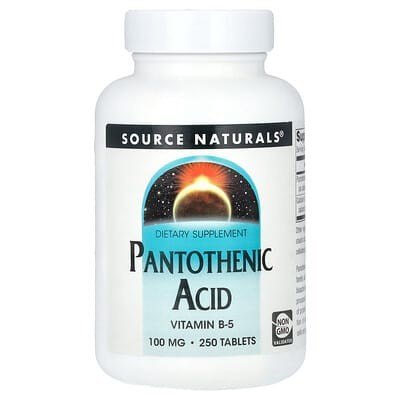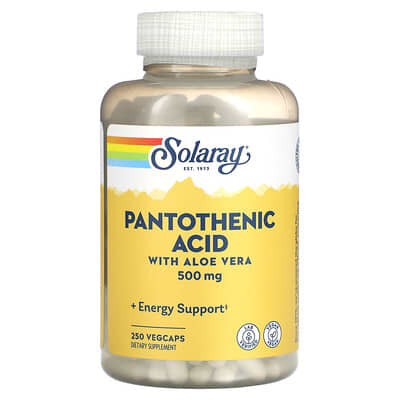
Vitamin B5

vitamin

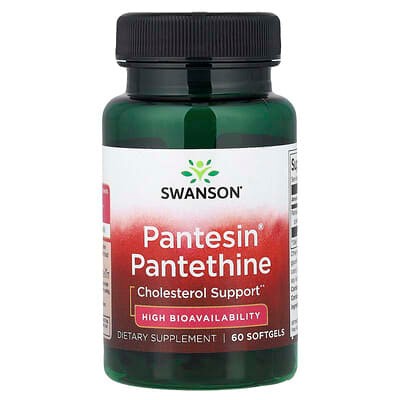
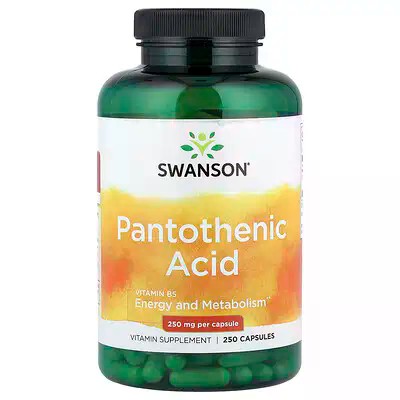
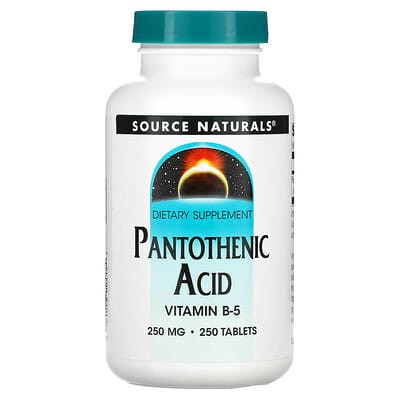
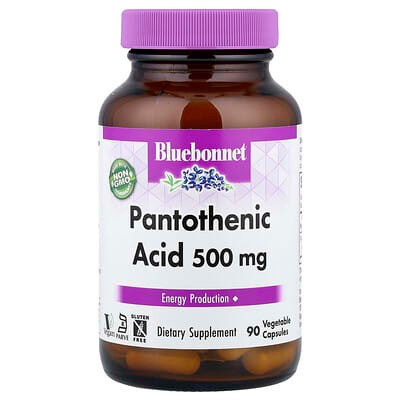
Vitamin B5, or pantothenic acid, is an essential water-soluble nutrient involved in various metabolic processes. It serves as a fundamental component of coenzyme A, which is necessary for the breakdown and synthesis of fats, carbohydrates, and proteins to support cellular energy production. This vitamin also supports the synthesis of steroid hormones, cholesterol, and neurotransmitters. Additionally, it contributes to red blood cell production and supports adrenal gland function, which is involved in the body's natural response to stress. Pantothenic acid is found in a broad range of food sources, making deficiency relatively uncommon. Supplementation is generally considered safe at recommended levels, as the body typically processes the vitamin with minimal risk of adverse effects.

Natural sources
Meat (chicken, beef, liver)FishWhole grainsAvocadoMushroomsPotatoesEggsLegumesDairy productsBroccoli

Ingredient forms

No public comparison lists found.

Timing & Intake
AnytimeWith food
Taking this vitamin with food may support absorption and help minimize potential digestive discomfort. Since it is water-soluble, specific timing is not required, though it is frequently included in B-complex supplements taken during meals.
Daily Intake
RDA (Men)5 mg
RDA (Women)5 mg
RDI5 mg
Optimal Dosage
Minimum10 mg
Maximum50 mg
Safety & Toxicity
Toxicity Threshold10000 mg
Toxicity Effectdiarrhea, water retention
2 safety notes
  • Individuals taking very high doses of Vitamin B5 should consult a healthcare professional.
  • Pregnant or breastfeeding women should consult a doctor before taking supplements.
Goals
Energy
Impact
Highest effect
Typical dose:5–500 mg

Vitamin B5 (Pantothenic Acid) is central to energy production via the Krebs cycle and the breakdown of fatty acids. It's fundamental for creating ATP from all macronutrients, making it essential for sustained energy.

Focuses on
Macronutrient MetabolismATP ProductionCoenzyme A SynthesisMetabolic Pathways
Most relevant for
Individuals seeking to support the fundamental metabolic pathways that transform fats, proteins, and carbohydrates into cellular fuel.

Potential benefits

  • Metabolic Energy Support.Unconfirmed. Vitamin B5 is a precursor to Coenzyme A, which is essential for converting food into energy, though its specific benefit for boosting physical energy is currently unproven by clinical research.

Limitations

  • Indirect Evidence.While its biochemical role in energy metabolism is established, there is a lack of clinical evidence demonstrating that supplementation increases perceived energy levels or reduces fatigue.
  • Dietary Ubiquity.Because pantothenic acid is found in nearly all food groups, supplementation may provide little to no benefit for individuals already consuming a balanced diet.

Study evidence

No published studies for this goal yet.

View goal

Metabolism Boost
Impact
Highest effect
Typical dose:5–100 mg

Pantothenic Acid is central to metabolism because as part of Coenzyme A, it is required for the oxidation of fatty acids and for the entry point into the citric acid cycle (as Acetyl-CoA). Virtually all energy-yielding pathways depend on it, establishing it as a foundational nutrient for metabolism.

Focuses on
Coenzyme A precursorEnergy metabolism supportMacronutrient breakdownCellular fuel processing
Most relevant for
Individuals seeking to maintain the foundational nutrients required for the body's natural processes of converting food into cellular energy.

Potential benefits

  • Coenzyme A Synthesis.Vitamin B5 is a structural component of Coenzyme A (CoA), which is essential for the oxidation of fatty acids and the entry of nutrients into the citric acid cycle for energy production.
  • Metabolism Boost.Unconfirmed. The benefit of using supplemental Vitamin B5 to increase metabolic rate or calorie burning is unproven, as clinical evidence does not show that extra intake speeds up these biochemical pathways in healthy people.

Limitations

  • No Effect on Exercise Metabolism.Controlled trials in athletes demonstrate that supplementation does not alter exercise metabolism, oxygen consumption, or physical performance.
  • Nutritional Ceiling.Evidence suggests that once any deficiency is corrected, additional intake does not further increase the body's ability to metabolize glucose or fats.
  • Derivative Specificity.Most human research showing metabolic effects on blood lipids uses pantethine; these results may not apply to the standard pantothenic acid found in most B5 supplements.
Things to consider

There are currently no established biochemical indices to accurately assess if an individual has reached optimum pantothenate status for metabolic function.

Study evidence

12 studies

Vitamin B5 is involved in normal energy metabolism, but the supplied evidence does not show that extra B5 speeds metabolism or increases calorie burning. Some favorable human findings concern pantethine, a related compound that can affect blood lipids, rather than ordinary vitamin B5 supplementation.

View goal
Stress Relief
Impact
Moderate effect
Typical dose:100–500 mg

Vitamin B5 (Pantothenic Acid) is a critical component of Coenzyme A, which is essential for the synthesis of stress hormones like cortisol in the adrenal glands. Ensuring adequate levels helps the body maintain a robust and balanced response to stressors, preventing depletion during chronic stress. It is most effective as part of a B-complex.

Focuses on
Adrenal healthCortisol synthesisCofactor supportMetabolic resilience
Most relevant for
Those looking to support the biological pathways involved in hormone production during periods of increased stress.

Potential benefits

  • Adrenal Support Role.Unconfirmed. Vitamin B5 is biologically essential for the production of adrenal hormones like cortisol, although its direct effect on reducing perceived stress is unproven.
  • Hormone Synthesis.Unconfirmed. As a precursor to Coenzyme A, it supports the metabolic processes required for the body's stress response, but clinical evidence for stress relief is lacking.

Limitations

  • Lack of Clinical Data.There is no direct evidence from clinical research to confirm that Vitamin B5 supplementation provides measurable stress relief in humans.
  • Dietary Prevalence.Because pantothenic acid is widely available in common foods, the specific benefit of additional supplementation for stress relief is uncertain.
Things to consider

Vitamin B5 is typically most effective for metabolic support when taken as part of a balanced B-complex rather than in isolation.

Study evidence

No published studies for this goal yet.

View goal

Skin Health
Impact
Situational effect
Typical dose:50–250 mg

Vitamin B5 (Pantothenic Acid) is involved in synthesizing coenzyme A, which is essential for fatty acid metabolism. This supports the skin's lipid barrier, aiding hydration and wound healing. It is particularly noted for its potential to help regulate sebum production, making it situationally useful for acne-prone skin.

Focuses on
Barrier functionSkin hydrationWound healingAcne managementSoothing irritation
Most relevant for
Individuals seeking to support skin barrier recovery after irritation or minor procedures, and those managing mild-to-moderate acne.

Potential benefits

  • Barrier repair and hydration.Topical dexpanthenol significantly improves skin barrier repair and hydration while reducing transepidermal water loss and skin roughness after irritation.
  • Accelerated wound recovery.Topical application supports faster re-epithelialization and wound closure following superficial skin injuries and fractional laser treatments.
  • Acne lesion reduction.Oral pantothenic acid supplementation has been shown in preliminary research to significantly reduce inflammatory lesion counts in adults with mild-to-moderate facial acne.

Limitations

  • Application method differences.Strongest evidence for barrier repair and hydration applies to topical creams; these benefits cannot be assumed for oral Vitamin B5 supplements.
  • Derivative-specific results.Different Vitamin B5 derivatives like panthenol and panthenyl triacetate may vary in their effectiveness for specific outcomes like wound healing.
  • Acne evidence constraints.Benefits for acne are based on a specific oral formulation and study population, and may not generalize to all Vitamin B5 products.
Things to consider

Topical panthenol may cause allergic contact dermatitis or skin sensitization in some individuals, despite its use in hypoallergenic products.

Study evidence

11 studies

Vitamin B5 derivatives applied to the skin can improve hydration and support repair of the skin barrier after irritation or superficial injury. Evidence for oral supplements is much more limited, with preliminary acne findings that do not establish broad skin benefits from taking Vitamin B5.

View goal

Studies

Research connections will load here.
Interactions

Positive Interactions

Vitamin B6
B5 and B6 work together in numerous metabolic pathways, including amino acid metabolism and neurotransmitter synthesis.
Biotin
Both B5 and Biotin are B vitamins essential for metabolism, particularly of fats and carbohydrates.
Folate
As part of the B-complex, B5 works synergistically with Folate in various metabolic functions, including cell growth and repair.
Niacin
Another B vitamin that collaborates with B5 in energy production and other metabolic processes.
Riboflavin
As part of the B-complex, Riboflavin assists B5 in energy metabolism and enzyme function.
Thiamin
Essential for carbohydrate metabolism, Thiamin works with B5 and other B vitamins in converting food into energy.
Vitamin B12
All B vitamins work together; B12 is crucial for energy and nerve function, complementing B5's roles.
Choline
Choline and B5 are both involved in the synthesis of neurotransmitters and fat metabolism.
Magnesium
Magnesium is a cofactor for many enzymes involved in energy production, supporting the metabolic processes B5 facilitates.
L-Carnitine
B5 is essential for the synthesis of Coenzyme A, which is needed for fatty acid transport, a process L-Carnitine also supports.
Acetyl L-Carnitine
Similar to L-Carnitine, B5's role in CoA synthesis indirectly supports the fatty acid transport and energy production facilitated by Acetyl L-Carnitine.
Coenzyme Q-10
Both B5 (via Coenzyme A) and Coenzyme Q-10 are crucial for cellular energy production within the mitochondria.
Cysteine
Cysteine is a precursor to Coenzyme A, for which Vitamin B5 is a key component.
Glutathione
B vitamins, including B5, support liver detoxification pathways which are crucial for glutathione's antioxidant functions.
Sources

Up to five highest-ranked published examples per goal. Study counts and charts include all published studies for the connection.

  1. Apolipoprotein E and sex modulate fatty acid metabolism in a prospective observational study of cognitive decline.
    González-Domínguez R; Castellano-Escuder P; Lefèvre-Arbogast S; Low DY; Du Preez A; Ruigrok SR; Lee H; Helmer C; Pallàs M; Urpi-Sarda M; Sánchez-Pla A; Korosi A; Lucassen PJ; Aigner L; Manach C; Thuret S; Samieri C; Andres-Lacueva C · Alzheimer's research & therapy · 2022
    Observational studyMetabolism Boost
  2. Exploring auxotrophy and engineering vitamin B6 prototrophy in the acetogen Clostridium sp. AWRP.
    Kwon SJ; Lee J; Lee HS · Applied and environmental microbiology · 2024
    Clinical trialMetabolism Boost
  3. Pantothenate utilization by Plasmodium as a target for antimalarial chemotherapy.
    Spry C; van Schalkwyk DA; Strauss E; Saliba KJ · Infectious disorders drug targets · 2010
    Narrative reviewMetabolism Boost
  4. Optimum nutrition: thiamin, biotin and pantothenate.
    Bender DA · The Proceedings of the Nutrition Society · 1999
    Narrative reviewMetabolism Boost
  5. Serum metabolites of hypertension among Chinese adolescents aged 12-17 years.
    Sun J; Ding W; Liu X; Zhao M; Xi B · Journal of human hypertension · 2022
    Other77 participantsMetabolism Boost
  6. Dexpanthenol enhances skin barrier repair and reduces inflammation after sodium lauryl sulphate-induced irritation.
    Proksch E; Nissen HP · The Journal of dermatological treatment · 2009
    Randomized trialSkin Health
  7. Comparative trial of 5% dexpanthenol in water-in-oil formulation with 1% hydrocortisone ointment in the treatment of childhood atopic dermatitis: a pilot study.
    Udompataikul M; Limpa-o-vart D · Journal of drugs in dermatology : JDD · 2012
    Non-randomized trial30 participantsSkin Health
  8. Panthenyl triacetate transformation, stimulation of metabolic pathways, and wound-healing properties in the human skin.
    Dell'Acqua G; Schweikert K · Journal of cosmetic science · 2012
    Randomized trialSkin Health
  9. Dexpanthenol modulates gene expression in skin wound healing in vivo.
    Heise R; Skazik C; Marquardt Y; Czaja K; Sebastian K; Kurschat P; Gan L; Denecke B; Ekanayake-Bohlig S; Wilhelm KP; Merk HF; Baron JM · Skin pharmacology and physiology · 2013
    Clinical trialSkin Health
  10. A randomized, double-blind, placebo-controlled study of a novel pantothenic Acid-based dietary supplement in subjects with mild to moderate facial acne.
    Yang M; Moclair B; Hatcher V; Kaminetsky J; Mekas M; Chapas A; Capodice J · Dermatology and therapy · 2014
    Randomized trial48 participantsSkin Health