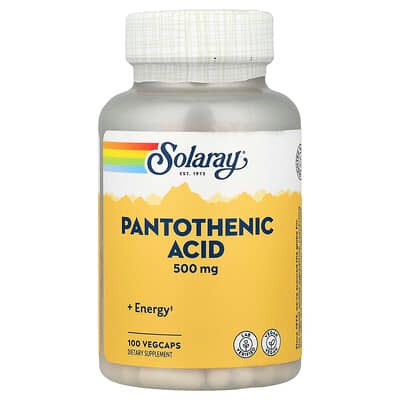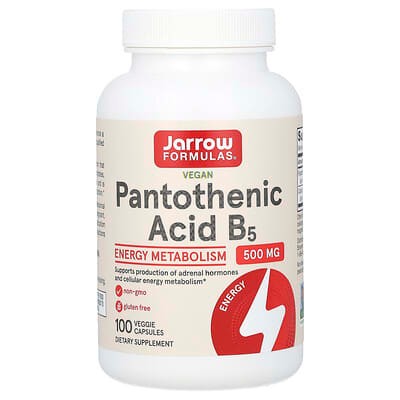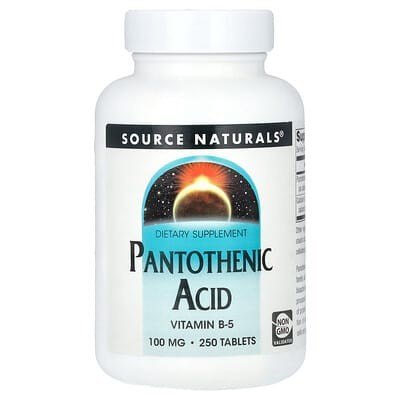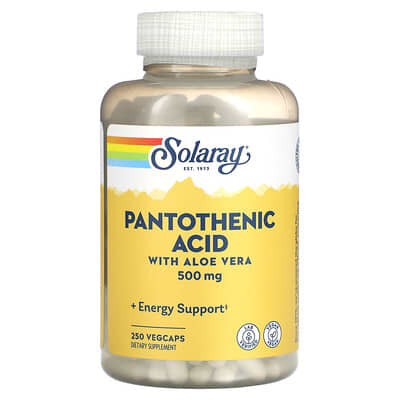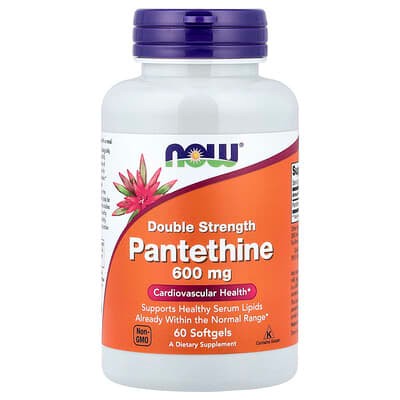
Vitamin B5

Description

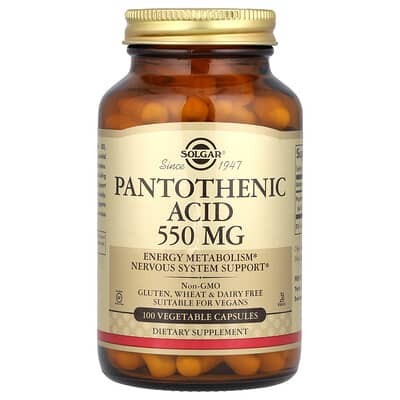
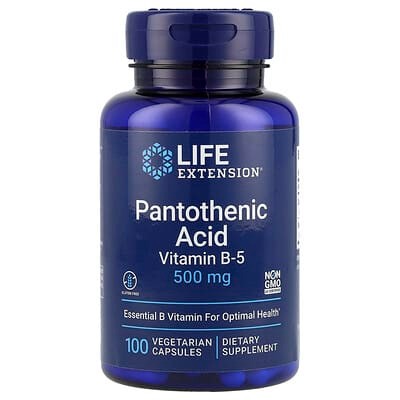
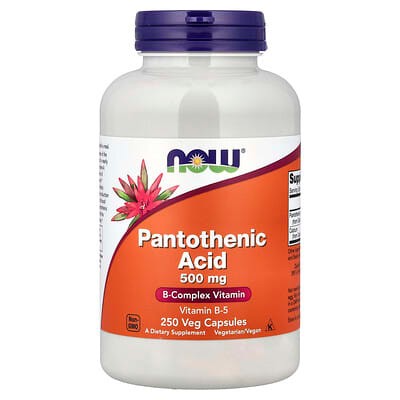
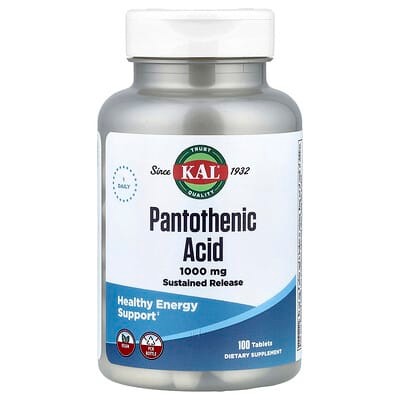
Pantothenic acid, commonly known as Vitamin B5, is a crucial water-soluble B vitamin. It plays a central role in numerous metabolic pathways, primarily as a component of coenzyme A (CoA). CoA is vital for the synthesis and breakdown of fats, carbohydrates, and proteins, making B5 indispensable for energy production and nutrient utilization. Beyond its role in energy metabolism, Vitamin B5 is involved in the synthesis of steroid hormones, cholesterol, and various neurotransmitters. It also contributes to the production of red blood cells and supports the adrenal glands, which are responsible for stress response. Its broad involvement in bodily functions highlights its importance for overall health and well-being. Pantothenic acid is readily available from a wide array of food sources, and deficiencies are rare due to its widespread presence ("pantothen" comes from the Greek word "pantothen," meaning "from everywhere"). Supplementation is typically considered safe at recommended doses, with few adverse effects.

Sources
Meat (chicken, beef, liver)FishWhole grainsAvocadoMushroomsPotatoesEggsLegumesDairy productsBroccoli
Cheapest Vitamin B5 supplements
Discover the most affordable Vitamin B5 supplements to help support stress relief, boost metabolism, enhance energy, and promote skin health.
Best Vitamin B5 supplements
Compare the best Vitamin B5 supplements chosen for their effectiveness in promoting stress relief, metabolism, energy, and skin health.
Value Vitamin B5 supplements
Find the best value Vitamin B5 supplements to support stress relief, metabolism, energy, and skin health with our detailed comparison.
Timing & Intake
AnytimeWith food
Can be taken with food to enhance absorption and reduce potential mild digestive discomfort. As a water-soluble vitamin, it doesn't require specific timing but is often part of B-complex supplements taken with a meal.
Daily Intake
RDA (Men)5 mg
RDA (Women)5 mg
RDI5 mg
Optimal Dosage
Minimum10 mg
Maximum50 mg
Safety & Toxicity
Toxicity Threshold10000 mg
Toxicity Effectdiarrhea, water retention
Goals
Energy
Energy
Impact
Highest effect
Typical dose:5–500 mg
Vitamin B5 (Pantothenic Acid) is central to energy production via the Krebs cycle and the breakdown of fatty acids. It's fundamental for creating ATP from all macronutrients, making it essential for sustained energy.
View goal ->
Metabolism Boost
Metabolism Boost
Impact
Highest effect
Typical dose:5–100 mg
Pantothenic Acid is central to metabolism because as part of Coenzyme A, it is required for the oxidation of fatty acids and for the entry point into the citric acid cycle (as Acetyl-CoA). Virtually all energy-yielding pathways depend on it, establishing it as a foundational nutrient for metabolism.
View goal ->
Stress Relief
Stress Relief
Impact
Moderate effect
Typical dose:100–500 mg
Vitamin B5 (Pantothenic Acid) is a critical component of Coenzyme A, which is essential for the synthesis of stress hormones like cortisol in the adrenal glands. Ensuring adequate levels helps the body maintain a robust and balanced response to stressors, preventing depletion during chronic stress. It is most effective as part of a B-complex.
View goal ->
Skin Health
Skin Health
Impact
Situational effect
Typical dose:50–250 mg
Vitamin B5 (Pantothenic Acid) is involved in synthesizing coenzyme A, which is essential for fatty acid metabolism. This supports the skin's lipid barrier, aiding hydration and wound healing. It is particularly noted for its potential to help regulate sebum production, making it situationally useful for acne-prone skin.
View goal ->
Interactions

Positive Interactions

Vitamin B6
B5 and B6 work together in numerous metabolic pathways, including amino acid metabolism and neurotransmitter synthesis.
Biotin
Both B5 and Biotin are B vitamins essential for metabolism, particularly of fats and carbohydrates.
Folate
As part of the B-complex, B5 works synergistically with Folate in various metabolic functions, including cell growth and repair.
Niacin
Another B vitamin that collaborates with B5 in energy production and other metabolic processes.
Riboflavin
As part of the B-complex, Riboflavin assists B5 in energy metabolism and enzyme function.
Thiamin
Essential for carbohydrate metabolism, Thiamin works with B5 and other B vitamins in converting food into energy.
Vitamin B12
All B vitamins work together; B12 is crucial for energy and nerve function, complementing B5's roles.
Choline
Choline and B5 are both involved in the synthesis of neurotransmitters and fat metabolism.
Magnesium
Magnesium is a cofactor for many enzymes involved in energy production, supporting the metabolic processes B5 facilitates.
L-Carnitine
B5 is essential for the synthesis of Coenzyme A, which is needed for fatty acid transport, a process L-Carnitine also supports.
Acetyl L-Carnitine
Similar to L-Carnitine, B5's role in CoA synthesis indirectly supports the fatty acid transport and energy production facilitated by Acetyl L-Carnitine.
Coenzyme Q-10
Both B5 (via Coenzyme A) and Coenzyme Q-10 are crucial for cellular energy production within the mitochondria.
Cysteine
Cysteine is a precursor to Coenzyme A, for which Vitamin B5 is a key component.
Glutathione
B vitamins, including B5, support liver detoxification pathways which are crucial for glutathione's antioxidant functions.
Price per product
Average$28.48
Median$24.19
Price per serving
Average$0.64
Median$0.50
Price per 100 mg
Average$0.65
Median$0.48
Price distribution
Price per serving distribution
Price per 100 mg
Reference amount: 100 mg
Forms
Paired ingredients
D-Calcium Pantothenate (313)90
D-Calcium Pantothenate is a widely used and stable salt form of Vitamin B5, meaning the active D-pantothenic acid is bound to calcium. This form is well-absorbed in the digestive system and efficiently converted to coenzyme A, which is vital for numerous metabolic processes. It is a preferred form in many dietary supplements due to its stability and excellent bioavailability.
Pros
  • Highly stable
  • Excellent bioavailability
  • Well-researched and widely available
  • Generally well-tolerated
Cons
  • Requires conversion in the body to its active form (pantothenic acid), though this process is efficient
Per product
Avg$29.05
Med$23.99
Per serving
Avg$0.76
Med$0.45
Per 10 mg
Avg$0.34
Med$0.16
Price distribution
Calcium D-Pantothenate (269)90
Calcium D-Pantothenate is the preferred and most common supplemental form of Vitamin B5, explicitly indicating the biologically active D-isomer bound to calcium. This combination ensures stability and optimal absorption. Once absorbed, it is readily utilized by the body to synthesize coenzyme A, which is indispensable for carbohydrate, fat, and protein metabolism, and for the synthesis of fatty acids, cholesterol, and steroid hormones.
Pros
  • Highly stable with excellent bioavailability
  • Explicitly contains the active D-isomer
  • Well-researched and widely available
Cons
  • No significant cons compared to other effective forms.
Per product
Avg$33.19
Med$29.59
Per serving
Avg$0.75
Med$0.60
Per 10 mg
Avg$0.37
Med$0.19
Price distribution
Calcium Pantothenate (243)90
Calcium Pantothenate is a common supplemental form of Vitamin B5, usually referring to D-Calcium Pantothenate. It combines pantothenic acid with calcium, enhancing stability and ease of incorporation into supplements. Upon ingestion, it releases pantothenic acid, which is then converted into coenzyme A, a key molecule for energy production and nutrient metabolism.
Pros
  • Stable and widely available
  • Good bioavailability
  • Generally well-tolerated
Cons
  • Generic term, might not always explicitly state D-isomer, though usually implies it for supplements.
Per product
Avg$33.90
Med$25.46
Per serving
Avg$0.76
Med$0.48
Per 10 mg
Avg$0.26
Med$0.16
Price distribution
Vitamin B5 (84)90
Vitamin B5, also known as pantothenic acid, is an essential water-soluble vitamin required for numerous metabolic functions, including the synthesis of coenzyme A (CoA). CoA is crucial for the metabolism of carbohydrates, fats, and proteins, and for the synthesis of fatty acids, cholesterol, and steroid hormones. While "Vitamin B5" refers to the nutrient itself, supplements typically contain a stable form like calcium pantothenate.
Pros
  • Essential nutrient for overall health
  • Involved in critical metabolic pathways
Cons
  • As a general term, it doesn't specify a particular form, which can impact absorption or stability in supplements.
Per product
Avg$43.17
Med$30.98
Per serving
Avg$0.77
Med$0.54
Per 100 mg
Avg$1.92
Med$0.52
Price distribution
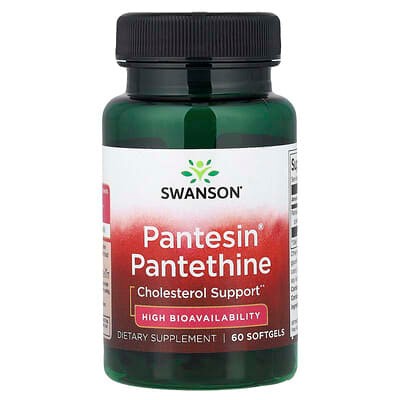
Pantethine (38)92
Pantethine is a derivative of pantothenic acid that is composed of two pantetheine molecules. Pantetheine is the precursor to coenzyme A, making pantethine a more direct and often considered more metabolically active form of Vitamin B5. It is particularly known for its potential role in supporting healthy lipid profiles, as it's a key component of the acyl carrier protein (ACP) and coenzyme A, involved in fatty acid synthesis and degradation.
Pros
  • Directly converts to pantetheine and then coenzyme A
  • Potentially more potent for specific metabolic pathways (e.g., lipid metabolism)
  • Well-absorbed
Cons
  • More expensive than standard pantothenic acid forms
  • May not be necessary for general B5 supplementation
Per product
Avg$28.99
Med$27.84
Per serving
Avg$0.65
Med$0.68
Per 100 mg
Avg$0.58
Med$0.59
Price distribution
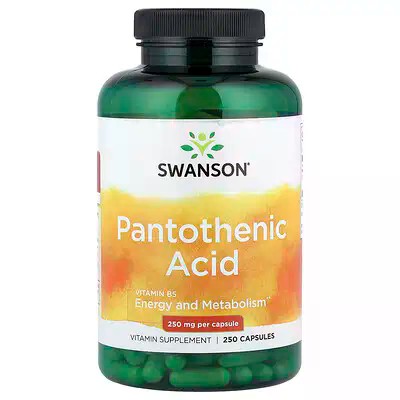
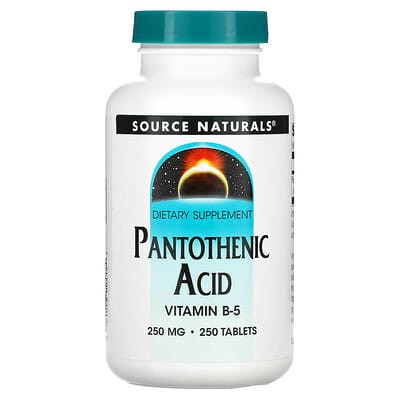
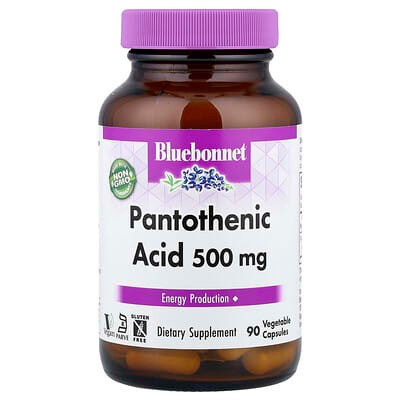
Pantothenic Acid (8)85
Pantothenic acid is the biologically active core compound of Vitamin B5. It is a water-soluble vitamin essential for life, primarily acting as a precursor to coenzyme A (CoA). CoA is critical for energy metabolism, fatty acid synthesis and breakdown, and the synthesis of neurotransmitters and hormones. While fundamental, the free acid form is less stable than its salt derivatives like calcium pantothenate, especially when exposed to heat, acid, or alkaline conditions.
Pros
  • The active chemical form, essential for all B5 functions
Cons
  • Less stable than salt forms, can degrade during processing or storage, potentially leading to lower potency in supplements if not properly stabilized.
Per product
Avg$26.84
Med$27.92
Per serving
Avg$0.80
Med$0.85
Per 10 mg
Avg$0.53
Med$0.43
Price distribution
D-Panthenol (5)90
d-Panthenol is synonymous with D-Panthenol and dexpanthenol. It is a provitamin of B5, meaning it converts to pantothenic acid within the body or upon topical application. It is highly valued in cosmetics and skincare for its ability to hydrate, soothe, and promote tissue repair, making it effective for improving skin barrier function and overall skin health. When taken internally, it serves as a bioavailable source of Vitamin B5.
Pros
  • Excellent for topical skin and hair health
  • Readily converted to active B5
  • Well-tolerated, effective orally
Cons
  • Less common in oral supplements compared to calcium pantothenate
  • Primarily known for topical applications
Per product
Avg$12.22
Med$12.22
Per serving
Avg$0.73
Med$0.66
Per 10 mg
Avg$0.12
Med$0.12
Price distribution
organic Brown Rice (5)60
Organic brown rice is a natural, unprocessed whole grain that contains pantothenic acid (Vitamin B5) along with other B vitamins, minerals, and dietary fiber. While it contributes to overall B5 intake as part of a balanced diet, it is not a concentrated or isolated form of Vitamin B5. Its benefits stem from the synergy of its complete nutritional profile, rather than delivering a high dose of a single nutrient.
Pros
  • Natural food source of B5 and other essential nutrients
  • Provides dietary fiber
  • Certified organic status
Cons
  • Not a concentrated source of Vitamin B5
  • B5 intake levels are highly variable
  • Not suitable for targeted high-dose B5 supplementation
Per product
Avg$32.65
Med$29.59
Per serving
Avg$0.83
Med$0.88
Per 10 mg
Avg$0.44
Med$0.46
Price distribution