
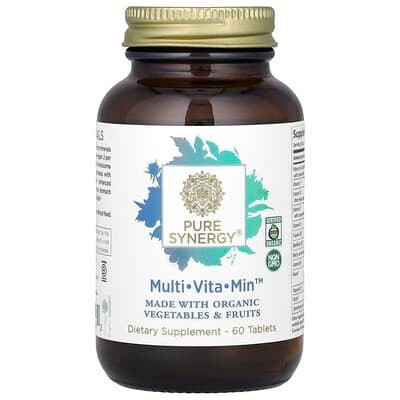

$38.95 $1.29 per serving


Product analysis
Multi Vita Min offers broad nutritional support for normal immune function, energy use and blood formation when intake is low. Missing ingredient-form and composition details make close comparisons with other multivitamins harder.
AI assessment of the formula, label and price. How scoring works
Nutrient Quality30
Named MK-7 provides a clearly identified vitamin K form, but most preparations remain unclear. Other ingredient-quality information is insufficient to judge the blend consistently.
Ingredient Transparency60
The listed nutrient quantities are stated, but most forms are missing. The vitamin A and E mixtures lack proportions, and differing vitamin K declarations leave its total unclear.
Value For Money33
The serving looks expensive when considered for vitamin K and several minerals. Many other ingredient-price comparisons are unavailable, so the full formula is difficult to assess on value.
Customer Satisfaction75
Customer feedback is very positive across hundreds of ratings. The review history provides useful satisfaction context without proving added benefits when nutrition is already adequate.
Product Focus47
The broad blend supports several normal nutrient functions, especially when intake is low. Those related roles do not establish extra energy, hair growth or protection from health problems when needs are met.
- Format
Tablet - Container
- 60 Tablet(s)
- Per serving
- $1.29
- Customer rating
- 4.7 · 359 ratings
Goals

Impact
Highest effect
Folate · 800 mcg DFEVitamin B12 · 5 mcgVitamin D · 40 mcgVitamin K · 20 mcgSelenium · 55 mcgZinc · 11 mgVitamin C · 180 mg
B vitamins and folate supply nutrients for normal energy metabolism and blood formation. Vitamin D contributes to bone and mineral balance, zinc and selenium to normal immune or antioxidant functions, and iodine can fill an intake gap relevant to thyroid function. These are nutritional contributions, not evidence of added benefit above adequate intake. Vitamin K has no known amount, while B12 and vitamin C were below the saved contribution thresholds.
How this product is rated for Everyday Health
Ingredient fit81
Several nutrients provide broad nutritional coverage, although vitamin K has an unknown amount.
Goal fit
Several nutrients provide broad nutritional coverage, although vitamin K has an unknown amount.
Dose adequacy
Known nutrient amounts provide mixed contributions; vitamin K cannot be assessed by amount.
Pathways100
Energy metabolism is the strongest area. Energy metabolism, blood formation, bone balance and antioxidant or immune functions are covered.
Depth
Energy metabolism is the strongest area.
Breadth
Energy metabolism, blood formation, bone balance and antioxidant or immune functions are covered.
Evidence82
Folate anchors the nutritional evidence. Nutritional roles do not establish added benefit above adequate intake.
Evidence strength
Folate anchors the nutritional evidence.
Studied preparation
The ten nutrients with substantial known amounts have accepted preparations.
Formulation logic98
The counted nutrients work independently or have their required partner. Vitamin K lacks a known amount.
Partner coverage
The counted nutrients work independently or have their required partner.
Conflicts
No configured ingredient conflict was found.
Effective doses
Ten counted nutrients provide meaningful amounts; vitamin K remains unquantified.

Impact
High effect
Biotin · 60 mcgVitamin D · 40 mcgZinc · 11 mgVitamin C · 180 mg
Zinc can help hair affected by low zinc intake. Vitamin C contributes to normal collagen formation, without established extra hair growth. The vitamin E declaration combines tocopherols and tocotrienols without allocating their amounts, so it does not establish exposure to the mixed tocotrienols used in the limited hair-count trial.
How this product is rated for Hair Health
Ingredient fit67
The formula contains hair-relevant nutrients, but its focus and contributing amounts vary. The declared amounts do not by themselves establish hair growth.
Goal fit
The formula includes hair-relevant ingredients alongside ingredients directed at other goals.
Dose adequacy
Several contributing amounts fall short of the saved comparison benchmarks.
Pathways45
The strongest recorded route is antioxidant-related, with limited breadth across the other specified routes.
Depth
Antioxidant-related ingredients provide the strongest recorded route; this does not establish follicular regrowth.
Breadth
Only the antioxidant-related route reaches the saved coverage benchmark.
Evidence97
Zinc is central to the saved evidence finding, while its supported hair role remains correction of inadequate intake. Preparation matches do not establish extra regrowth.
Evidence strength
Zinc leads the contributing evidence; its practical hair benefit is tied to correcting low intake.
Studied preparation
Most contributing forms meet the saved preparation comparison; iodine does not have a matching studied preparation.
Formulation logic100
Contributing ingredients meet the saved minimum amount comparison without a missing required partner or an identified conflict. This does not establish synergy.
Partner coverage
No required ingredient partner is missing among the ingredients that contribute.
Conflicts
No ingredient conflict was identified by the supplied checks.
Effective doses
All contributing ingredients clear the saved minimum amount benchmark; this is not a proven biological effectiveness threshold.

Impact
High effect
Vitamin K · 20 mcgVitamin D · 40 mcgSelenium · 55 mcgVitamin B12 · 5 mcgVitamin B6 · 3.4 mgVitamin E · 30 mgFolate · 800 mcg DFENiacin · 32 mg NEVitamin C · 180 mg
Folate, B6 and B12 support homocysteine metabolism, without establishing cardiovascular-event prevention. Thiamin and selenium matter when intake is deficient. The separately declared MK-7 is only 20 mcg per serving, well below the 180 mcg daily exposure studied for selected arterial-stiffness measures in postmenopausal women.
How this product is rated for Cardiovascular Support
Ingredient fit58
This broad multivitamin has several nutrient connections, with limited MK-7, B6 and B12 amounts.
Goal fit
This broad multivitamin has several nutrient connections, with limited MK-7, B6 and B12 amounts.
Dose adequacy
Folate is prominent; several other declared amounts contribute only partly to the saved comparison.
Pathways58
Homocysteine processing is the main area represented by the saved findings. The findings are concentrated in one area, with limited wider cardiovascular coverage.
Depth
Homocysteine processing is the main area represented by the saved findings.
Breadth
The findings are concentrated in one area, with limited wider cardiovascular coverage.
Evidence72
Vitamin C leads the saved evidence finding, although the supplied clinical context does not establish routine cardiovascular-event prevention.
Evidence strength
Vitamin C leads the saved evidence finding, although the supplied clinical context does not establish routine cardiovascular-event prevention.
Studied preparation
The saved findings recognize studied preparations among the included ingredients; the preparation match does not extend the population or outcome evidence.
Formulation logic100
No listed conflict was triggered by the supplied ingredient facts. The included ingredients meet the saved minimum amount comparison.
Partner coverage
No required partner is missing among the recognized ingredients; this does not establish an extra benefit from combining them.
Conflicts
No listed conflict was triggered by the supplied ingredient facts.
Effective doses
The included ingredients meet the saved minimum amount comparison; this does not establish a proven clinical dose.

Impact
High effect
Vitamin K · 20 mcgVitamin B12 · 5 mcgVitamin B6 · 3.4 mgFolate · 800 mcg DFEVitamin D · 40 mcg
Thiamin supports heart function when intake is low, and selenium's heart-related role is mainly relevant to deficiency. Folate and B vitamins contribute to homocysteine metabolism, but improving this marker does not generally establish fewer major cardiac events. The saved findings mainly reflect these nutrient roles; the supplied facts do not support a broad vascular or cholesterol benefit.
How this product is rated for Heart Health
Ingredient fit61
The formula covers several nutrient roles and many broader uses, so its focus on heart health is diluted. The included amounts vary in relevance; qualifying nutrients contribute while low or unresolved amounts limit the findings.
Goal fit
The formula covers several nutrient roles and many broader uses, so its focus on heart health is diluted.
Dose adequacy
The included amounts vary in relevance; qualifying nutrients contribute while low or unresolved amounts limit the findings.
Pathways60
The strongest saved finding concerns homocysteine metabolism; that biochemical activity does not itself establish cardiovascular-event prevention.
Depth
The strongest saved finding concerns homocysteine metabolism; that biochemical activity does not itself establish cardiovascular-event prevention.
Breadth
Homocysteine metabolism is the only broadly covered category in the saved findings.
Evidence89
Folate leads the saved evidence finding; the supplied scientific context limits what that can mean for everyday heart health.
Evidence strength
Folate leads the saved evidence finding; the supplied scientific context limits what that can mean for everyday heart health.
Studied preparation
The saved findings recognize the preparations of the included nutrients, without proving that every nutrient prevents heart disease.
Formulation logic100
The included ingredients work without a required missing partner. No listed ingredient conflict was triggered by the supplied facts.
Partner coverage
Every included ingredient can contribute without a required missing partner.
Conflicts
No listed ingredient conflict was triggered by the supplied facts.
Effective doses
4 included ingredients meet the saved minimum amount criterion; this is not proof of clinical effectiveness.

Impact
High effect
Folate · 800 mcg DFEVitamin B12 · 5 mcgVitamin K · 20 mcgVitamin D · 40 mcg
Vitamin C supports collagen formation when intake is low, while vitamin D can help restore muscle function in deficiency. Vitamin B12 can correct deficiency-related neurological and memory problems. These nutritional roles do not establish extra anti-aging benefits when intake is adequate. Antioxidant activity from the other vitamins and minerals does not by itself demonstrate longer life or broad prevention of age-related decline.
How this product is rated for Longevity
Ingredient fit57
Vitamin K, Vitamin B9 (Folate), Selenium provide the main connection. The saved amount comparison should not be interpreted as proof of anti-aging effectiveness.
Goal fit
Vitamin K, Vitamin B9 (Folate), Selenium provide the relevant connection, while other active ingredients make the formula less focused on this goal.
Dose adequacy
The relevant amounts only partly match the supplied comparison exposures; this does not quantify the expected benefit.
Pathways53
The main connection is antioxidant defence; broader aging outcomes do not follow from that mechanism.
Depth
The main supplied connection is antioxidant defence, through Vitamin K, Vitamin B9 (Folate), Selenium. This mechanism does not establish a clinical anti-aging effect.
Breadth
Only one mechanism reaches the saved coverage threshold; the connection remains narrow rather than covering multiple aspects of aging.
Evidence83
The saved finding recognizes ingredient evidence and preparation matches, while the human outcomes remain bounded by the qualifications described above.
Evidence strength
Vitamin D anchors the saved evidence finding, but the supported outcome remains limited by the ingredient-specific human findings.
Studied preparation
The ingredients used for this finding match preparations recognized in the saved comparison; this does not remove the limits of their clinical evidence.
Formulation logic100
The supplied checks identify no missing required partner or matched conflict. Amount thresholds describe the saved comparison and do not establish clinical effectiveness.
Partner coverage
The relevant ingredients can act independently or have their required partner; this does not demonstrate an added benefit from combining them.
Conflicts
No conflict was identified by the supplied checks; this is a limited formulation finding, not a general safety conclusion.
Effective doses
The included ingredients meet the saved amount threshold, which is a comparison convention rather than a proven minimum effective dose.

Impact
High effect
Vitamin K · 20 mcgVitamin D · 40 mcgCopper · 0.9 mgManganese · 2.3 mgZinc · 11 mgVitamin C · 180 mg
Vitamin D supports calcium handling and deficiency-related mineralization, while copper and vitamin C support the collagen matrix when intake is low. These normal nutritional roles do not establish extra bone benefit when intake is adequate. Vitamin K's amount and preparation remain unresolved, preventing a supported MK-7-specific comparison. The formula's other credited nutrient roles do not establish routine fracture prevention.
How this product is rated for Bone Health
Ingredient fit61
Several nutrients relate to bone function, although the formula also serves wider nutritional purposes.
Goal fit
Several nutrients relate to bone function, although the formula also serves wider nutritional purposes.
Dose adequacy
Amounts give partial overall support; unresolved vitamin K does not receive amount-based credit.
Pathways80
The strongest saved coverage concerns collagen matrix formation. Two pathways meet the saved coverage threshold.
Depth
Collagen matrix formation is the strongest saved pathway; this describes nutrient coverage rather than a proven change in bone outcomes.
Breadth
Calcium handling and collagen formation meet the saved threshold.
Evidence98
Zinc leads the saved evidence finding, but its normal bone role does not establish an independent routine bone-density or fracture benefit.
Evidence strength
Zinc leads the saved evidence finding; this does not measure the chance of improved bone outcomes.
Studied preparation
The saved findings recognize the counted preparations as studied, without establishing routine benefit for every credited nutrient.
Formulation logic97
Vitamin D's partner condition is not met, reducing its saved formulation support. No listed conflict was triggered.
Partner coverage
Vitamin D's partner condition is not met; its contribution retains only the saved standalone allowance.
Conflicts
No listed ingredient conflict was triggered by the supplied facts.
Effective doses
All counted ingredients pass the saved amount threshold; this does not establish a proven effective skeletal dose.
Ingredients
| Ingredient | Amount per serving | Score |
|---|---|---|
Vitamin A (Beta-Carotene, Carotenoids) | 1800 mcg RAE | |
Vitamin C | 180 mg | |
Vitamin D3 (Cholecalciferol) | 40 mcg | |
Vitamin E (Tocopherol, Tocotrienols) | 30 mg | |
Vitamin K1 | 240 mcg | |
Thiamine | 2.4 mg | |
Riboflavin | 2.6 mg | |
Niacin (Niacinamide) | 32 mg NE | |
Vitamin B6 | 3.4 mg | |
Folate | 800 mcg DFE | |
Vitamin B12 | 5 mcg | |
Biotin | 60 mcg | |
Pantothenic Acid | 10 mg | |
Choline | 55 mg | |
Iodine | 150 mcg | |
Zinc | 11 mg | |
Selenium | 55 mcg | |
Copper | 0.9 mg | |
Manganese | 2.3 mg | |
Chromium | 35 mcg | |
Molybdenum | 45 mcg | |
Vitamin K2 (Menaquinone-7) | 20 mcg |
Iodine · 150 mcg OverallScore68
Each serving provides 150 mcg of iodine, an amount the evaluation views favorably. Its chemical form is unknown, limiting comparison with named forms.
How this ingredient is rated
Active Ingredient Quality & Bioavailability61
The iodine chemical form is unknown, so it cannot be compared with named forms. No marine source is identified for the marine-specific check.
Iodine Form & Bioavailability
The iodine chemical form is unknown, so it cannot be compared with named forms.
Marine Source Purity & Sourcing
No marine source is identified in the saved facts, so the marine-specific check is not applicable; this does not establish purity.
Dose, Safety & Label Transparency100
The label states 150 mcg of elemental iodine per serving. The evaluation does not flag that amount as exceeding its safety limit.
Dosage Efficacy for Daily Support
The 150 mcg of iodine per serving is an amount the evaluation views favorably.
Dosage Safety & Upper Limits
The evaluation does not flag the labeled serving amount as exceeding its safety limit.
Elemental Iodine Transparency
The label specifies 150 mcg of elemental iodine per serving.
Value20
A whole-product serving costs about $1.30.
Price Per Effective Serving
A whole-product serving costs about $1.30.
Vitamin K · 240 mcg OverallScore53
Each serving provides 20 mcg of vitamin K2 as MK-7, a relatively small amount in the evaluation. It also contains 240 mcg of vitamin K1, with the two amounts identified separately.
How this ingredient is rated
Active Ingredient Quality & Bioavailability82
Both vitamin K1 and the MK-7 form of K2 are identified. The saved information does not specify whether the MK-7 is the trans isomer.
Vitamin K Form (MK-7 vs. MK-4 vs. K1)
The vitamin K includes K1 and K2 as MK-7.
MK-7 Isomer Disclosure
MK-7 is identified, but its trans isomer is not specified in the saved information.
Dose, Safety & Label Transparency50
The serving contains 240 mcg of K1 and 20 mcg of MK-7. The MK-7 amount is relatively small in the evaluation.
Vitamin K2 (MK-7) Dosage Efficacy
The serving provides 20 mcg of MK-7, a relatively small amount in the evaluation.
Form and Subtype Transparency
The saved facts identify K1 and MK-7 separately, with 240 mcg and 20 mcg per serving, respectively.
Value0
The whole-product serving costs about $1.30, a high price in this evaluation.
Price per Effective MK-7 Serving
The whole-product serving costs about $1.30, a high price in this evaluation.
Choline · 55 mg OverallScore41
A serving provides 55 mg of choline. The saved data does not specify its chemical form.
How this ingredient is rated
Active Ingredient Quality & Bioavailability33
Choline is identified, but its chemical form is not specified in the saved data. The saved ingredient data records no flagged additives or standard flow agents.
Choline Form Efficacy & Bioavailability
The saved data identifies choline but does not specify its chemical form.
Formula Purity & Excipient Quality
The saved ingredient data records no flagged additives or standard flow agents.
Dose, Safety & Label Transparency59
The amount is 55 mg of choline per serving.
Choline Dose by Declared Basis
A serving provides 55 mg of choline.
Elemental Yield Transparency
The choline amount is specified as 55 mg per serving, although its chemical form is unknown in the saved data.
Value20
The cost is about $2.36 per 100 mg of choline, based on the price of the whole-product serving.
Price per 100 mg of Declared Choline Basis
The cost is about $2.36 per 100 mg of choline, based on the price of the whole-product serving.
Alternative products
Report alternatives
Sources
Published studies used for the product analysis and the top-ranked studies for each ingredient and goal.
- The Association between Dietary and Circulating Copper Levels and Osteoporosis: a Scoping Review.
- Association between dietary copper, iron, zinc, selenium intake and osteopenia or osteoporosis in elderly hypertensive patients: a retrospective cohort study.
- Associations of dietary copper intake with total bone mineral density and lumbar spine bone mineral density in American adults.
- The association between dietary mineral intake and bone mineral density: a cross-sectional study.
- Association between dietary copper intake and bone mineral density in children and adolescents aged 8-19 years: A cross-sectional study.
- Association between RBC folate and lumbar bone mineral density in postmenopausal women, a cross-sectional study from NHANES 2009-2018.
- Genetic variants modify the associations of concentrations of methylmalonic acid, vitamin B-12, vitamin B-6, and folate with bone mineral density.
- Adequate Intake and Supplementation of B Vitamins, in Particular Folic Acid, can Play a Protective Role in Bone Health.
- Relation of homocysteine, folate, and vitamin B12 to bone mineral density of postmenopausal women.
- Dietary intake of folate, but not vitamin B2 or B12, is associated with increased bone mineral density 5 years after the menopause: results from a 10-year follow-up study in early postmenopausal women.
- Risk of Environmental Chemicals on Bone Fractures Is Independent of Low Bone Mass in US Adults: Insights from 2017 to 2018 NHANES.
- The Manganese-Bone Connection: Investigating the Role of Manganese in Bone Health.
- Associations of multiple metals with bone mineral density: A population-based study in US adults.
- Sex-specific associations of urinary mixed-metal concentrations with femoral bone mineral density among older people: an NHANES (2017-2020) analysis.
- Relationship between blood manganese and bone mineral density and bone mineral content in adults: A population-based cross-sectional study.
- Evaluating the Protective Role of Vitamin A Supplementation in Periodontal Health: A Comprehensive Systematic Review and Meta-Analysis.
- Dietary vitamin A intake and bone health in the elderly: the Rotterdam Study.
- Vitamin A and its dervatives effect on bone mineral density, a systematic review.
- Association of vitamins with bone mineral density and osteoporosis measured by dual-energy x-ray absorptiometry: a cross-sectional study.
- Association of dietary consumption and serum levels of vitamin A and β-carotene with bone mineral density in Chinese adults.