
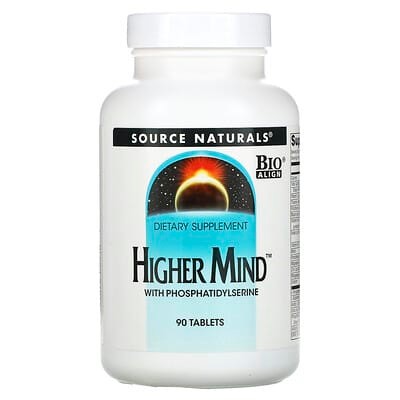

$29.81 $1.35 per serving


Product analysis
Higher Mind provides nutrients that may support memory and concentration when intake is inadequate. Numerous unspecified ingredient forms make its broad mixture harder to compare, while routine cognitive benefits from the added ingredients remain uncertain.
AI assessment of the formula, label and price. How scoring works
Nutrient Quality34
Some B-vitamin and manganese forms compare favorably for quality. Many other forms are unspecified, and the mixed magnesium sources have unknown proportions that limit absorption comparisons.
Ingredient Transparency61
The ingredient amounts are disclosed, helping compare the serving. Most forms and mixed-source proportions remain unspecified, leaving important composition details unclear.
Value For Money34
Most assessable ingredients offer less favorable value for their cost. Vitamin B6 compares favorably, but that does not establish good value across the entire mixture.
Customer Satisfaction67
Customer feedback is positive across a moderate number of ratings. The feedback describes satisfaction and does not establish effectiveness.
Product Focus27
The large ingredient mix spans cognitive support and many other goals, making it less focused. The clearest nutritional role is filling dietary gaps, while dependable extra focus or memory benefits remain uncertain.
- Format
Tablet - Container
- 90 Tablet(s)
- Per serving
- $1.35
- Customer rating
- 4.4 · 210 ratings
Goals

Impact
High effect
Folate · 1360 mcg DFEVitamin B6 · 100 mgVitamin B12 · 400 mcgMagnesium · 200 mgAcetyl L-Carnitine · 500 mgHuperzine · 200 mcg
Folate, vitamin B12, thiamin and niacin can support concentration when low intake or deficiency is contributing to difficulty concentrating. Acetyl L-carnitine participates in energy and acetylcholine processes, but this does not establish an acute focus benefit. The other nootropic mechanisms likewise do not demonstrate routine healthy-adult attention enhancement. The broad formulation therefore has a more limited scientific basis for immediate focus than its ingredient variety suggests.
How this product is rated for Mental Focus
Ingredient fit62
The serving has focus-related ingredients, with amount suitability and broader-purpose ingredients assessed separately.
Goal fit
The formula includes ingredients for other purposes, so its focus-related contribution is less concentrated.
Dose adequacy
The declared serving receives partial amount credit; matching an amount reference does not establish an effective dose for acute focus.
Pathways60
The saved mechanism finding is concentrated in the roles described below. Mechanism coverage does not establish clinical improvement.
Depth
The strongest mapped role is cerebral energy supply; this describes the saved mechanism finding rather than a demonstrated clinical effect.
Breadth
Only one assessed route reaches the saved coverage threshold, so the mapped contribution remains narrow.
Evidence99
The strongest saved evidence finding and preparation matches are described separately. Scientific limitations still determine which focus benefits can be claimed.
Evidence strength
Magnesium leads the saved evidence finding, but its normal functions do not establish extra acute focus benefits in adults with adequate intake.
Studied preparation
Huperzine does not match the saved studied-preparation requirement; the other qualifying ingredients do. This limits transfer of preparation-specific findings.
Formulation logic100
Partner requirements, recorded conflicts and minimum amounts shape the saved formulation finding.
Partner coverage
The saved partner check finds no missing required partner among the credited ingredients.
Conflicts
No configured conflict was recorded in the supplied facts; this is not a general safety assessment.
Effective doses
All credited ingredients meet the saved minimum amount threshold; that threshold does not prove a clinically effective focus dose.
Huperzine Not classified
No linked studies yet.

Impact
High effect
Vitamin B12 · 400 mcgVitamin B12 · 400 mcgVitamin B6 · 100 mgZinc · 10 mgMagnesium · 200 mgAcetyl L-Carnitine · 500 mgAcetyl L-Carnitine · 500 mgEleuthero · 60 mgEleuthero · 60 mgVinpocetine · 30 mgHuperzine · 200 mcg
Vitamin B12 and folate can address fatigue and concentration difficulties caused by their respective deficiencies. Magnesium and zinc have normal nutritional roles, but the supplied information does not establish extra productivity from supplementing adequate intake or favor these forms. The saved ingredient and amount findings do not establish improved work output.
How this product is rated for Productivity Boost
Ingredient fit54
The relevant ingredients sit within a broader formula containing ingredients aimed at other purposes. The declared serving only partly meets the saved amount references across the included ingredients.
Goal fit
The relevant ingredients sit within a broader formula containing ingredients aimed at other purposes.
Dose adequacy
The declared serving only partly meets the saved amount references across the included ingredients.
Pathways56
The saved findings emphasize nutrient-related brain functions; these do not establish enhanced productivity with adequate intake.
Depth
The saved findings emphasize nutrient-related brain functions; these do not establish enhanced productivity with adequate intake.
Breadth
Only one evaluated mechanism met the saved coverage requirement, so the findings remain narrow.
Evidence98
Magnesium leads the saved evidence finding, although the supplied context does not establish generic productivity enhancement.
Evidence strength
Magnesium leads the saved evidence finding, although the supplied context does not establish generic productivity enhancement.
Studied preparation
Some included preparations lack a match to the studied preparations, limiting transfer of findings.
Formulation logic100
None of the evaluated ingredient conflicts was identified. No missing partner requirement was identified for the included ingredients.
Partner coverage
No missing partner requirement was identified for the included ingredients.
Conflicts
None of the evaluated ingredient conflicts was identified.
Effective doses
All included ingredients met the saved minimum amount requirement; this is not proof of a clinically effective productivity dose.
Eleuthero Not classified
No linked studies yet.
Vinpocetine Not classified
No linked studies yet.

Impact
Highest effect
Folate · 1360 mcg DFEVitamin B12 · 400 mcgVitamin B6 · 100 mgThiamin · 100 mgMagnesium · 200 mgAshwagandha · 100 mgHuperzine · 200 mcg
Folate, thiamin, niacin and B12 support normal brain function when intake is low; high amounts do not establish extra benefit when intake is adequate. The other cognitive-intent ingredients do not establish dependable broad benefits for general adult use. In particular, phosphatidylserine findings are inconsistent and population-specific, while the unidentified ashwagandha extract cannot inherit evidence from a named studied preparation.
How this product is rated for Brain Health
Ingredient fit64
The formula contains ingredients considered relevant to brain health, with the practical contribution constrained by their amounts, identities and supported roles.
Goal fit
Relevant ingredients sit alongside ingredients intended for other uses, making this a broader formulation.
Dose adequacy
Declared amounts contribute unevenly to the saved comparison; undisclosed amounts cannot establish an amount-based contribution.
Pathways100
The supplied findings describe mechanistic coverage. Coverage alone does not establish improvement in the corresponding cognitive abilities.
Depth
The strongest recorded area is cerebral energy metabolism. This describes the supplied mechanism finding, not a demonstrated cognitive outcome.
Breadth
The recorded coverage spans several brain-related mechanisms, without establishing broad improvements in cognitive performance.
Evidence91
The supplied ingredient evidence has population and preparation limits; the leading saved finding should be interpreted within those limits.
Evidence strength
Vitamin B6 leads the saved evidence comparison; its applicable population and benefit limits still govern expectations.
Studied preparation
The supplied comparison identifies preparation gaps for Phosphatidylserine, so evidence from particular studied materials cannot automatically transfer.
Formulation logic100
The supplied formulation checks address partners, conflicts and amounts. They do not demonstrate added benefit from combining the ingredients.
Partner coverage
No required partner is missing among the ingredients considered in the supplied formulation check.
Conflicts
No configured ingredient conflict was identified; this is not a comprehensive safety assessment.
Effective doses
All ingredients included in this check reach its minimum amount threshold, which does not establish proven effective doses for general cognition.
Phospholipids (unspecified) Not classified
No linked studies yet.

Impact
Highest effect
Thiamin · 100 mgVitamin B6 · 100 mgFolate · 1360 mcg DFEVitamin B12 · 400 mcgMagnesium · 200 mgHuperzine · 200 mcgAshwagandha · 100 mgAcetyl L-Carnitine · 500 mg
Thiamin, B12, folate and niacin can address low intake that affects memory and attention, without established extra benefit when intake is adequate. Ginkgo and ashwagandha have preparation-specific findings, but their unidentified materials limit transfer. Huperzine and acetyl L-carnitine evidence comes from disease cohorts, while phosphatidylserine has inconsistent general results. The saved findings span several mechanisms, but that breadth does not establish broad cognitive improvement from this mixture.
How this product is rated for Cognitive Support
Ingredient fit66
The formula’s relevance depends on both its ingredient focus and the usable declared amounts. The declared amounts provide only partial comparison coverage; smaller or unresolved amounts limit the findings.
Goal fit
The formula mixes ingredients recognized for this goal with other actives, so its focus extends beyond cognition.
Dose adequacy
The declared amounts provide only partial comparison coverage; smaller or unresolved amounts limit the findings.
Pathways100
The strongest saved connection concerns acetylcholine signalling; mechanism coverage alone does not establish cognitive improvement. Three mechanisms reached the saved coverage threshold, without proving benefits across all cognitive abilities.
Depth
The strongest saved connection concerns acetylcholine signalling; mechanism coverage alone does not establish cognitive improvement.
Breadth
Three mechanisms reached the saved coverage threshold, without proving benefits across all cognitive abilities.
Evidence97
Vitamin B6 leads the saved evidence finding, while its specific scientific limitations still constrain expected cognitive benefits. Preparation matching is incomplete for Ginkgo , Phosphatidylserine; findings for particular studied materials cannot automatically transfer.
Evidence strength
Vitamin B6 leads the saved evidence finding, while its specific scientific limitations still constrain expected cognitive benefits.
Studied preparation
Preparation matching is incomplete for Ginkgo , Phosphatidylserine; findings for particular studied materials cannot automatically transfer.
Formulation logic100
No configured conflict was identified in the supplied facts. All counted ingredients reach the saved amount threshold; that comparison is not proof of a clinically effective dose.
Partner coverage
No missing required partner reduced the findings; this does not establish synergy or added benefit from combining ingredients.
Conflicts
No configured conflict was identified in the supplied facts.
Effective doses
All counted ingredients reach the saved amount threshold; that comparison is not proof of a clinically effective dose.
Phospholipids (unspecified) Not classified
No linked studies yet.

Impact
Moderate effect
Folate · 1360 mcg DFEMagnesium · 200 mgVitamin B12 · 400 mcgTaurine · 100 mg
Acetyl-L-carnitine relates to mitochondrial processes, while magnesium and B vitamins support normal energy and nutrient functions. Vitamin C contributes to collagen formation.
Ginkgo and phosphatidylserine have limited or inconsistent relevance to preserving cognition, and alpha-lipoic acid, taurine and ashwagandha do not establish slower aging from their mechanisms or selected symptom findings.
How this product is rated for Longevity
Ingredient fit46
The relevant ingredients sit within a broader mix aimed at several needs. The assessed amounts partly meet the saved comparison benchmarks.
Goal fit
The relevant ingredients sit within a broader mix aimed at several needs.
Dose adequacy
The assessed amounts partly meet the saved comparison benchmarks.
Pathways11
The strongest assessed area is mitochondrial energy production, with limited coverage. No assessed area reaches the threshold for substantial coverage.
Depth
The strongest assessed area is mitochondrial energy production, with limited coverage.
Breadth
No assessed area reaches the threshold for substantial coverage.
Evidence99
Magnesium provides the strongest evidence contribution among the assessed ingredients, with important limits on broader healthy-aging claims. Preparation matching is partial; Boron. Shared rubric rule. lacks a recognized trial-preparation match.
Evidence strength
Magnesium provides the strongest evidence contribution among the assessed ingredients, with important limits on broader healthy-aging claims.
Studied preparation
Preparation matching is partial; Boron. Shared rubric rule. lacks a recognized trial-preparation match.
Formulation logic97
The assessed ingredients can contribute independently or have their required partner. No configured ingredient conflict was matched in the supplied assessment. 7 of 8 credited ingredients reach the minimum amount threshold; Vitamin E. Shared rubric rule. falls below it or has an unresolved amount.
Partner coverage
The assessed ingredients can contribute independently or have their required partner.
Conflicts
No configured ingredient conflict was matched in the supplied assessment.
Effective doses
7 of 8 credited ingredients reach the minimum amount threshold; Vitamin E. Shared rubric rule. falls below it or has an unresolved amount.
Boron Not classified
No linked studies yet.

Impact
High effect
Vitamin B5 · 100 mgMagnesium · 200 mgRiboflavin · 50 mgThiamin · 100 mgVitamin B12 · 400 mcgAcetyl L-Carnitine · 500 mg
B vitamins, vitamin C and magnesium support normal metabolism and can help with tiredness caused by inadequate intake. Extra amounts do not establish extra energy once intake is adequate. Acetyl L-carnitine fatigue findings concern older adults with clinical fatigue, and the small ashwagandha and eleuthero amounts do not establish reliable everyday fatigue relief.
How this product is rated for Energy
Ingredient fit57
The formula includes ingredients connected with energy alongside ingredients used for other purposes. The assessed amounts provide partial coverage of the saved references, with some ingredients contributing less than others.
Goal fit
The formula includes ingredients connected with energy alongside ingredients used for other purposes.
Dose adequacy
The assessed amounts provide partial coverage of the saved references, with some ingredients contributing less than others.
Pathways40
Mitochondrial energy production is the main covered mechanism, with partial coverage from the assessed ingredients.
Depth
Mitochondrial energy production is the main covered mechanism, with partial coverage from the assessed ingredients.
Breadth
Coverage is concentrated in mitochondrial energy production, rather than extending across several energy mechanisms.
Evidence95
Acetyl L-carnitine evidence is limited to selected clinical fatigue populations; the saved preparation finding does not remove that distinction.
Evidence strength
Acetyl L-Carnitine provides the strongest assessed evidence connection; the population and intended use still limit what benefits can be expected.
Studied preparation
The assessed preparations meet the saved study criteria, without establishing identical effects in every population or regimen.
Formulation logic100
No missing partner or configured conflict was identified. The assessed ingredients meet the saved minimum amount check.
Partner coverage
The assessed ingredients do not depend on a missing partner for their assigned contribution.
Conflicts
No configured ingredient conflict was found in the supplied facts.
Effective doses
All ingredients included in this amount check clear its minimum comparison threshold; that threshold does not itself prove a noticeable benefit.
Vitamin B5 Not classified
No linked studies yet.
Ingredients
| Ingredient | Amount per serving | Score |
|---|---|---|
Calories | 15 Calorie(s) | |
Total Carbohydrate | 1 Gram(s) | |
Vitamin C (Ascorbic Acid, Zinc Ascorbate) | 200 mg | |
Thiamine | 100 mg | |
Riboflavin | 50 mg | |
Niacin | 164 mg | |
Vitamin B6 (Pyridoxal-5'-Phosphate, Pyridoxine Hydrochloride) | 100 mg | |
Folate (Calcium Folinate, Folic Acid) | 1360 mcg DFE | |
Vitamin B12 (Cyanocobalamin) | 400 mcg | |
Biotin | 80 mcg | |
Pantothenic Acid (Calcium D-Pantothenate) | 100 mg | |
Magnesium (Magnesium Malate, Magnesium Oxide) | 200 mg | |
Zinc (Zinc Ascorbate) | 10 mg | |
Manganese (Manganese Citrate) | 5 mg | |
Sodium | 5 mg | |
L-Pyroglutamic Acid | 600 mg | |
L-Glutamine | 500 mg | |
Acetyl L-Carnitine HCl | 500 mg | |
Gotu Kola Whole Plant Extract | 250 mg | |
Phosphatidylserine | 200 mg | |
N-Acetyl L-Tyrosine | 200 mg | |
DMAE (DMAE Bitartrate) | 160 mg | |
Ginkgo leaf extract | 120 mg | |
Inositol Nicotinate | 110 mg | |
Alpha-Lipoic Acid | 100 mg | |
Taurine | 100 mg | |
DL-Phenylalanine | 100 mg | |
GABA | 100 mg | |
L-Phenylalanine | 100 mg | |
Gamma-Vitamin E Complex | 100 mg | |
Ashwagandha root ext. | 100 mg | |
Turmeric | 100 mg | |
Bilberry fruit extract | 100 mg | |
Eleuthero root extract | 60 mg | |
Vinpocetine | 30 mg | |
Boron (Boron Amino Acid Complex) | 2 mg | |
Huperzine A (Huperzia serrata whole plant extract) | 200 mcg |
Vinpocetine · 30 mg OverallScore86
Vinpocetine is listed separately at 30 mg per serving, an amount favored in the evaluation. Based on the whole-product price, it costs about $0.44 per 10 mg of vinpocetine, a moderate cost for that amount.
How this ingredient is rated
Active Ingredient Quality & Bioavailability91
Vinpocetine is identified by name, while its source form is unresolved in the saved data. The evaluation recognizes ordinary excipients.
Vinpocetine Identity and Source
Vinpocetine is identified by name with 30 mg per serving; its source form is unresolved in the saved data.
Excipient and Filler Quality
The evaluation recognizes ordinary excipients; this does not establish that the product is additive-free.
Dose, Safety & Label Transparency100
The 30 mg serving amount is separately disclosed, making the vinpocetine quantity clear.
Vinpocetine Dosage Alignment
The serving contains 30 mg of vinpocetine, an amount favored in the evaluation.
Proprietary Blend Disclosure
The individual vinpocetine amount is disclosed as 30 mg per serving.
Value50
The whole-product price works out to about $0.44 per 10 mg of vinpocetine, a moderate cost for that amount.
Cost Efficiency per 10mg Dose
Based on the whole-product price, 10 mg of vinpocetine costs about $0.44, a moderate cost for that amount.
Acetyl L-Carnitine · 500 mg OverallScore75
Each serving provides 500 mg of acetyl L-carnitine HCl, a substantial amount. The whole-product price corresponds to about $1.32 per 500 mg of acetyl L-carnitine.
How this ingredient is rated
Active Ingredient Quality & Bioavailability88
The HCl form of acetyl L-carnitine is identified. No purity or manufacturing claim is recorded in the saved facts.
ALCAR vs. Standard Carnitine Form
Acetyl L-carnitine is identified, with no other carnitine form recorded.
Advanced Sourcing and Salt Specificity
The HCl form is identified. No purity or manufacturing claim is recorded in the saved facts.
Dose, Safety & Label Transparency100
The label states 500 mg of acetyl L-carnitine per serving, a substantial amount.
Clinical Dosage Efficacy
The serving provides 500 mg of acetyl L-carnitine, a substantial amount.
Label Transparency and Proprietary Blends
The specific amount of acetyl L-carnitine is stated as 500 mg per serving.
Value0
The whole-product price corresponds to about $1.32 per 500 mg of acetyl L-carnitine.
Price per 500mg Acetyl L-Carnitine
The whole-product price corresponds to about $1.32 per 500 mg of acetyl L-carnitine.
Huperzine (Huperzia serrata whole plant extract) · 200 mcg OverallScore69
The serving lists 200 mcg of Huperzine A. The whole-product price works out to about $0.66 per 100 mcg of Huperzine A, which is moderate.
How this ingredient is rated
Active Ingredient Quality & Bioavailability60
The saved facts identify Huperzia serrata extract, but do not establish its Huperzine A concentration.
Source and Standardization Clarity
A Huperzia serrata extract is identified; its standardization percentage is not established by the available facts.
Dose, Safety & Label Transparency88
The serving lists 200 mcg of Huperzine A. No specific cycling guidance is recorded in the saved facts.
Huperzine A Dosage Efficacy
The serving lists 200 mcg of Huperzine A.
Cycling Guidance and Transparency
The active amount is specified, but no specific cycling guidance is recorded in the saved facts.
Value50
The whole-product price works out to about $0.66 per 100 mcg of Huperzine A, which is moderate.
Price per 100mcg of Huperzine A
Based on the whole-product price, 100 mcg of Huperzine A costs about $0.66, which is moderate.
Alternative products
Report alternatives
Sources
Published studies used for the product analysis and the top-ranked studies for each ingredient and goal.
- [Comparative study of the urinary excretion of boron, calcium, magnesium and phosphorus in postmenopausal women with and without osteoporosis].
- Effect of dietary boron on mineral, estrogen, and testosterone metabolism in postmenopausal women.
- The relationship between boron and magnesium status and bone mineral density in the human: a review.
- Effects of boron supplementation on bone mineral density and dietary, blood, and urinary calcium, phosphorus, magnesium, and boron in female athletes.
- Metabolic responses of postmenopausal women to supplemental dietary boron and aluminum during usual and low magnesium intake: boron, calcium, and magnesium absorption and retention and blood mineral concentrations
- Association between RBC folate and lumbar bone mineral density in postmenopausal women, a cross-sectional study from NHANES 2009-2018.
- Genetic variants modify the associations of concentrations of methylmalonic acid, vitamin B-12, vitamin B-6, and folate with bone mineral density.
- Adequate Intake and Supplementation of B Vitamins, in Particular Folic Acid, can Play a Protective Role in Bone Health.
- Relation of homocysteine, folate, and vitamin B12 to bone mineral density of postmenopausal women.
- Dietary intake of folate, but not vitamin B2 or B12, is associated with increased bone mineral density 5 years after the menopause: results from a 10-year follow-up study in early postmenopausal women.
- Association between Serum Magnesium and Fractures: A Systematic Review and Meta-Analysis of Observational Studies.
- Bioabsorbable Magnesium-Based Materials Potential and Safety in Bone Surgery: A Systematic Review.
- Vascularized bone grafting fixed by biodegradable magnesium screw for treating osteonecrosis of the femoral head.
- An update on magnesium and bone health.
- Sex-specific differences in the association of magnesium intake with femoral neck bone mineral density among older adults.
- Risk of Environmental Chemicals on Bone Fractures Is Independent of Low Bone Mass in US Adults: Insights from 2017 to 2018 NHANES.
- The Manganese-Bone Connection: Investigating the Role of Manganese in Bone Health.
- Associations of multiple metals with bone mineral density: A population-based study in US adults.
- Sex-specific associations of urinary mixed-metal concentrations with femoral bone mineral density among older people: an NHANES (2017-2020) analysis.
- Relationship between blood manganese and bone mineral density and bone mineral content in adults: A population-based cross-sectional study.